Cataracts in San Francisco: When to See an Optometrist
A cataract is a clouding of the eye's natural lens, and it usually develops slowly with age. Early signs include blurry or dim vision, glare and halos around lights at night, colors that look faded, and prescriptions that keep changing. An optometrist can confirm a cataract during a comprehensive eye exam, track how it changes, and tell you when a referral to a cataract surgeon makes sense.
Most people notice a cataract before they have a name for it. Headlights on the Presidio Parkway start to look like starbursts. The menu at your favorite Union Street restaurant needs more light than it used to. Your glasses feel a step behind, even though you just updated them. None of this means something urgent is happening, but it's worth having checked.
What is a cataract?
Inside your eye, behind the colored iris, sits a clear lens that focuses light onto the retina. According to the American Academy of Ophthalmology, aging is the most common cause of cataracts, as proteins in that lens gradually break down. The lens becomes cloudy, and less light reaches the back of the eye in a clean, focused way.
The lens changes behind cataracts can begin after age 40, and vision problems may not appear until years later. Many people have an early cataract that is found during a routine exam long before they notice a single symptom. That is one reason annual eye exams matter more with each decade.
What are the early signs of a cataract?
The American Academy of Ophthalmology and Prevent Blindness describe a consistent set of symptoms:
- Vision that looks blurry, hazy or dim, as if you are looking through a smudged window
- Glare from sunlight, lamps or oncoming headlights
- Halos or rings around lights, especially at night
- Colors that look faded or slightly yellow
- Needing brighter light to read
- Frequent changes to your glasses or contact lens prescription
- Double vision
Night driving is often where people feel it first. If glare on the road has become a problem, it could be your lens coatings, your glasses or a cataract, and an exam tells you which. Our guide to reducing glare on eyeglasses covers the glasses side of that question. If you're not sure a cataract is the cause, our post on halos and glare when driving at night walks through the common causes.
One caution: sudden changes in vision are different. A sudden shower of floaters, flashes of light or a shadow across your vision is not how cataracts behave. Read our page on flashes, floaters and sudden blurry vision and call us the same day.
Is it a cataract, or do I just need new glasses?
It is one of the most common questions about cataracts, and you can't tell on your own. Both can make your vision blurry. Both can make reading harder. The difference shows up in the exam chair.
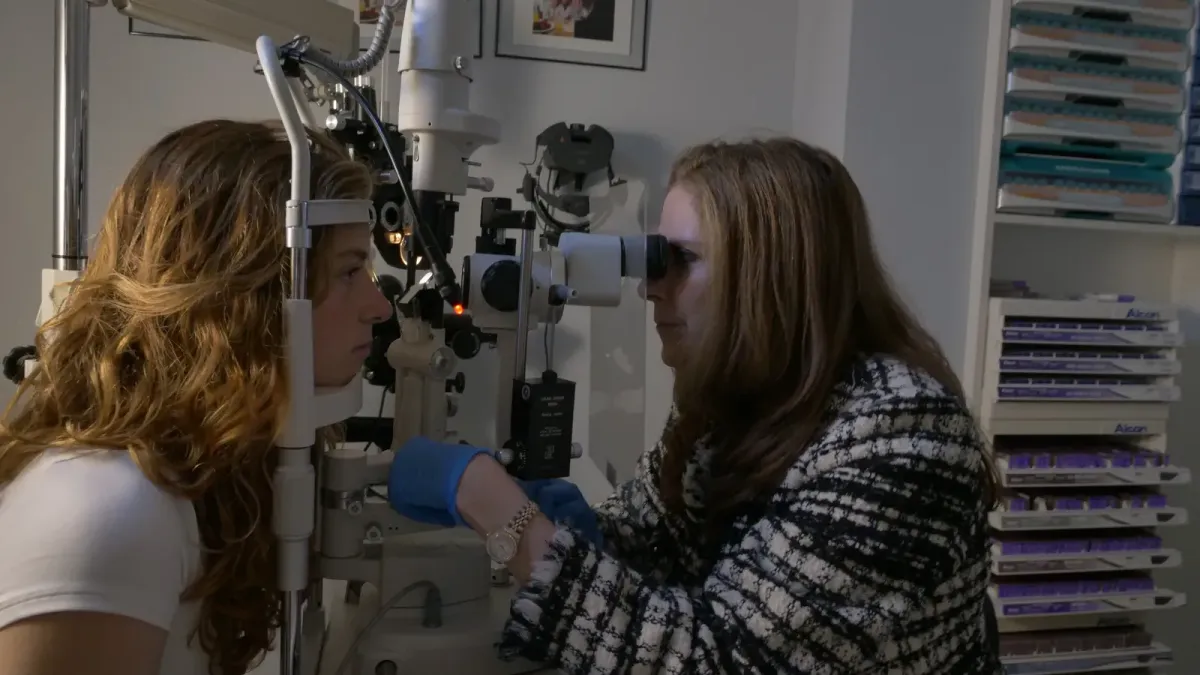
During a comprehensive eye exam, your optometrist measures your prescription and then looks directly at the lens of each eye under magnification. A cataract has a visible appearance. If your vision improves fully with a new prescription and your lenses are clear, new glasses are the answer. If a cloudy lens is limiting how well you can see, even with the right prescription, that is a cataract.
What happens during a cataract evaluation?
A cataract evaluation is part of a thorough eye health exam. At Eyes in Disguise, Dr. Michelle Blas and Dr. Nina Stroud typically:
- Ask how your vision is affecting daily life, including driving, reading, work on screens and hobbies
- Measure your visual acuity and update your prescription
- Examine the lens, retina and optic nerve, with dilation if your doctor needs a closer look
- Check for other conditions that can blur vision, including glaucoma, macular degeneration and diabetic eye disease
- Record the cataract's appearance so future visits can show whether it is changing
That last step is why monitoring matters. Cataracts tend to progress gradually, and seeing the change over time helps you and your doctor make a calm, informed decision rather than a rushed one.
Can glasses help with an early cataract?
Often, yes. In the early stages, an updated prescription, anti-glare lens coatings, brighter task lighting and sunglasses outdoors can keep vision comfortable for a long time. Our eyeglass lens options guide explains the coatings that help most with glare.
Glasses can't clear a cloudy lens, though. When a new prescription stops making a real difference, that is usually the sign that the conversation is shifting toward surgery.
When is cataract surgery needed?
There is no single number on an eye chart that decides it. The American Academy of Ophthalmology's clinical guidelines for cataract in the adult eye center the decision on function: surgery is considered when a cataract interferes with the activities you need or want to do and glasses no longer solve it.
In practice, people often decide when:
- Night driving feels unsafe or stressful
- Reading, screen work or hobbies have become frustrating
- Glare makes bright days or oncoming headlights hard to handle
- A new prescription no longer brings vision back
Cataract surgery replaces the cloudy lens with a clear artificial lens. Your surgeon will walk you through lens choices and recovery.
Optometrist or ophthalmologist: who does what?
An optometrist (OD) is your primary eye doctor. At Eyes in Disguise, that means detecting a cataract, monitoring it over time, updating your glasses as it changes, and ruling out other causes of blurry vision. An ophthalmologist (MD) is a medical doctor and surgeon, and a cataract surgeon is the one who performs the procedure.
When the time is right, we refer you to a cataract surgeon. For a fuller explanation of the two roles, see optometry versus ophthalmology.
Can I lower my risk?
Age is the biggest factor, and no one can change that. The National Eye Institute also lists diabetes, smoking, heavy alcohol use, time in the sun, steroid medicines, eye injuries and a family history of cataracts. What you can control:
- Wear UV-blocking sunglasses year round. The American Academy of Ophthalmology says you may be able to slow cataract development, and that protecting your eyes from sunlight is the best way to do it. Our guide to UV protection and prescription sunglasses covers what to look for.
- Do not smoke.
- Manage diabetes carefully, and keep up with your diabetic eye exam.
- Keep regular eye exams, so changes are found early rather than when they are already affecting your life.
If you are in your 40s and already adjusting to reading glasses, our post on presbyopia and aging eyes explains how that change differs from a cataract.
When to see an optometrist about cataracts
Book an exam if you notice any of these:
- Glare or halos that make night driving harder
- Vision that seems dimmer or less sharp than a year ago
- Colors that look duller than they used to
- A new prescription that did not bring your vision back
If a family member was told they have cataracts, or you have diabetes or take long-term steroids, mention that when you book.
Frequently Asked Questions
What are the early signs of a cataract?
Early signs include blurry or dim vision, glare from lights, halos around lights at night, faded colors, needing brighter light to read, and frequent prescription changes. These often develop slowly, so many people notice them first while driving at night.
Can new glasses fix a cataract?
New glasses cannot clear a cloudy lens, but in the early stages an updated prescription, anti-glare coatings and better lighting can keep vision comfortable for a long time. When a new prescription stops helping, it is time to talk about surgery.
When is cataract surgery needed?
Cataract surgery is usually considered when a cataract interferes with daily activities such as driving, reading or work, and glasses no longer solve the problem. The surgery replaces the cloudy lens with a clear artificial lens.
Does an optometrist treat cataracts?
An optometrist detects cataracts, monitors how they change, updates your prescription and rules out other causes of blurry vision. When surgery makes sense, the optometrist refers you to an ophthalmologist who performs cataract surgery.
Can I lower my risk of cataracts?
Age is the main cause, but you can lower other risks by wearing UV-blocking sunglasses, not smoking, managing diabetes and keeping regular eye exams.
Cataracts are common, they usually move slowly, and they're treatable with surgery when the time comes. The hardest part is often knowing whether what you're noticing is a cataract at all. If glare, dim vision or night driving has started to bother you, book an eye exam at Eyes in Disguise at 2133 Union Street in Cow Hollow, or call (415) 474-5321. Dr. Blas and Dr. Stroud will tell you what is going on and what, if anything, to do next. You can meet our San Francisco optometrists before your visit.
