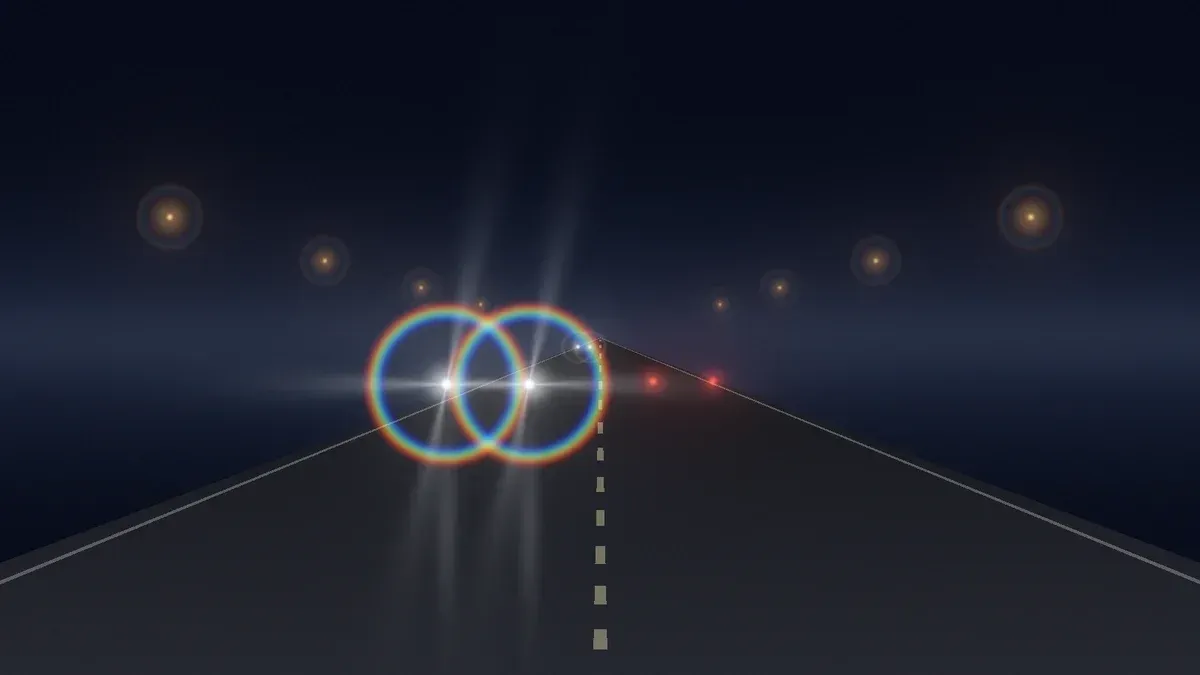
Halos and Glare When Driving at Night: What Causes Them
Halos and glare around headlights at night have many possible causes, according to the American Academy of Ophthalmology. Common causes include early cataract changes, astigmatism, dry eye, an outdated prescription and pupils that open wide in low light. Some people also notice them after LASIK. An optometrist can find which cause applies to you.
On Sunday, November 1, the clocks fall back, and many San Francisco commutes home will start happening in the dark. That is often when people notice it for the first time: streetlights wearing rings, oncoming headlights that bloom into starbursts, a drive down Lombard that feels harder than it did in August. If that sounds familiar, you're not imagining it, and it is worth understanding why.
Why do I see halos around lights at night?
In low light, your pupils open wider. The AAO lists very wide pupils in low light as one cause of halos, and a bright headlight against a dark street makes a halo easy to notice.
The American Academy of Ophthalmology puts it plainly: there are many causes of halos. In one answer to a reader who saw halos on some nights but not others, an AAO ophthalmologist listed:
- Early lens changes. Hardening of the lens inside the eye, an early cataract change that usually begins around age 50.
- Astigmatism. An unevenly shaped cornea or lens that blurs and distorts light.
- Dry eye. The AAO lists dry eye as a cause of halos, and blurred vision as one of its symptoms.
- Very wide pupils in low light.
- Under-correction. Some nearsightedness has returned, or your glasses or contacts no longer match your eyes.
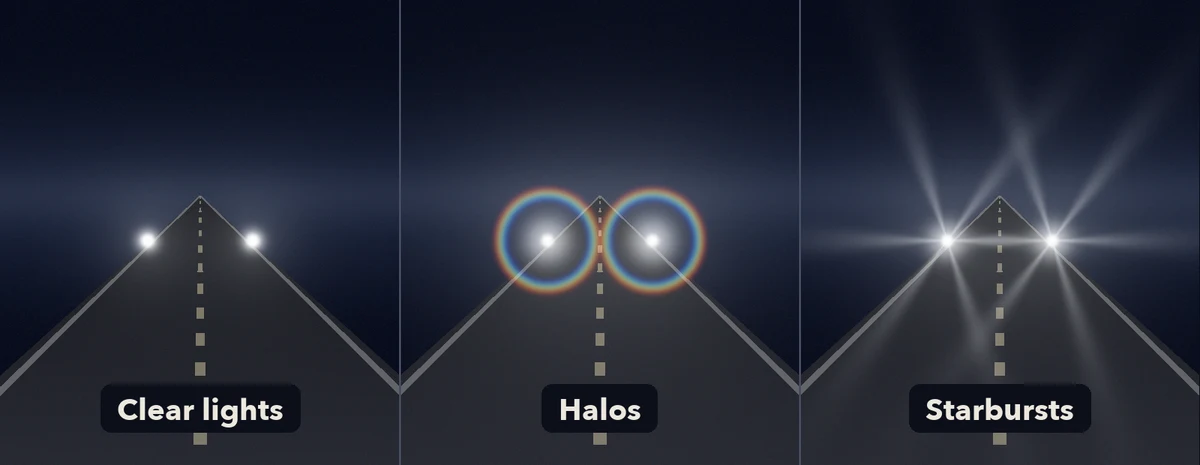
Because several of these can show up at once, and some change from day to day, halos can come and go.
Is it cataracts?
It can be, and it is one of the first things to rule out as you get older. The National Eye Institute lists these changes as cataracts grow: you can't see well at night, lamps and headlights seem too bright, you see a halo around lights, colors look faded, or you need to change your glasses or contact lens prescription often. The AAO describes the same pattern as being extra sensitive to light, especially oncoming headlights at night.
The NEI also notes that early cataracts may cause no symptoms at all, and it recommends a dilated eye exam every 1 to 2 years from age 60. Not every cataract needs surgery right away. The AAO says to consider surgery when cataracts keep you from doing things you want or need to do. Our post on cataract evaluation in San Francisco explains what that evaluation involves and how optometrists work with surgeons when surgery is the right call.
Can astigmatism or dry eye cause halos?
Yes, both are on the AAO's list of halo causes. With astigmatism, the AAO explains, the cornea or lens has a different shape than normal, so light does not focus evenly and vision can be blurry or distorted. If you suspect astigmatism, our guide to understanding astigmatism covers how it is measured and corrected.
Dry eye works differently. The AAO lists blurred vision among its symptoms, and names wind, smoke, dry climates, long screen sessions, long-term contact lens wear, LASIK and some medicines, including antihistamines for allergies and colds, among its causes. San Francisco has plenty of wind and plenty of screens, which is why we wrote about why the city makes dry eye worse. If long screen days leave your eyes dry, dry eye is worth asking about.
Do halos happen after LASIK?
They can. The U.S. Food and Drug Administration's LASIK risks page states that some patients develop glare, halos or double vision that can seriously affect nighttime vision, and that some do not see as well in low contrast, such as at night or in fog, even with good results on the vision chart. The AAO answer above also lists under-correction, meaning a return of some nearsightedness, as a cause of halos.
Eyes in Disguise provides LASIK co-management, meaning pre- and post-operative care in collaboration with LASIK surgeons. If you've had LASIK and your night vision has changed, bring it up at your next visit.
Do yellow night driving glasses help?
The evidence says no. The AAO summarized a small simulator study in which yellow-tinted lenses did not help drivers spot pedestrians at night any faster than clear lenses, and did not reduce problems with headlight glare. The researchers concluded the lenses do not live up to their product claims.
What can help is simpler. Keep your glasses clean, and make sure your prescription is current. If reflections on your lenses bother you, our post on reducing eyeglasses glare covers lens options. None of that replaces finding the cause, though. A lens coating can't fix a cataract.
When should I see an optometrist about night vision?
Book an eye exam if:
- Halos, glare or starbursts are new, or getting worse.
- Night driving has started to feel unsafe, or you've begun avoiding it.
- You notice the problem more in one eye than the other.
- Your glasses or contacts need frequent prescription changes.
- You've had LASIK or another refractive procedure and your night vision has changed.
A comprehensive eye exam is the place to sort out which of these causes applies to you. The AAO recommends a baseline eye disease screening at age 40 for adults with no symptoms or risk factors.
When it is an emergency: halos that come on suddenly with severe eye pain, headache, a red eye, blurry vision, nausea or vomiting can signal an acute angle-closure glaucoma attack. The AAO calls this a true eye emergency. Call your eye doctor right away or go to an emergency room. Our glaucoma testing guide explains how routine exams look for glaucoma risk before an attack ever happens.
Questions people ask about night driving halos
Why do I see halos around headlights at night?
In low light your pupils open wider, and very wide pupils are one cause of halos. Common causes include early cataract changes, astigmatism, dry eye and an outdated prescription. Some people notice halos after LASIK. An eye exam can find the cause.
Are halos around lights a sign of cataracts?
They can be. The National Eye Institute lists halos around lights, headlights that seem too bright and trouble seeing at night among the changes people notice as cataracts grow. Other conditions cause halos too, so an eye exam is the way to know.
Why is night driving harder as I get older?
One common reason is the lens inside the eye. The American Academy of Ophthalmology notes that early hardening of the lens, usually beginning around age 50, can cause halos, and cataracts can make you extra sensitive to oncoming headlights. Regular eye exams track these changes over time.
Do yellow-tinted night driving glasses work?
The evidence says no. A simulator study summarized by the American Academy of Ophthalmology found yellow-tinted lenses did not help drivers detect pedestrians at night or reduce headlight glare compared with clear lenses.
When are halos around lights an emergency?
Halos that appear suddenly with severe eye pain, headache, a red eye, blurry vision, nausea or vomiting can signal an acute angle-closure glaucoma attack. Call your eye doctor right away or go to an emergency room.
Darker evenings are coming, and clear night vision makes every drive home easier. If halos, glare or starbursts have crept into your commute, book a visit at Eyes in Disguise at 2133 Union Street in Cow Hollow, or call (415) 474-5321. You can meet our San Francisco optometrists, Dr. Michelle Blas and Dr. Nina Stroud, before you come in.
