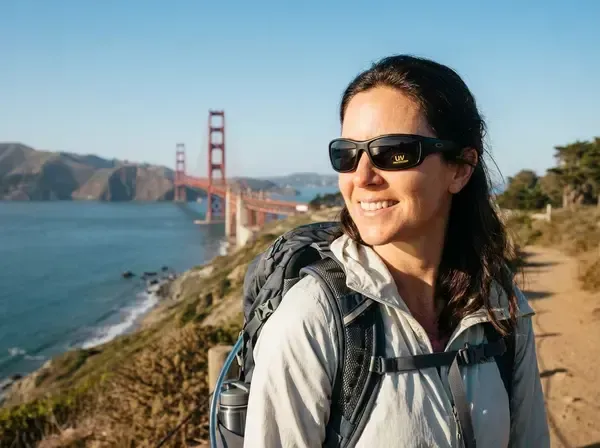
The Complete Guide to UV Protection & Prescription Sunglasses for San Francisco's Outdoor Lifestyle
Why Quality Sun Protection Is Non-Negotiable for Your Eye Health—and How to Choose the Perfect Prescription Sunglasses
When James, a 42-year-old software engineer from Russian Hill, came in for his annual exam last spring, he mentioned that his eyes felt tired and irritated after his Saturday morning runs along Crissy Field. He'd been wearing cheap drugstore sunglasses over his contact lenses, assuming any dark lens would protect his eyes. What he didn't realize: those $15 sunglasses offered zero UV protection and were actually making the problem worse.
James isn't alone. Despite San Francisco's famously foggy reputation, UV radiation here is surprisingly intense—especially during those sudden transitions from fog to brilliant sunshine that catch residents off guard. The reflective properties of the Bay's water, the concrete cityscape, and even our fog itself amplify UV exposure in ways most people never consider.
If you wear prescription glasses and spend any time outdoors—whether you're hiking the Presidio trails, cycling across the Golden Gate Bridge, sailing on the Bay, or simply walking your dog through Dolores Park—this guide will help you understand why proper UV protection matters, how to choose prescription sunglasses that actually work, and what options exist beyond the basics.
Why UV Protection Matters: The Science Your Eyes Need You to Understand

Ultraviolet radiation isn't just a concern for your skin. Your eyes are equally vulnerable to both short-term damage and cumulative long-term harm that can permanently affect your vision.
The Two Types of UV Radiation That Threaten Your Eyes
UVA rays (315-400nm wavelength)penetrate deeply into the eye, reaching the retina. Long-term UVA exposure contributes to:
Macular degeneration (the leading cause of vision loss in adults over 50)
Cataracts (clouding of the lens that requires surgical intervention)
Premature aging of the delicate skin around your eyes
UVB rays (280-315nm wavelength)primarily affect the front structures of your eye—the cornea and lens. Acute UVB exposure causes:
Photokeratitis ("sunburn of the eye"—intensely painful and temporarily blinding)
Pterygium (a growth on the white of the eye that can obstruct vision)
Pinguecula (yellowish bumps on the conjunctiva)
Accelerated cataract formation
San Francisco's Hidden UV Risks

Many Bay Area residents underestimate their UV exposure because of our moderate climate and frequent fog. However, several factors make San Francisco particularly challenging for eye protection:
1. Microclimate Transitions
You might leave your Marina apartment in fog and arrive in sunny Financial District within 20 minutes. These rapid environment changes mean your eyes don't have time to adapt, increasing strain and exposure.
2. Water Reflection
The Bay reflects up to 10-20% of UV rays back toward your eyes—essentially hitting you from multiple angles. This is why sailors, rowers, and waterfront runners experience higher UV exposure than their mileage alone would suggest.
3. Altitude Variations
UV exposure increases approximately 8-10% for every 1,000 feet of elevation gain. Twin Peaks (922 feet) and Mount Sutro (908 feet) may not seem high, but they deliver measurably more UV than sea-level neighborhoods.
4. The "Cloudy Day" Myth
Up to 80% of UV rays penetrate cloud cover. Our overcast days still require eye protection—the diffused light can actually increase glare without reducing UV exposure.Johns Hopkins Medicine
What "100% UV Protection" Actually Means (and Why It's the Bare Minimum)
When shopping for sunglasses, you'll encounter various UV protection claims. Here's how to decode them:
"UV400" or "100% UV Protection":Blocks all light rays with wavelengths up to 400 nanometers, covering both UVA and UVB. This is the minimum standard—not a premium feature.
"Blocks 99-100% UVA/UVB":Functionally identical to UV400. This is baseline protection, not a selling point.
"Polarized":Reduces glare from horizontal surfaces (water, pavement, car hoods) but doesn't automatically provide UV protection. You need both polarization AND UV blocking—they're separate technologies.
"Blue Light Blocking":Some premium sunglasses now filter high-energy visible (HEV) blue light (400-500nm) in addition to UV. While research is ongoing, blue light filtering may offer additional retinal protection during extended outdoor exposure.
The Lens Color Myth
Lens darkness has zero correlation with UV protection. A light amber lens can block 100% of UV if properly coated, while a very dark lens might block nothing. UV protection comes from invisible coatings or materials integrated into the lens—not the tint you see.
Prescription Sunglasses vs. Alternatives: Making the Right Choice
If you wear glasses, you have several options for sun protection. Each has distinct advantages and limitations.
1. Prescription Sunglasses (Dedicated Pair)
How they work:Completely separate glasses with your prescription built into sun-darkened lenses.
Advantages:
Optimal optical quality with no compromises
Customizable lens colors for specific activities
Can incorporate advanced coatings (anti-reflective backside coating, oleophobic, hydrophobic)
Polarization available in prescription
Most stylish option with access to designer frames
Disadvantages:
Requires carrying two pairs (clear and sun)
Higher upfront cost ($300-$800+ depending on prescription and frame)
Need updating when prescription changes
Best for:Anyone who spends significant time outdoors or drives frequently in daylight. The investment pays off in comfort, eye health, and visual performance.
2. Photochromic (Transition) Lenses
How they work:Lenses darken automatically in UV light, returning to clear indoors.
Advantages:
One pair does double duty
Convenient—no swapping glasses
Available in various tints and darkness levels
Moderate cost ($150-$250 additional to regular prescription)
Disadvantages:
Don't darken inside cars (windshields block UV that triggers the change)
Slower to transition in cold weather
May not get as dark as dedicated sunglasses
Limited fashion options (can't choose different frame styles for different looks)
Best for:People who need one simple solution and don't drive extensively or participate in high-glare activities like boating or skiing.
3. Clip-On Sunglasses
How they work:Tinted lenses that attach to the front of your existing prescription glasses.
Advantages:
Most economical ($30-$100)
Work with your current frames
Easy to flip up without removing glasses
No prescription update needed
Disadvantages:
Added weight and bulk on your nose
Can shift or fall off during activity
Optical quality varies widely by manufacturer
Limited style appeal
May create small gaps allowing UV light around edges
Best for:Occasional outdoor exposure, budget-conscious clients, or as a backup option to keep in your car or bag.Vaske Vision Care
4. Fit-Over Sunglasses
How they work:Sunglasses large enough to wear over your prescription glasses.
Advantages:
Full UV coverage including peripheral vision
No modification to existing glasses
Often polarized
Lower cost than prescription sunglasses
Disadvantages:
Bulky appearance
Can fog up
Limited style options
May not fit properly over larger frames
Best for:Post-surgical patients, extreme UV environments (high-altitude hiking, snow activities), or those with recent prescription changes awaiting new glasses.
How to Choose the Right Prescription Sunglasses for Your San Francisco Life
1. Start With Frame Fit and Coverage

Wraparound or curved frames provide superior protection by preventing UV rays from entering from the sides. Studies show that up to 40% of UV exposure comes from peripheral light—especially problematic when you're near water or in bright urban environments with reflective surfaces.
Proper coverage means:
Lenses extend to or slightly beyond your eyebrows
Frame temples are wide enough to block side light
Minimal gap between frame and face (especially at the bridge and temples)
2. Select Lens Color Based on Activity

Different tints optimize vision for specific conditions:
Gray/Smoke (neutral tint):
Reduces brightness without color distortion
Best for: driving, general use, bright sunny days
Maintains true color perception
Ideal for San Francisco's variable light
Brown/Amber:
Enhances contrast and depth perception
Best for: driving in fog/overcast conditions, hiking trails, golf
Filters blue light naturally
Particularly useful for SF's frequent hazy days
Green:
Reduces glare while maintaining color accuracy
Best for: baseball, tennis, cycling
Good in variable light conditions
Comfortable for all-day wear
Yellow/Orange:
Maximum contrast in low light
Best for: early morning/evening outdoor activities, shooting sports
Not suitable for bright sun (allows too much light)
Useful for dawn Bay Bridge runs or sunset walks
Polarized Gray or Brown:
Eliminates glare from horizontal surfaces
Essential for: water activities (sailing, kayaking, fishing), driving, beach time
Reduces eye fatigue significantly
Critical for anyone spending time on or near SF Bay
3. Consider Lens Materials
Polycarbonate:
Impact-resistant (ideal for sports and active lifestyles)
Built-in UV protection in the material itself
Lightweight
Slightly less optical clarity than high-index
High-Index Plastic (1.67, 1.74):
Thinner lenses for strong prescriptions
Requires UV coating (not inherent to material)
Better optics than polycarbonate
More fragile
Trivex:
Superior optical quality
Impact-resistant like polycarbonate
UV protection built-in
Slightly thicker than high-index but exceptional clarity
Glass (rare today):
Best optical quality
Scratch-resistant
Heavy and can shatter (safety concern)
Inherent UV protection
For most San Francisco residents balancing urban life with outdoor activities,polycarbonate with polarizationoffers the best combination of durability, protection, and visual comfort.
4. Add Performance Coatings
Backside Anti-Reflective (AR) Coating:
Essential for sunglasses. Without it, light bounces off the back surface of the lens into your eyes, creating distracting reflections and reducing the effectiveness of tint. Quality sunglasses always include backside AR.
Hydrophobic Coating:
Repels water, fog, and condensation—critical for San Francisco's humidity and fog. Makes lenses much easier to clean.
Oleophobic Coating:
Resists oils and fingerprints. Keeps lenses clearer throughout the day.
Mirror Coating:
Reflective outer coating that bounces additional light away before it reaches your eyes. Useful for extremely bright conditions (snow, water) but purely functional—not necessary for most Bay Area use.
The True Cost of UV Damage: Why Quality Sunglasses Are an Investment, Not an Expense
Short-Term Consequences
Inadequate eye protection leads to immediate discomfort:
Photokeratitis:Painful corneal sunburn requiring 24-48 hours to heal
Increased eye strain:Squinting causes tension headaches and facial muscle fatigue
Dry eye exacerbation:UV exposure increases tear evaporation
Temporary vision blur:Especially after prolonged bright light exposure
Long-Term Health Risks
The cumulative effects of UV exposure are far more serious:
Cataracts:UV exposure is a major modifiable risk factor. The World Health Organization estimates that up to 20% of cataract cases are caused or worsened by UV exposure.American Optometric Association
Macular Degeneration:UV and blue light contribute to oxidative damage in the retina, accelerating age-related macular degeneration (AMD)—the leading cause of irreversible vision loss in adults over 60.
Pterygium and Pinguecula:These growths on the eye's surface are directly linked to UV exposure. While usually benign, pterygium can grow across the cornea and require surgical removal.
Eyelid Skin Cancer:The thin, delicate skin around your eyes is highly susceptible to UV damage. Basal cell carcinoma and squamous cell carcinoma frequently develop on eyelids in people with chronic sun exposure.Skin Cancer Foundation
The math is simple:A quality pair of prescription sunglasses ($400-$700) offers decades of protection. Cataract surgery costs $3,000-$5,000 per eye (with insurance); AMD treatments run $2,000+ per injection multiple times per year. The return on investment is extraordinary.
San Francisco-Specific Scenarios: When Sunglasses Matter Most
Fog-to-Sun Commutes
If your commute involves the Sunset District to downtown, or Daly City to SoMa, you're experiencing 30-40°F temperature swings and dramatic light changes. Keep prescription sunglasses in your car or bag—putting them on as conditions change prevents squinting-induced headaches and UV exposure during those bright stretches.
Bay and Coastal Activities
Sailing, kayaking, paddleboarding, or simply walking the Embarcadero exposes you to reflected UV from water.Polarized prescription sunglasses are non-negotiablefor these activities—they protect your eyes and dramatically improve your ability to see through glare.
Urban Cycling
San Francisco's hills, traffic, and variable light make cycling challenging. Prescription sunglasses withbrown or amber tintshelp you see road conditions more clearly in mixed light, while polarization reduces glare from car windows and wet pavement.
Hiking and Trail Running
Whether you're on the Lands End Trail, climbing Mount Davidson, or exploring Glen Canyon, elevation and exposure increase UV levels. Wraparound frames withgray polarized lensesprovide maximum protection without distorting trail colors.
Driving
Polarized lenses dramatically reduce glare from hoods, windshields, and wet roads—but avoid them if you need to read digital dashboards or GPS screens (polarization can make these harder to see). For most drivers,gray or brown tinted prescription sunglasseswithout polarization offer the best balance.
What to Expect at Eyes in Disguise: Our Prescription Sunglasses Process
At our Cow Hollow practice, Dr. Michelle Blas and our optical team guide you through every step:
1. Comprehensive Eye Exam
We ensure your prescription is current and assess your eye health, checking for any UV-related damage and discussing your specific protection needs.
2. Lifestyle Consultation
We ask about your daily routine, outdoor activities, commute, hobbies, and visual challenges. This helps us recommend lens colors, coatings, and frame styles matched to your actual life.
3. Frame Selection
Our curated collection includes designer frames specifically suited to prescription sun lenses—proper coverage, durable construction, and styles that work with your face shape and personal aesthetic.
4. Lens Customization
We discuss tint options, polarization, coatings, and materials. You'll understand exactly what you're getting and why each element matters.
5. Precision Fitting
Proper fit ensures lenses sit at the correct distance from your eyes (vertex distance) and angle (pantoscopic tilt), maximizing optical performance and UV protection.
6. Ongoing Service
We provide complimentary adjustments, cleaning, and guidance on care. When your prescription changes, we can often replace just the lenses in frames you love.
Caring for Your Prescription Sunglasses Investment

Daily Maintenance:
Rinse under lukewarm water before wiping (removes abrasive dust)
Use microfiber cloths only—never paper towels or clothing
Apply lens cleaner to cloth, not directly to lenses
Avoid leaving in hot cars (extreme heat can damage coatings)
Storage:
Always use a hard case when not wearing
Store in cool, dry place away from direct sunlight
Keep away from harsh chemicals (hairspray, perfume, cleaning products)
When to Seek Service:
Loose or bent frames (can alter optical alignment)
Scratches that interfere with vision
Coating deterioration (peeling, hazing)
Prescription changes
Lifespan:
Quality prescription sunglasses with proper care last 3-5 years. Lenses may need replacing sooner if heavily scratched; frames can often be re-lensed as prescriptions change.
Myths We Hear Every Day (and the Truth)
Myth: "I only need sunglasses in summer."
Truth:UV radiation is present year-round. Winter sun reflected off fog and wet pavement can be just as damaging as summer beach exposure.
Myth: "Dark lenses protect better than light lenses."
Truth:UV protection comes from coatings and materials, not darkness. A dark lens without UV coating is actually worse—it dilates your pupils, allowing more harmful light to enter.
Myth: "My transition lenses are enough."
Truth:Photochromics don't darken inside cars and rarely get as dark as dedicated sunglasses. For high-glare situations (water, snow, driving), dedicated prescription sunglasses perform significantly better.
Myth: "Polarized lenses block UV."
Truth:Polarization reduces glare; UV protection is a separate treatment. You need both features.
Myth: "Kids need sun protection, but adults don't."
Truth:UV damage is cumulative over a lifetime. While protecting children's eyes is critical, adults continue accumulating damage with every unprotected exposure. It's never too late to start protecting your eyes.
Special Considerations for Progressive and Multifocal Wearers

If you wear progressive or bifocal lenses, prescription sunglasses present unique considerations:
Lens Height Requirements:
Progressives need adequate vertical height for the prescription corridor. Choose frames with taller lens heights (minimum 28mm for most progressives, 32mm+ for optimal comfort).
Fitting Precision:
Progressive prescription sunglasses require more precise measurements than single-vision lenses. At Eyes in Disguise, we use digital measuring tools to capture your exact pupil position, fitting height, and pantoscopic tilt.
Dedicated vs. Photochromic:
Many progressive wearers find dedicated prescription sunglasses more comfortable than photochromic progressives, especially for driving and outdoor activities. The consistent darker tint reduces the visual adjustment period.
Cost Considerations:
Progressive prescription sunglasses cost more than single-vision ($500-$900+ including premium frames), but the visual comfort and protection justify the investment for anyone who spends regular time outdoors.
When to Schedule Your Eyes in Disguise Appointment
You should book a comprehensive exam and sunglasses consultation if:
You're experiencing eye strain, fatigue, or headaches after outdoor activities
Your current sunglasses are more than 3 years old
You've never had prescription sunglasses and spend regular time outdoors
You're planning a trip with significant sun exposure (travel, vacation, outdoor events)
You notice any changes in your vision or eye comfort
You want to explore polarization, specific tint options, or performance coatings
Your prescription has changed and your sun lenses need updating
What to bring to your appointment:
Current prescription glasses (for reference and measurements)
Your most recent eyeglass prescription if available
List of outdoor activities and visual challenges you experience
Questions about lens options, coatings, or frame styles
The Bottom Line: Your Eyes Deserve Better Than Drugstore Sunglasses
UV damage is cumulative, irreversible, and entirely preventable. Every day you spend outdoors without proper eye protection adds to your lifetime exposure—increasing your risk of cataracts, macular degeneration, and other serious conditions that affect quality of life as you age.
San Francisco's unique climate and outdoor culture make high-quality prescription sunglasses not a luxury, but a necessity. Whether you're a weekend warrior hitting the trails, a daily commuter navigating fog and sun, or someone who simply enjoys walking through your neighborhood, your eyes need—and deserve—real protection.
The investment in quality prescription sunglasses pays dividends in comfort, visual performance, and long-term eye health. And with proper care, a single pair can protect your vision for years.
Ready to protect your vision with prescription sunglasses designed for your San Francisco lifestyle?
Schedule your comprehensive eye exam and sunglasses consultation with Dr. Michelle Blas at Eyes in Disguise. Call(415) 474-5321or visiteyesindisguise.comto book your appointment today.
About the Author
Dr. Michelle Blas, OD, has dedicated her 30-year optometry career to providing exceptional vision care at Eyes in Disguise in San Francisco's Cow Hollow neighborhood. Board-certified with extensive training in pediatric optometry and myopia control, Dr. Blas serves families throughout San Francisco including Pacific Heights, the Marina District, Russian Hill, and the Presidio. She combines evidence-based medical care with personalized service, helping clients navigate eye health challenges with confidence and clarity.
FAQ SECTION
1. Do I really need prescription sunglasses if I wear contact lenses?
Yes, absolutely. Contact lenses provide zero UV protection (even "UV-blocking" contacts only protect the area they cover—not your entire eye or the surrounding tissue). You need non-prescription sunglasses with 100% UV protection over your contacts. Many of our contact lens wearers maintain both prescription sunglasses (for days they wear glasses) and non-prescription sunglasses (for contact lens days), ensuring protection regardless of which correction method they're using.
2. How dark should my prescription sunglasses be?
For general outdoor use in San Francisco, lenses that block 75-85% of visible light work well. This translates to a "Category 3" darkness rating (visible light transmission of 8-18%). Category 4 lenses (blocking 92-97% of light) are only necessary for extreme conditions like high-altitude mountaineering or snow sports—they're actually too dark for driving and general use. We help you select the right darkness based on your specific activities and light sensitivity.
3. Can I get prescription sunglasses if I have a strong prescription or astigmatism?
Absolutely. Modern lens technology accommodates virtually any prescription. High-index materials keep lenses thin even with strong prescriptions, and computer-optimized surfacing ensures accurate astigmatism correction in curved sunglass frames. We've successfully fit prescription sunglasses for clients with -10.00 myopia, +6.00 hyperopia, and significant astigmatism. Your prescription strength shouldn't prevent you from getting proper sun protection.
4. Are polarized lenses worth the extra cost?
For most San Francisco residents, yes—especially if you drive, spend time near water, or engage in outdoor activities. Polarized lenses eliminate glare from horizontal surfaces (Bay water, wet pavement, car hoods), reducing eye strain and improving visual comfort dramatically. The cost premium ($100-$200 additional) is worthwhile for anyone who experiences glare-related headaches or squinting. However, they're not necessary for everyone—we discuss your specific needs during your consultation.
5. How often should I replace my prescription sunglasses?
Replace your prescription sunglasses when: 1) Your prescription changes significantly (typically every 2-3 years for adults), 2) Lenses become scratched enough to interfere with vision, 3) Frame damage affects fit or optical alignment, or 4) Coatings deteriorate (peeling, hazing). With proper care, quality frames can last indefinitely—we can often just replace lenses when prescriptions change, making your initial frame investment go further.
6. Will my insurance cover prescription sunglasses?
Many vision insurance plans treat prescription sunglasses the same as regular prescription glasses—one pair covered per benefit period. Some plans offer a "second pair" discount. We accept most major vision insurance plans and help you maximize your benefits. Even without insurance coverage, the long-term eye health benefits and prevention of UV-related damage make prescription sunglasses a worthwhile out-of-pocket investment.
7. Can I get prescription sunglasses in trendy or designer frames?
Yes! Our Cow Hollow practice carries curated designer collections with frames specifically designed to accommodate prescription sun lenses—proper coverage, durable construction, and styles that look intentionally like sunglasses (not just tinted eyeglasses). We work with independent designers and heritage brands to offer frames you won't find at chain retailers, ensuring your prescription sunglasses make a style statement while protecting your vision.
8. What's the difference between prescription sunglasses and just putting a dark tint on my regular glasses?
Prescription sunglasses are purpose-built for outdoor use with: 1) Larger frames for better coverage and peripheral UV protection, 2) Specific tints optimized for outdoor conditions (grays, browns, greens), 3) Backside anti-reflective coatings that eliminate internal reflections, 4) Often wraparound or curved designs that regular frames don't support, and 5) Polarization options. Simply tinting your regular glasses doesn't provide adequate coverage, proper coatings, or the optical performance that dedicated prescription sunglasses deliver.
