Presbyopia and Aging Eyes: Vision Solutions for San Francisco's Active Over-40 Population
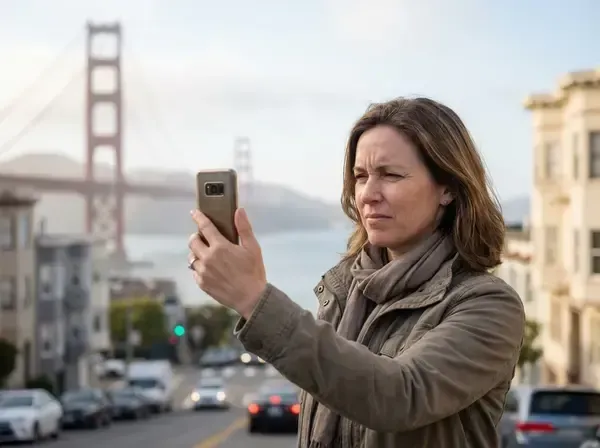
You're hiking the Presidio trails, smartphone in hand to capture the Golden Gate Bridge view, when you realize the screen looks blurry. Or perhaps you're at a Marina District restaurant, holding the menu at arm's length—and still struggling to read it. Maybe you've noticed that your evening computer work requires more light than it used to, or those tiny price tags at Cow Hollow boutiques have become frustratingly difficult to decipher.
Welcome to presbyopia, the universal vision change that affects virtually everyone after age 40. If you're experiencing these challenges, you're in good company—and in San Francisco, you're surrounded by solutions that allow you to maintain your active lifestyle without compromise.
At Eyes in Disguise in San Francisco's Cow Hollow neighborhood, Dr. Michelle Blas helps patients navigate the vision changes that come with aging, providing personalized solutions that match the dynamic lifestyles of Bay Area residents. Whether you're a tech executive, an avid cyclist, a foodie exploring the city's culinary scene, or a parent keeping up with active teenagers, presbyopia doesn't have to slow you down.
Let's explore what's happening to your eyes after 40, why it occurs, and the full spectrum of modern solutions available to keep you seeing clearly at every distance.
Understanding Presbyopia: The Universal Age-Related Vision Change

Presbyopia is the gradual loss of your eyes' ability to focus on nearby objects. Unlike other vision conditions that might affect you, presbyopia is completely normal—it's not a disease, defect, or sign of poor eye health. It's simply a natural part of aging that happens to everyone.
The Science Behind the Changes
Inside your eye sits a clear, flexible lens that changes shape to focus light onto your retina. When you look at something close—a book, your phone, a price tag—tiny muscles (ciliary muscles) contract, causing the lens to become more rounded and increase its focusing power. This process is called accommodation.
Throughout childhood and young adulthood, your lens is soft and elastic, easily shifting shape to provide sharp focus at any distance. But starting in your mid-30s, the lens gradually becomes less flexible. According to research from the American Optometric Association, "Your eyes and vision change over time and many adults over 40 may start to have problems seeing clearly at close distances."
By your early 40s, this loss of flexibility becomes noticeable. The lens simply can't curve enough to focus on nearby objects, and close-up work becomes progressively more difficult. The American Academy of Ophthalmology confirms that "nearly everyone gets this increasing farsightedness in their late-30s to mid-40s."
Why "Presbyopia" and Not "Getting Old"?
The term comes from Greek: "presby" (old) + "opia" (eye). While the name might suggest it's just about aging, presbyopia is actually a precise medical term describing a specific focusing problem unrelated to nearsightedness, farsightedness, or astigmatism you may already have.
Importantly, presbyopia progresses gradually. Most people first notice symptoms between ages 40-45, with the condition stabilizing around age 65. The progression means you may need updated prescriptions every few years during this period.
The Classic Signs: How to Recognize Presbyopia

San Francisco residents often first notice presbyopia in very specific situations:
The Telltale Symptoms
The "Arm's Length" Phenomenon You find yourself holding your smartphone, restaurant menus, or books progressively farther away to see them clearly. This automatic adjustment temporarily compensates for your eyes' reduced focusing ability—but eventually, your arms aren't long enough.
Difficulty in Dim Lighting Reading in restaurants, theaters, or during San Francisco's famously foggy evenings becomes particularly challenging. Your eyes need more light to compensate for reduced focusing ability.
Screen Strain After Close Work Whether you're working in tech, reviewing documents, or pursuing detailed hobbies, extended near-vision tasks cause more fatigue, eyestrain, and headaches than they used to.
The "Small Print" Struggle Those pharmacy labels, ingredient lists, and instruction manuals with tiny text? Suddenly impossibly frustrating. You might find yourself squinting or needing better lighting—neither of which actually solves the underlying problem.
Inconsistent Vision Throughout the Day Many people notice their near vision is better in bright morning light and worsens as the day progresses and they become fatigued.
According to Mayo Clinic research, common signs include "a tendency to hold reading material farther away to make the letters clearer, blurred vision at normal reading distance, and eyestrain or headaches after reading or doing close-up work."
Beyond Presbyopia: Other Vision Changes After 40
While presbyopia is the most universal change, other age-related vision shifts commonly occur:
Reduced Night Vision
Many people notice diminished ability to see in low light or increased sensitivity to glare from oncoming headlights. This affects San Francisco driving, particularly on foggy nights or when navigating the city's many tunnels and bridges.
The pupils naturally become smaller with age and don't dilate as effectively in darkness, allowing less light to reach the retina. Additionally, the eye's lens may begin developing early cataracts that scatter light.
Dry Eye Syndrome
Tear production naturally decreases with age, and tear composition changes. San Francisco's microclimates—from the windy Marina to the dry Mission—can exacerbate symptoms.
Women experiencing hormonal changes during perimenopause and menopause are particularly susceptible. Dry eye causes burning, grittiness, intermittent blurred vision, and paradoxically, sometimes excessive tearing as eyes try to compensate for insufficient natural lubrication.
Decreased Contrast Sensitivity
The ability to distinguish between similar shades or subtle gradations diminishes. This affects tasks like reading low-contrast text, navigating stairs with poor lighting, or driving in fog—all relevant to San Francisco life.
Color Perception Changes
The eye's lens gradually yellows with age, affecting color perception—particularly blues and purples. While usually subtle, this can impact professions requiring precise color discrimination, from graphic design to interior decorating.
Increased Risk of Eye Diseases
Age 40 marks increased risk for serious eye conditions including:
Glaucoma: Progressive optic nerve damage, often without symptoms
Cataracts: Clouding of the lens affecting vision quality
Macular Degeneration: Damage to the central retina affecting fine detail vision
Diabetic Retinopathy: Diabetes-related damage to retinal blood vessels
These conditions underscore why comprehensive eye exams become critical after 40, even if you only notice minor vision changes.
7 Modern Solutions for Presbyopia: Finding Your Perfect Fit

The good news? More presbyopia correction options exist today than ever before. Dr. Blas at Eyes in Disguise helps patients select solutions matching their specific lifestyles, visual demands, and personal preferences.
1. Progressive Lenses: The Versatile Gold Standard

Progressive lenses (often called "no-line bifocals") provide seamless vision at all distances through a single lens with gradually changing power.
How They Work:The upper portion corrects distance vision (driving, watching presentations). The middle section addresses intermediate vision (computer screens, dashboard). The lower portion provides near vision (reading, smartphone use). The transitions between zones are gradual and invisible—no visible lines.
Ideal For:
Professionals spending time at computers and in meetings
People who want one pair of glasses for all activities
Those prioritizing aesthetics (no visible bifocal lines)
San Francisco residents who drive frequently and need clear distance vision
Considerations:Modern progressive lenses have significantly improved from earlier versions. Premium progressives feature wider reading areas, reduced peripheral distortion, and easier adaptation. However, they do require a brief adjustment period (typically a few days to two weeks) as your brain learns to use different parts of the lens automatically.
At Eyes in Disguise, Dr. Blas precisely measures your visual needs and selects progressive lens designs optimized for your primary activities. Frame selection also matters—progressive lenses require adequate vertical lens height to accommodate all vision zones.
San Francisco Lifestyle Advantage:Perfect for the Bay Area professional who transitions from driving to office work to after-work social activities without wanting to switch glasses.
2. Computer Glasses: Digital Age Essentials
Specialized computer glasses optimize vision for the intermediate distance of computer screens (20-26 inches) while also providing clear near vision for documents and keyboards.
How They're Different:Unlike progressives designed primarily for distance and near, computer glasses prioritize the intermediate and near zones—exactly where you spend most of your workday. They typically have larger intermediate zones than standard progressives, reducing neck strain and eye fatigue.
Ideal For:
Tech professionals and remote workers
Anyone spending 4+ hours daily on screens
People experiencing digital eye strain with regular progressives
Those who primarily work indoors
Considerations:Computer glasses aren't designed for driving or distance activities. Many patients maintain both computer glasses for work and progressives for general use.
San Francisco Lifestyle Advantage:Essential for the Bay Area's tech-heavy workforce. Combined with blue light filtering and anti-reflective coatings, they address the visual demands of San Francisco's screen-intensive careers.
3. Reading Glasses: Simple and Effective
Over-the-counter or prescription reading glasses correct only near vision. They're the simplest, most affordable presbyopia solution.
Types Available:
Drugstore readers: Available in standard powers, work for people with no other vision correction needs
Prescription readers: Custom-made for your exact near vision needs, including astigmatism correction
Custom readers: Prescription lenses in designer frames from Eyes in Disguise's curated collection
Ideal For:
People with excellent distance vision who only need help reading
Occasional readers who don't want full-time glasses
Those wanting multiple pairs in different locations (bedside, office, car, kitchen)
Budget-conscious individuals
Considerations:You'll need to remove them to see clearly at distance. They're impractical for activities requiring frequent distance-to-near focus changes.
San Francisco Lifestyle Advantage:Perfect for active individuals who don't want to wear glasses full-time but need vision help for reading menus at Ferry Building restaurants or checking trail maps in Golden Gate Park.
4. Bifocal and Trifocal Lenses: Traditional Multi-Focus
Bifocals provide two distinct vision zones (distance and near) separated by a visible line. Trifocals add a third intermediate zone, also with visible lines.
How They Work:The upper portion corrects distance vision; the lower segment (and middle segment in trifocals) corrects near (and intermediate) vision. Lines are visible but provide immediate, clear focus at each distance without the peripheral blur some experience with progressives.
Ideal For:
People who tried progressives but found the adaptation difficult
Those who primarily need two distinct focal points
Individuals wanting clear, defined vision zones
Budget considerations (typically less expensive than premium progressives)
Considerations:The visible lines create an age-associated appearance some people prefer to avoid. The sudden shift between zones can take adjustment, and there's a "jump" effect when transitioning between sections.
San Francisco Lifestyle Advantage:Reliable option for active adults who want clear vision without the adaptation period progressives require—particularly good for golfers, hikers, and outdoor enthusiasts who need quick distance-to-near transitions.
5. Multifocal Contact Lenses: Frameless Freedom
Multifocal contacts correct presbyopia while maintaining the freedom and natural appearance of contact lenses.
How They Work:Similar to progressive lenses, multifocal contacts have different zones for various distances. Designs include:
Simultaneous vision: Both near and distance corrections present simultaneously; your brain learns to select the appropriate image
Alternating vision: Similar to bifocals; the lens physically moves as you shift gaze
According to recent contact lens research, "multifocal contact lenses restore near, intermediate, and distance vision for presbyopia correction" (December 2025).
Ideal For:
Active San Francisco residents who hike, cycle, or play sports
People who dislike glasses' appearance
Those wanting peripheral vision without frames
Individuals needing compatibility with non-prescription sunglasses
Considerations:Fitting multifocal contacts requires expertise—Dr. Blas's 30 years of experience ensures optimal results. Initial adaptation takes longer than single-vision contacts. Some people experience slight visual compromise compared to glasses, particularly in low light.
Not everyone achieves perfect vision with multifocals. Success rates are high but not universal. Eyes in Disguise offers trial lenses so you can evaluate performance before committing.
San Francisco Lifestyle Advantage:Ideal for the active Bay Area lifestyle—from morning yoga to afternoon cycling to evening social events—without worrying about glasses slipping, fogging, or breaking.
6. Monovision: The Contact Lens Alternative
Monovision corrects one eye for distance and the other for near vision. Your brain adapts to use the appropriate eye for each task.
How It Works:Typically, your dominant eye is corrected for distance (driving, watching presentations) while your non-dominant eye is corrected for near vision (reading, smartphone). The brain learns to automatically favor the eye with clearer vision for each task.
Ideal For:
Contact lens wearers who find multifocals challenging
People with prior successful monovision experience
Those prioritizing simplicity over perfect binocular vision
Individuals willing to accept minor depth perception compromises
Considerations:Monovision slightly reduces depth perception and binocular vision quality, which can affect activities requiring precise depth judgment (like parking or catching objects). Some people find the vision compromise unacceptable; others adapt completely within weeks.
A trial period is essential. Eyes in Disguise provides monovision trial lenses so you can evaluate whether this approach suits your visual needs and lifestyle before committing.
San Francisco Lifestyle Advantage:Works well for urban dwellers who primarily need good vision for either distance (walking/driving) or near (phone/reading) at any given moment, rather than simultaneous clear vision at all distances.
7. Combination Approach: The Best of All Worlds
Many San Francisco professionals maintain multiple presbyopia solutions for different situations:
Common Combinations:
Multifocal contacts + reading glasses: Wear contacts for activities, keep readers for extended reading sessions
Progressive glasses + single-vision sunglasses with readers: Progressives for daily wear, prescription sunglasses for outdoor activities
Computer glasses + progressives: Specialized computer glasses for work, progressives for evenings and weekends
Contact lenses + progressives: Contacts for active days, glasses for relaxed evenings
Ideal For:
People with varied lifestyle demands
Those who value optimal vision in every situation
Individuals willing to invest in comprehensive vision solutions
Professionals with different needs for work versus leisure
San Francisco Lifestyle Advantage:Perfect for the diverse demands of Bay Area living—tech work requiring computer optimization, outdoor activities needing contact freedom, and evening social events where you want style flexibility.
Emerging Presbyopia Treatments: The Future is Here
Beyond traditional glasses and contacts, innovative treatments continue emerging:
Presbyopia Eye Drops
The FDA has approved several presbyopia eye drops that temporarily improve near vision:
Vuity (Pilocarpine 1.25%)Approved in 2021, works by temporarily constricting the pupil to increase depth of focus. Effects last approximately 6 hours.According to recent research, "presbyopia can be corrected using optical aids such as spectacles or contact lenses or by surgical treatment" (2024).
Vizz (Aceclidine 1.44%) Approved by FDA in July 2025, Vizz "received FDA approval for the pharmacological therapy of presbyopia" backed by three phase 3 studies showing efficacy.
How They Work:These drops cause pupil constriction (miosis), creating a pinhole effect that increases depth of focus. They're applied once daily, typically in the morning.
Ideal For:
People wanting occasional near vision improvement without wearing glasses
Those with mild presbyopia in early stages
Individuals seeking temporary solutions for specific activities
Considerations:Effects are temporary (4-6 hours). Side effects can include dim vision in low light, headaches, and red eyes. Cost is ongoing ($80-100/month). Not covered by most insurance. Not everyone achieves satisfactory vision improvement.
At Eyes in Disguise, Dr. Blas can discuss whether presbyopia drops might complement your overall vision correction strategy.
Corneal Inlays and Other Surgical Options
For patients interested in reducing dependence on reading glasses, surgical options exist:
Corneal Inlays Small devices implanted in the cornea to improve near vision, typically in the non-dominant eye (similar to monovision).
LASIK with Monovision Laser vision correction that creates intentional monovision—one eye for distance, one for near.
Lens Replacement Surgery Replacing the eye's natural lens with a multifocal artificial lens, similar to cataract surgery.
Considerations:Surgical options involve risks, costs, and permanent changes to your eyes. Dr. Blas provides LASIK co-management at Eyes in Disguise, working with skilled surgical partners to guide appropriate candidates through the process.
Most people aren't ideal candidates for presbyopia surgery. Comprehensive evaluation is essential to determine suitability.
Choosing Your Solution: Factors to Consider
Selecting the right presbyopia correction involves evaluating multiple factors:
Lifestyle and Visual Demands
Primary Activities:
Office workers might prioritize computer glasses
Outdoor enthusiasts often prefer multifocal contacts
Readers may find simple reading glasses sufficient
Professionals needing all-distance clarity often choose progressives
Occupation Considerations:San Francisco's tech industry creates specific demands—extended screen time, video conferences requiring clear vision, and varied indoor/outdoor transitions. Dr. Blas tailors recommendations to these unique professional demands.
Aesthetic Preferences
Do you view glasses as fashion accessories (embracing designer frames) or prefer the invisible correction of contacts? Eyes in Disguise's curated eyewear collection transforms prescription lenses into style statements for those who enjoy frames.
Budget and Value
Cost Comparison:
Reading glasses: $20-300 (drugstore to prescription designer)
Progressive lenses: $300-800 (frame + lenses with coatings)
Multifocal contacts: $400-1,000/year
Computer glasses: $250-600
Presbyopia drops: $80-100/month
Consider both upfront and ongoing costs. Quality eyewear is an investment in daily quality of life and productivity.
Adaptation Willingness
Different solutions require varying adaptation periods:
Reading glasses: Instant
Bifocals/trifocals: Few days to two weeks
Progressive lenses: One to three weeks
Multifocal contacts: Two to four weeks
Monovision: Four to six weeks (if successful at all)
Your patience with adaptation periods influences which solutions work best for you.
Eye Health Considerations
Certain eye conditions affect presbyopia correction options:
Dry eyes may limit contact lens tolerance
Significant astigmatism requires toric designs
Corneal irregularities might preclude certain contact types
Other eye diseases could limit surgical options
Dr. Blas's comprehensive examination identifies any limitations before recommending solutions.
The Eyes in Disguise Advantage: Personalized Presbyopia Care
Choosing presbyopia solutions isn't one-size-fits-all. At Eyes in Disguise in Cow Hollow, Dr. Michelle Blas provides:
Comprehensive Over-40 Eye Exams
Going beyond simple vision testing, Dr. Blas evaluates:
Complete refractive assessment for all distances
Eye health screening for age-related conditions
Dry eye evaluation
Lifestyle needs assessment
Visual demands analysis
Discussion of aesthetic preferences
Trial and Adjustment Support
Making the right choice often requires trying options:
Progressive lens demonstrations and measurements
Contact lens trials with different multifocal designs
Monovision trials to assess adaptation potential
Follow-up adjustments until you're completely satisfied
Expert Frame Selection
Eyes in Disguise's curated collection includes designer and independent eyewear brands perfect for progressive lenses. Professional opticians ensure:
Frames compatible with your lens design
Proper fitting for optimal optical performance
Style matching your personal aesthetic
Comfort for all-day wear
Ongoing Care and Updates
Presbyopia progresses until approximately age 65. Dr. Blas provides:
Regular prescription monitoring and updates
Adaptation to changing visual needs
Solutions adjustments as demands evolve
Comprehensive eye health monitoring
San Francisco-Specific Considerations
Living in San Francisco creates unique vision demands:
Microclimate Challenges
The city's famous microclimates affect vision comfort:
Marina District wind: Can dry contact lenses quickly; rewetting drops essential
Mission District heat: Causes frame materials to expand; proper fitting prevents slippage
Fog and overcast conditions: Require excellent low-light vision; anti-reflective coatings crucial
Intense Bay Area sun: UV protection essential year-round
Active Urban Lifestyle
San Francisco's walkability and outdoor culture favor:
Contact lenses for hiking, cycling, and outdoor activities
Progressive lenses for seamless city navigation
Multiple glasses options for varied activities
Durable, lightweight frames that withstand active use
Tech Industry Demands
Silicon Valley's influence creates:
Extended screen time requiring computer glasses
Video conference needs demanding clear vision and good appearance
Multiple device usage (phone, tablet, computer) requiring versatile solutions
Fast-paced work environment where vision problems impact productivity
Cultural and Social Expectations
San Francisco's fashion-forward culture means:
Designer eyewear as personal expression
Quality expectations for all vision solutions
Preference for cutting-edge options
Value placed on both function and aesthetics
Living Well with Presbyopia: Lifestyle Tips
Beyond correction options, smart habits optimize vision after 40:
Optimize Your Lighting
Good lighting reduces eye strain and improves vision quality:
Use task lighting for reading and close work
Position computer monitors perpendicular to windows
Increase overall ambient lighting in work areas
Consider warm LED bulbs that reduce glare
Practice the 20-20-20 Rule
During extended near work, every 20 minutes look at something 20 feet away for 20 seconds. This reduces focusing fatigue and digital eye strain—critical for San Francisco's screen-heavy workforce.
Maintain Eye Health Through Nutrition
Omega-3 fatty acids, lutein, zeaxanthin, and vitamins C and E support long-term eye health. San Francisco's access to fresh produce and quality supplements makes nutrition-based eye care convenient.
Stay Active
Regular exercise improves blood flow to the eyes and helps manage conditions like diabetes and hypertension that affect vision. San Francisco's urban trails and outdoor spaces make staying active accessible.
Manage Dry Eyes Proactively
Use preservative-free artificial tears regularly, especially in San Francisco's windy or dry neighborhoods. Stay hydrated. Consider a humidifier in your home or office.
Protect Against UV Damage
UV exposure accelerates cataract development and contributes to macular degeneration. Wear UV-blocking sunglasses year-round—even foggy San Francisco days expose eyes to harmful UV rays.
When to See Dr. Blas: Beyond Routine Presbyopia
While presbyopia is normal, certain symptoms require immediate professional attention:
Warning Signs:
Sudden vision changes or loss
Persistent eye pain
Flashes of light or new floaters
Vision distortion or waviness
Significant glare sensitivity increase
Double vision
Colored halos around lights
These symptoms might indicate more serious conditions requiring prompt evaluation beyond routine presbyopia care.
Regular Monitoring:Even without concerning symptoms, adults over 40 should have comprehensive eye exams annually. Early detection of glaucoma, macular degeneration, and cataracts significantly improves treatment outcomes.
The Bottom Line: Presbyopia Doesn't Mean Compromise
Reaching your 40s doesn't mean accepting blurry vision or lifestyle limitations. Modern presbyopia solutions allow San Francisco's active adults to maintain—and often enhance—their visual capabilities for all of life's demands.
Whether you're closing business deals in Financial District boardrooms, hiking Lands End trails, reading menus at Mission District taquerias, or video conferencing with global clients, the right vision correction keeps you functioning at your best.
At Eyes in Disguise in Cow Hollow, Dr. Michelle Blas combines 30 years of optometry expertise with genuine understanding of San Francisco lifestyles. She doesn't simply prescribe vision correction—she partners with you to find solutions that enhance how you experience the world, maintain your independence, and support your active life.
Presbyopia is universal. Accepting compromised vision is optional.

Ready to explore your presbyopia solutions? Schedule a comprehensive eye exam with Dr. Michelle Blas at Eyes in Disguise. Discover how modern vision correction can keep you seeing clearly and living fully—at every age and every distance.
About the Author
Dr. Michelle Blas, OD, has dedicated her 30-year optometry career to providing exceptional vision care at Eyes in Disguise in San Francisco's Cow Hollow neighborhood. Board-certified with extensive training in pediatric optometry and myopia control, Dr. Blas serves families throughout San Francisco including Pacific Heights, the Marina District, Russian Hill, and the Presidio. She combines evidence-based medical care with personalized service, helping clients navigate eye health challenges with confidence and clarity.
FREQUENTLY ASKED QUESTIONS
Q: At what age does presbyopia typically start, and will it keep getting worse forever?
Presbyopia typically becomes noticeable between ages 40-45, though some people notice symptoms slightly earlier or later. The condition progressively worsens until approximately age 65, when the lens has lost most of its remaining flexibility and the progression stabilizes. During the 20-25 years of active progression, you'll likely need updated prescriptions every 1-3 years. After 65, your presbyopia prescription generally remains stable.
Q: Can I prevent or reverse presbyopia naturally?
Unfortunately, no. Presbyopia results from physical changes in your eye's lens that occur with aging—the lens becomes less flexible and the ciliary muscles weaken. No exercises, supplements, or lifestyle changes can prevent or reverse these structural changes. While excellent nutrition supports overall eye health and may reduce risk of diseases like macular degeneration, it doesn't affect presbyopia development. The good news: highly effective correction options exist that completely compensate for these changes.
Q: I already wear glasses for nearsightedness. Does presbyopia mean I need different glasses?
Most likely, yes—but the solution is elegant. If you're nearsighted and develop presbyopia, you'll benefit from multifocal lenses (progressive, bifocal, or trifocal) that correct both distance vision and presbyopia simultaneously in one pair of glasses. Many nearsighted people actually enjoy one silver lining: removing glasses to read may work reasonably well in early presbyopia stages, though this becomes less effective as presbyopia progresses. At Eyes in Disguise, Dr. Blas determines the ideal multifocal solution for your specific prescription combination.
Q: Are progressive lenses difficult to get used to? My friend said they made her dizzy.
Modern progressive lenses have improved dramatically from earlier generations. Most people adapt within a few days to two weeks with no issues. Success depends on several factors: proper prescription accuracy, precise measurements, frame selection compatible with progressives, and realistic expectations about the adaptation period. Some people do experience initial dizziness or peripheral blur, but this almost always resolves with adaptation. If problems persist, lens design adjustments typically solve issues. At Eyes in Disguise, Dr. Blas's expertise in progressive lens fitting minimizes adaptation challenges.
Q: Can I wear contact lenses if I have presbyopia, or am I limited to glasses?
Absolutely! Multifocal contact lenses and monovision are excellent options for presbyopia. Modern multifocal contact technology has advanced significantly, with many people achieving excellent vision at all distances. Success rates are high, though not everyone adapts equally well to multifocal contacts. Trial lenses allow you to evaluate whether contacts work for your visual needs before committing. Many San Francisco residents love the freedom contacts provide for active lifestyles—hiking, cycling, and sports without worrying about glasses.
Q: What's the difference between drugstore reading glasses and prescription reading glasses?
Drugstore readers use the same power in both lenses and don't correct astigmatism or differences between your eyes. They work fine if you have no other vision issues and your eyes are identical. Prescription readers are custom-made for your exact needs, correcting astigmatism, power differences between eyes, and can be made in your ideal reading distance. They also come in your choice of frames from Eyes in Disguise's designer collection. If you have any existing vision correction needs beyond presbyopia, prescription readers provide significantly better vision and comfort.
Q: I spend 10+ hours daily on screens for my tech job. What's the best presbyopia solution for heavy computer users?
Computer glasses (also called office lenses or intermediate progressives) are specifically designed for your situation. They prioritize the intermediate distance of computer screens while still providing clear near vision for documents and keyboards—with wider viewing zones than standard progressives. Many San Francisco tech professionals maintain both computer glasses for work and standard progressives for general use. Combined with blue light filtering, anti-reflective coatings, and proper ergonomics, computer glasses dramatically reduce digital eye strain while providing optimal vision for screen-intensive work.
Q: How much do presbyopia solutions typically cost, and does insurance cover them?
Costs vary widely based on solution complexity: reading glasses run $20-300, progressive lenses $300-800, multifocal contacts $400-1,000 annually, and computer glasses $250-600. Most vision insurance plans cover annual exams and contribute toward glasses or contacts (typically $100-200 allowance). Premium lens upgrades like progressives or specialized coatings may have additional out-of-pocket costs. At Eyes in Disguise, we maximize your insurance benefits and discuss all costs transparently before proceeding. Consider vision correction an investment in daily quality of life—blurry vision affects work productivity, safety, and enjoyment of life significantly.
