Eye Allergies or Pink Eye? How to Tell the Difference
Eye allergies and pink eye can both turn your eyes red, but they feel different. Itching is the hallmark of eye allergies, which usually affect both eyes and are not contagious. Infectious pink eye tends to bring more discharge, and the viral and bacterial types spread easily. An optometrist can tell which one you have.
It usually starts on an ordinary morning. Your eyes are pink, a little puffy, and you're not sure whether to reach for allergy drops or stay home from work. That question matters, because the answer changes what helps, who you might infect, and whether you can keep wearing your contacts.
What is pink eye, exactly?
Pink eye is the everyday name for conjunctivitis, an inflammation of the conjunctiva, the thin clear tissue covering the white of the eye and the inside of the eyelids. The American Academy of Ophthalmology describes three main types:
Viral conjunctivitis, the most common type, often arrives with a cold or other respiratory infection. It usually causes burning, red eyes with a watery discharge, and it is very contagious.
Bacterial conjunctivitis causes sore, red eyes with a lot of sticky discharge, which tends to be thicker and yellow-green. It is also very contagious.
Allergic conjunctivitis makes eyes very itchy, red and watery, and eyelids may get puffy. It is triggered by things like pollen or animals, and it is not contagious.
So "allergies or pink eye" is really a question about which kind of conjunctivitis you have.
How can I tell if it's allergies or pink eye?
Start with the itch. According to the AAO, itching is the hallmark of allergic conjunctivitis, and it is not typically a prominent feature of infectious pink eye. A few other clues help:
Itching. Allergies: intense, the main complaint. Infection: not usually the main symptom.
Discharge. Allergies: watery, sometimes stringy. Infection: more discharge, thick and yellow-green with bacteria.
One eye or both. Allergies: usually both. Infection: one or both eyes.
Other clues. Allergies: a known trigger like pets or pollen. Infection: a recent cold, or close contact with someone who has pink eye.
These are patterns, not a diagnosis. Symptoms overlap, and some people have more than one thing going on at once. If you can't tell, that is exactly the point of an exam.
Is pink eye contagious?
Viral and bacterial pink eye spread easily from person to person, especially through close contact or touching a contaminated surface. Allergic conjunctivitis is not contagious.
That difference shapes your week. The AAO says people with allergic conjunctivitis can keep going to work, school or the gym. With viral or bacterial pink eye, stay home and avoid close contact until your eyes are no longer red with discharge.
The National Eye Institute recommends washing your hands often, avoiding touching or rubbing your eyes, and not sharing pillows, towels, makeup or glasses.
What triggers eye allergies?
Allergic conjunctivitis is a reaction to something in your environment, such as pollen or pet allergens. Irritants including cigarette smoke, pool chlorine, car fumes and makeup can also cause red, uncomfortable eyes. If your eyes flare at the same time every year, or around the same pet or place, mention that pattern at your exam.
Our service page for dry eye treatment in San Francisco lists allergies and air quality among the things that aggravate dry eye, and our post on why the city makes dry eye worse covers wind, screens and smoke. If you already manage dry eye, mention it at your visit.
How is each type treated?
Treatment depends on the cause, which is why guessing can waste time. Per the AAO:
Allergic pink eye may be treated with allergy eye drops for itchiness and puffiness. Avoiding the trigger helps too.
Viral pink eye usually clears as your body fights the virus. A cool, wet washcloth and artificial tears can make your eyes more comfortable.
Bacterial pink eye may need antibiotic eye drops from a doctor.
Antibiotic eye drops do not help viral or allergic pink eye, so getting the cause right avoids a prescription that won't work.
The NEI notes that most cases of pink eye get better on their own, and mild symptoms can be eased with a cold compress and over-the-counter drops. The AAO adds that conjunctivitis usually clears within one to two weeks; if it lasts longer, get it checked to rule out a more serious problem.
Can I wear contact lenses with pink eye or eye allergies?
Don't wear contacts while your eyes are infected. The AAO says to stay out of them until the conjunctivitis goes away, and unclean or poorly fitting lenses are one way adults pick up infectious pink eye in the first place. The NEI also says to throw away the lenses, solution and case you used while you had pink eye, and to replace eye makeup and brushes you used during that time.
If allergies are the issue, ask us whether your current lenses and routine still suit your eyes. Our contact lens hygiene guide covers the daily habits that keep lenses from becoming part of the problem, and our post on makeup for sensitive eyes helps if cosmetics seem to set things off.
When should I see an optometrist?
The NEI advises seeing a doctor for severe eye pain, very red eyes, substantial mucus, or blurred vision and light sensitivity that persist after wiping away discharge. Get checked if symptoms worsen or fail to improve after a few days, especially if you wear contacts, recently scratched your eye or have a weakened immune system.
Newborns with pink eye symptoms need prompt medical care, because pink eye in babies can be very serious.
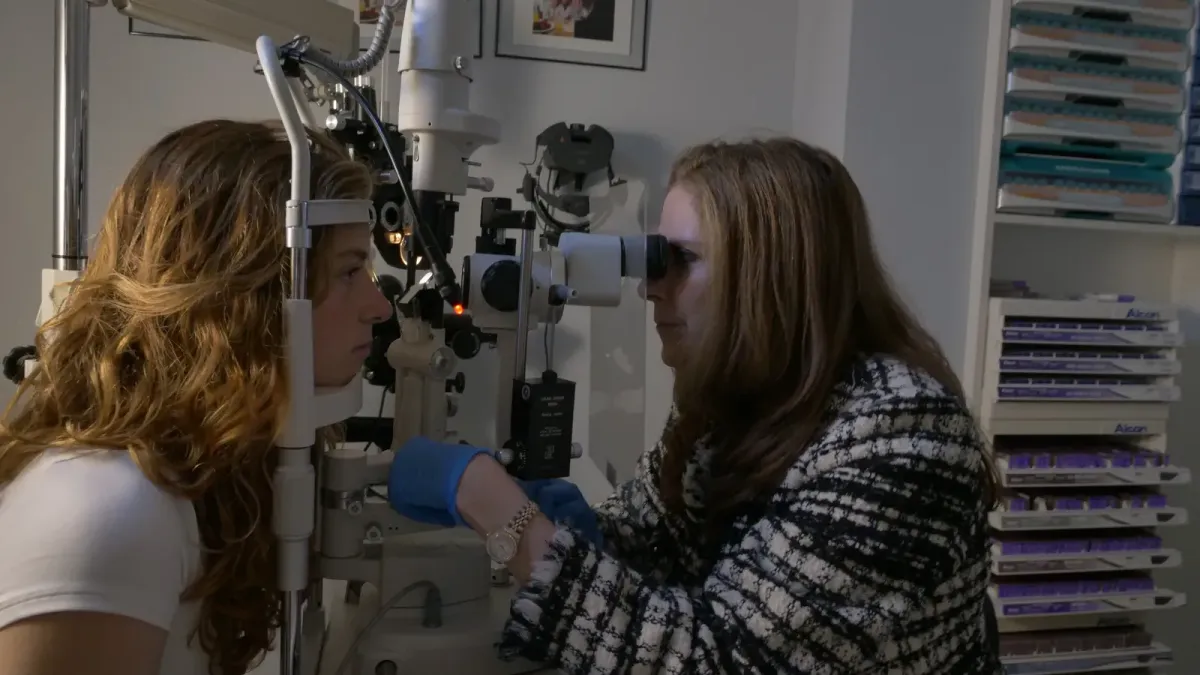
At Eyes in Disguise, eye infection evaluation and treatment is part of our eye care services, including diagnosis and prescriptions for pink eye when you need them. If pain, a scratch or something stuck in the eye is part of the story, see our urgent eye care page and our guides on a scratched eye and signs of an eye emergency.
Frequently Asked Questions
How can I tell if my red eyes are allergies or pink eye?
Itching is the hallmark of eye allergies, which usually affect both eyes and cause watery tears. Infectious pink eye tends to bring more discharge, which can be thick and yellow-green with bacteria, and itching is usually not the main symptom. An eye exam confirms the cause.
Is allergic pink eye contagious?
No. Allergic conjunctivitis is not contagious, so you can usually keep going to work, school or the gym. Viral and bacterial pink eye spread easily, so stay home and avoid close contact until your eyes are no longer red with discharge.
Do antibiotic eye drops help eye allergies?
No. Antibiotic eye drops only help bacterial conjunctivitis. They do not treat viral or allergic pink eye. Allergic pink eye may be treated with allergy eye drops, which is why knowing the cause matters.
Can I wear contact lenses if I have pink eye?
Not while your eyes are infected. Stay out of contacts until the conjunctivitis clears, then throw away the lenses, solution and case you used while you had pink eye.
When should I see an eye doctor for red, irritated eyes?
See an eye doctor if you have a lot of eye pain, a very red eye, a lot of mucus, blurry vision or light sensitivity that does not clear when you wipe your eyes, or symptoms that do not improve after a few days or get worse. Also get checked if you have pink eye symptoms and wear contacts.
Get help for red, itchy eyes in San Francisco
Red, itchy eyes are common, and most cases settle down. The tricky part is knowing whether you're dealing with allergies, an infection or something else, because each one calls for a different response. If your eyes are bothering you this fall, book a visit at Eyes in Disguise at 2133 Union Street in Cow Hollow, or call (415) 474-5321. You can meet our San Francisco optometrists, Dr. Michelle Blas and Dr. Nina Stroud, before you come in.
