Sensitive Eye Makeup: Which Ingredients Irritate Eyes
If your eyes burn, water, or turn red by the end of a workday, your makeup bag is the first place to look. The good news: you do not have to give up makeup. You have to get pickier about it.
The short answer: The best makeup for sensitive eyes is fragrance-free, ophthalmologist-tested, and free of harsh preservatives like parabens and benzalkonium chloride. Choose cream eyeshadows over powders, pencil eyeliner over liquid, skip waterproof formulas, and replace mascara and eyeliner every three months.
That is the two-sentence version. The full answer depends on which product is causing trouble, so let's go category by category. This guide comes from Dr. Michelle Blas, OD at Eyes in Disguise Optometry on Union Street in San Francisco's Cow Hollow, where helping patients wear makeup comfortably is one of our signature services.
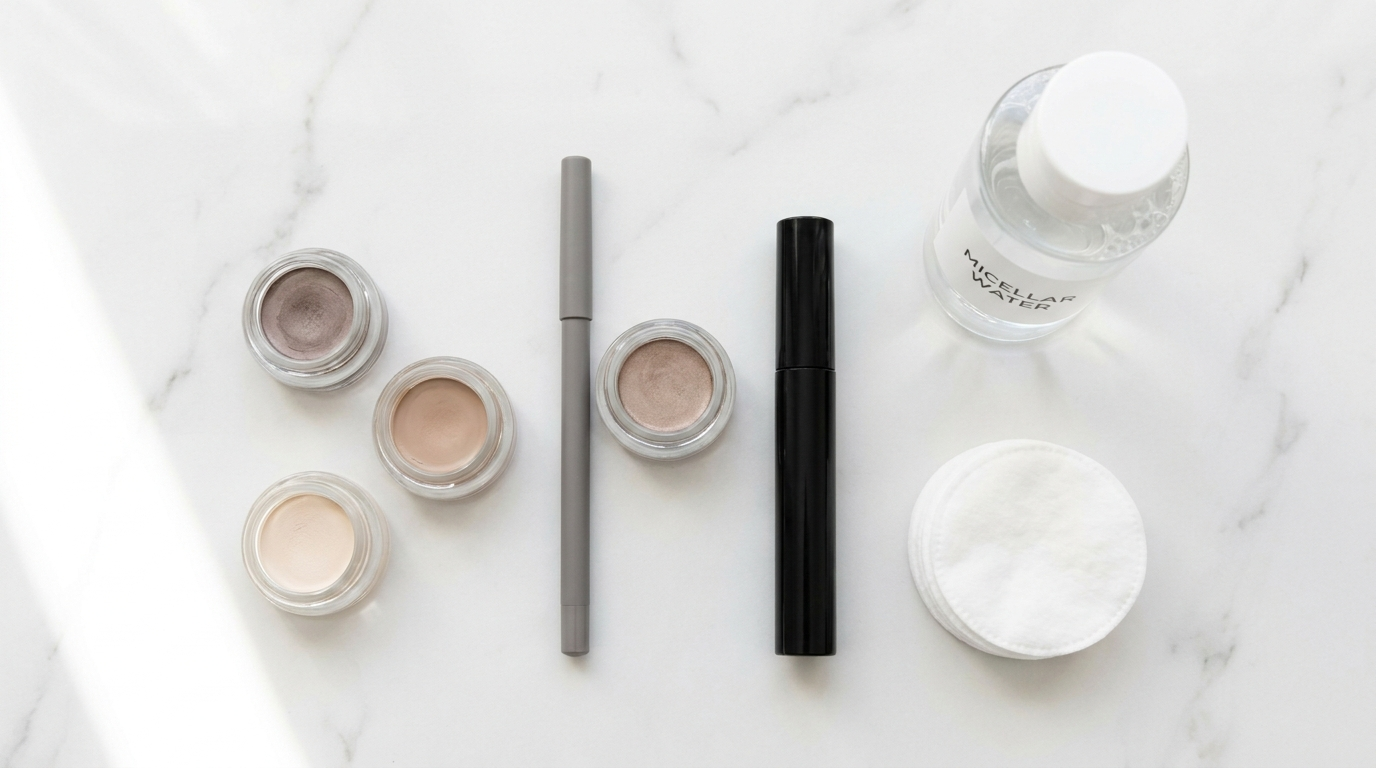
Quick Reference: Best Makeup Choices for Sensitive Eyes
Mascara: Best: fragrance-free, non-waterproof "tubing" or regular formulas. Avoid: waterproof formulas, fiber-lengthening mascaras, anything past 3 months old.
Eyeliner: Best: soft pencil liner, applied outside the lash line. Avoid: liquid liner, tightlining the waterline, glitter liners.
Eyeshadow: Best: cream formulas in neutral, matte shades. Avoid: loose powders, shimmer and glitter shadows with flaky fallout.
Foundation & concealer: Best: fragrance-free cream or liquid, kept off the lash line. Avoid: powder formulas applied near the eyes, fragranced products.
Makeup remover: Best: gentle micellar water or oil-free eye makeup remover. Avoid: harsh scrubbing, fragranced wipes, leaving makeup on overnight.
Why Makeup Bothers Sensitive Eyes in the First Place
Your eyelids contain dozens of tiny meibomian glands that release oil with every blink. That oil keeps your tear film stable and your eyes comfortable. When makeup particles, harsh preservatives, or aggressive removal block or inflame those glands, the result is the familiar trio: redness, watering, and that gritty, tired feeling.
Research backs this up. The TFOS (Tear Film and Ocular Surface Society) reports, the most comprehensive clinical reviews of dry eye disease to date, identify common cosmetic ingredients as direct contributors to ocular surface irritation and meibomian gland dysfunction. In other words, this is not in your head. Some makeup really is working against your eyes.
San Francisco adds its own challenges. Wind off the bay, fog-driven temperature swings, and seasonal pollen all destabilize the tear film before you have applied a single product. If your eyes are already borderline dry, the wrong mascara tips them over.
Mascara: Skip Waterproof, Watch the Clock
Mascara sits closer to your tear film than almost any other cosmetic, so it earns the most scrutiny.
Choose: A fragrance-free, non-waterproof formula. Tubing mascaras are a smart option for sensitive eyes because they wrap each lash in a polymer that slides off with warm water instead of requiring solvents.
Avoid: Waterproof mascara for daily wear. It resists your tears, which means it also resists removal, and the scrubbing required does more damage than the mascara is worth.
Replace it every 3 months. No exceptions. A mascara wand is a moist brush that travels from your lashes to a dark tube and back, which makes it a perfect bacterial shuttle.
Choosing Eyeliner for Sensitive Eyes
Choose eyeliner intended for use around the eyes and check its ingredients for anything you know irritates you. Stop using it if irritation develops. If irritation persists, see an eye-care professional.
The bigger issue is placement. Lining the waterline, sometimes called tightlining, puts pigment directly over the openings of your meibomian glands. Blocked glands lead to dry eye and styes. Keep all liner outside the lash line, where it frames the eye without plugging the glands that protect it.
Eyeshadow: Cream Formulas Win
Powder shadows flake. Those particles end up in your tear film, where they act like sand in a watch. Cream eyeshadows have minimal fallout, which makes them the better choice for sensitive eyes. If you love a powder finish, apply it with a damp brush to cut down on dust, and skip glitter entirely. Glitter particles are the most common cosmetic foreign body we remove from patients' eyes.
Foundation and Concealer: Keep It Off the Lash Line
Searches for "foundation for sensitive eyes" spike for a reason: foundation and concealer migrate. Applied too close to the eye, they wick along the skin and into the tear film within hours.
Choose fragrance-free cream or liquid formulas.
Leave a small halo of bare skin around the eyes, especially the lower lash line.
Set with pressed rather than loose powder, and keep the brush below the orbital bone.
The Ingredient Red-Flag List
Marketing terms like "hypoallergenic" are not regulated, so the ingredient panel is where the truth lives. When you flip the package over, watch for:
Benzalkonium chloride (BAK), a preservative known to damage the ocular surface
Parabens (methylparaben, ethylparaben), which can interfere with meibomian gland function
Formaldehyde-releasing preservatives such as DMDM hydantoin and quaternium-15
Added fragrance, one of the most common cosmetic allergens
Tea tree and other essential oils in products used near the eyes
Retinoids in eye-area products, which can disrupt the oil glands along the lid margin
BHA and BHT in higher concentrations
Want the complete checklist with brand recommendations? Dr. Blas put everything into her free CLEAN Makeup Manual for Sensitive Eyes, including a quiz to find your ideal makeup remover.
If You Wear Contact Lenses, Order Matters
Contact lens wearers have an extra layer to protect, literally. The rules that matter most:
Lenses in first, makeup on second. Reverse it at night: lenses out before makeup comes off.
Wash your hands before handling lenses, every time.
Avoid lash-lengthening fiber mascaras. Those fibers love to hitch a ride under a lens.
If a lens feels gritty after makeup application, remove and rinse it rather than powering through.
Struggling to find lenses that stay comfortable all day? Our contact lens fittings include options for sensitive and dry eyes, including specialty lenses.
Removal: Where Most Sensitive-Eye Damage Actually Happens
Ask Dr. Blas and she will tell you that half of makeup-related irritation comes not from wearing makeup but from taking it off. The routine that protects your eyes:
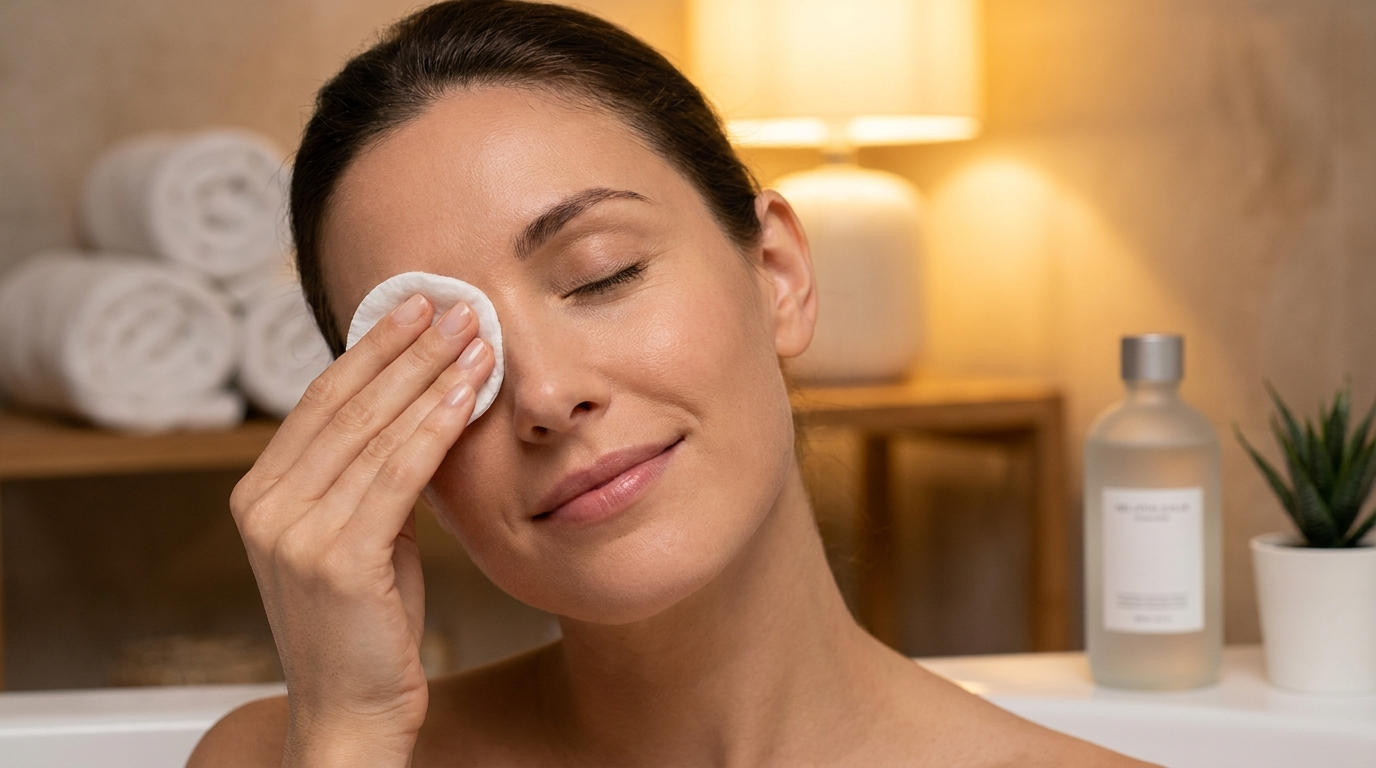
Soak a cotton pad with a gentle remover (micellar water suits most sensitive skin; oil-free formulas suit oily skin and lash-extension wearers).
Press it against your closed eye for 30 seconds. Let the remover do the work.
Wipe gently downward. No scrubbing, no back-and-forth.
Every night, no exceptions. Sleeping in eye makeup is the fastest route to clogged glands and morning redness.
When It Is Not the Makeup
If you have switched to clean products, fixed your removal routine, and your eyes still burn or water, the makeup may be aggravating an underlying condition rather than causing one. The usual suspects are dry eye disease, blepharitis (inflammation along the lash line), and meibomian gland dysfunction. All three are very treatable, and all three get worse when they are ignored.
That is the point where Google stops being useful and an exam starts. Dr. Blas uses advanced diagnostics to find the actual cause, and our dry eye treatments go well beyond "use drops," including in-office therapies that restore your glands' natural function.
The Bottom Line
The best makeup for sensitive eyes is the least reactive version of every product you use: fragrance-free formulas without harsh preservatives, cream instead of powder, pencil instead of liquid, nothing waterproof, nothing expired, and nothing on the waterline. Pair those choices with gentle nightly removal and your eyes can be comfortable and beautifully made up.
And if irritation persists anyway, do not keep guessing. Book an eye exam at Eyes in Disguise on Union Street, and Dr. Blas will build you a personalized plan, from product swaps to dry eye care. Call us at (415) 474-5321 or book online today.
Frequently Asked Questions
What is the best makeup for sensitive eyes?
The best makeup for sensitive eyes is fragrance-free and ophthalmologist-tested, with no parabens or benzalkonium chloride. Choose cream eyeshadows, soft pencil eyeliners, and non-waterproof mascara, and replace eye products every three months to prevent bacterial buildup.
What foundation is best for sensitive eyes?
Choose a fragrance-free cream or liquid foundation and keep it away from the lash line. Powder foundations and loose setting powders can flake into the tear film and cause irritation, so apply powders below the orbital bone with a clean brush.
Does "hypoallergenic" actually mean anything?
Not officially. "Hypoallergenic" is a marketing term that is not regulated by the FDA, so always check the ingredient list. Look for products that are fragrance-free and free of parabens, formaldehyde-releasing preservatives, and benzalkonium chloride.
What mascara should I use if my eyes are sensitive?
Use a fragrance-free, non-waterproof mascara, and consider a tubing formula that removes with warm water instead of harsh solvents. Skip fiber-lengthening mascaras, and replace any mascara every three months.
Can I wear makeup if I have dry eye?
Yes, with adjustments. Keep products off the waterline and lash line, switch to cream formulas, remove everything gently each night, and treat the underlying dry eye. An optometrist can pair your makeup routine with treatments that restore your tear film.
Is eyeliner on the waterline bad for your eyes?
Yes. Lining the waterline, also called tightlining, deposits pigment directly over the meibomian glands that keep your eyes moist. Blocked glands lead to dry eye, irritation, and styes. Keep eyeliner outside the lash line.
How often should I replace eye makeup?
Replace mascara and liquid eyeliner every 3 months, sharpen pencil liners before each use, and replace cream or powder eyeshadows every 1 to 2 years. Expired products harbor bacteria that cause infections and irritation.
When should I see an eye doctor about makeup irritation?
See an optometrist if irritation continues after switching to clean, fragrance-free products, or if you have persistent redness, burning, watering, or crusty lash lines. These are signs of dry eye disease or blepharitis, both of which are treatable with professional care.
About the author: Dr. Michelle Blas, OD, is an optometrist at Eyes in Disguise Optometry in San Francisco's Cow Hollow neighborhood. A graduate of the SUNY College of Optometry and a member of the American Optometric Association, she specializes in primary and emergency eye care, dry eye treatment, diabetic eye disease, glaucoma management, and specialty contact lens fittings. She created the CLEAN Makeup Manual to help patients with sensitive eyes enjoy cosmetics comfortably.
Eyes in Disguise Optometry, 2133 Union Street, San Francisco, CA 94123. (415) 474-5321.Mascara: Best: fragrance-free, non-waterproof "tubing" or regular formulas. Avoid: waterproof formulas, fiber-lengthening mascaras, anything past 3 months old.
Eyeliner: Best: soft pencil liner, applied outside the lash line. Avoid: liquid liner, tightlining the waterline, glitter liners.
Eyeshadow: Best: cream formulas in neutral, matte shades. Avoid: loose powders, shimmer and glitter shadows with flaky fallout.
Foundation & concealer: Best: fragrance-free cream or liquid, kept off the lash line. Avoid: powder formulas applied near the eyes, fragranced products.
Makeup remover: Best: gentle micellar water or oil-free eye makeup remover. Avoid: harsh scrubbing, fragranced wipes, leaving makeup on overnight.
Custom HTML/CSS/JAVASCRIPT
