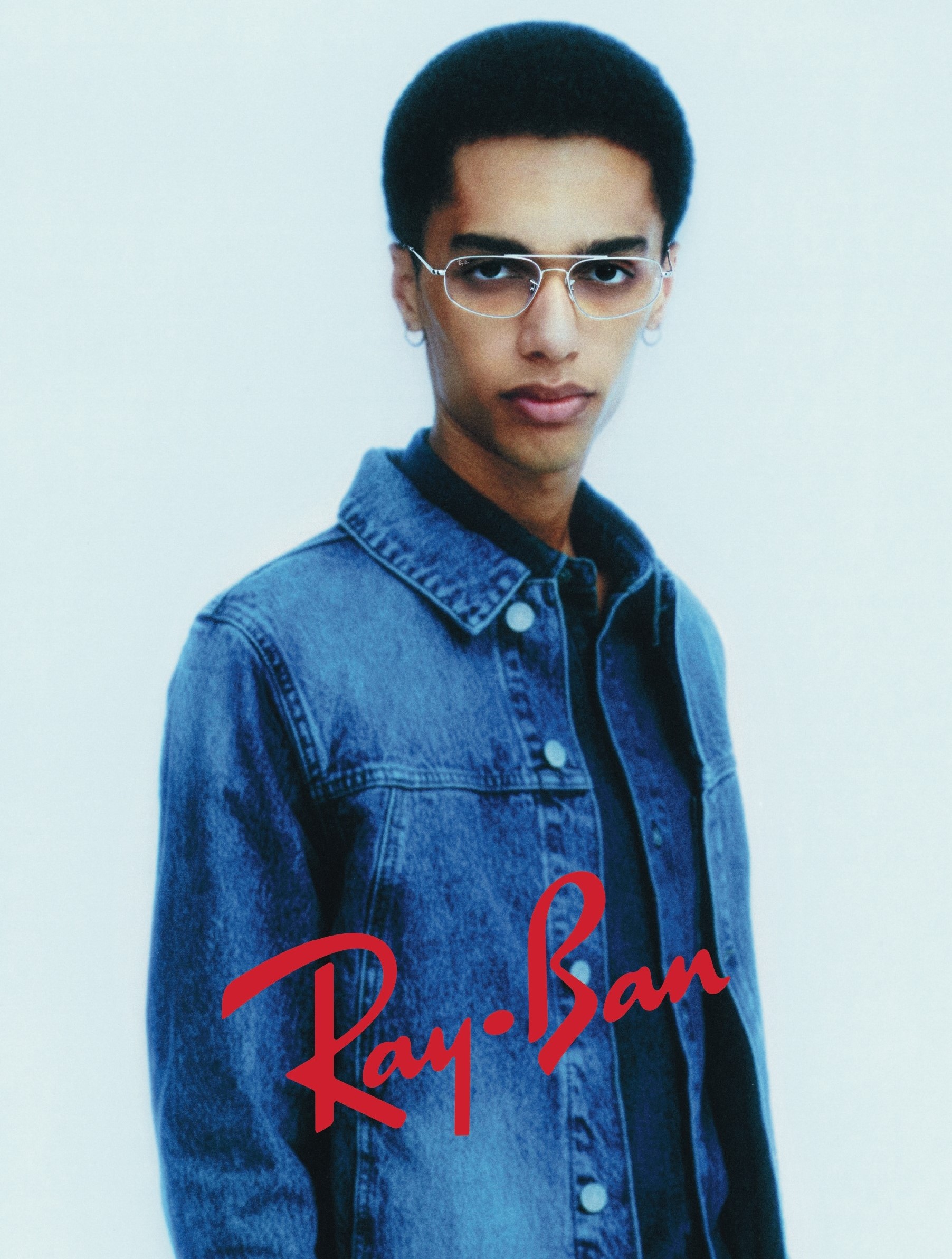
Ray-Ban Glasses in San Francisco | Eyes in Disguise Optometry
Almost everyone can draw a Ray-Ban from memory. The shapes people picture are almost always sunglasses.
The part that gets missed is that the same frames exist as everyday prescription eyeglasses. Not tinted. Not electronic. Clear lenses, your prescription, worn to work. We carry Ray-Ban optical at Eyes in Disguise, and the short answer is yes, Ray-Ban makes glasses you can read in.
What Ray-Ban actually is
Ray-Ban started in 1937 as an aviation product. Bausch and Lomb had been working on the problem since a 1929 collaboration with US Army Air Corps colonel John A. Macready. Pilots at altitude were coming down with headaches from raw, unfiltered glare. The brief was to make the sky survivable to look at.
That origin explains the shapes better than any style guide could. The Aviator's teardrop was cut to cover the eye through the range a pilot's eyes actually travel, including downward at the instrument panel. The lens was deliberately left unpolarized, because a pilot needs to see light glinting off another aircraft rather than have it filtered away.
The Wayfarer arrived in 1952. Bausch and Lomb designer Raymond F. E. Stegeman filed its patent in July of that year. The frame moved eyewear away from all-metal construction toward molded acetate, which meant a frame could be a shape someone had drawn rather than a shape wire could be bent into. Plastic frames since have followed.
The Clubmaster is the honest one. Its browline shape is not a Ray-Ban invention. The browline was designed in 1947 by Jack Rohrbach at Shuron Ltd, and Ray-Ban's version came decades later. We would rather tell you that than let the frame carry a heritage claim it has not earned.
Ray-Ban was sold to Luxottica in 1999 and now sits inside EssilorLuxottica, which also owns the lens maker Essilor. For someone buying prescription glasses, that ownership matters. It's why the lens options run deeper than the frame alone would suggest.

What makes Ray-Ban different in optical
Two things make Ray-Ban worth considering in optical, and only one of them is the shape.
The shape is the obvious one. Wayfarer, Clubmaster and Aviator have been around long enough that they have stopped reading as trends. If you've ever bought glasses, loved them for a year, and then felt them go stale, that is the failure this brand is unusually good at avoiding.
The second is the lens side. Because Ray-Ban sits inside EssilorLuxottica, its optical program is built with Essilor lens technology behind it. EssilorLuxottica's own materials describe Ray-Ban Authentic as offering more than 1,400 lens and frame combinations, with Transitions photochromic lenses and blue light filtering among the options.
What that means at the counter is simply more room to solve your actual problem. If you want a Clubmaster that darkens outdoors, or a Wayfarer in a progressive, that's a normal request rather than a special order. Our guide to lens options walks through what those choices do without naming a brand.
On the frame itself, Ray-Ban offers optical in acetate, metal and titanium according to the brand's own product pages. Those three materials behave differently on a face, in weight, in adjustability and in how they age. Our frame materials guide covers the difference in detail.
One thing to be clear about, because it causes real confusion in the office. Ray-Ban optical frames are not Ray-Ban Meta smart glasses. Those are two separate products with two separate decisions behind them. We wrote about the smart glasses separately in our guide to Ray-Ban Meta and your prescription. This post is about the ordinary kind you wear all day.

Who Ray-Ban optical is for
Ray-Ban suits the person who wants a frame that is recognizable without being loud, and who would rather buy once than chase a look.
You're a good candidate if you want glasses that read as intentional in a meeting and still work on a Saturday. If your last pair felt like a costume after six months. If you have a shape in your head already, because you have been quietly noticing Wayfarers on other people for years.
Where it fits less well: if what you want is a frame nobody else in the room could possibly own, Ray-Ban is the wrong instinct, and we'd say so. Recognition is the whole proposition here, and it cuts both ways. In that case we'd point you at the rest of the range on our designer eyewear page, or at a house like Kala, which is a completely different argument.
How to tell if it is right for you
Two questions settle it, and both are faster in person than online.
First, the shape against your actual face. The icon frames are strong shapes with real structure, and strong shapes are unforgiving. A Clubmaster's brow line sits where your own brow sits or it fights it. A Wayfarer's width either suits your face or overwhelms it. This is the single most common reason a well-chosen frame fails, and it takes about ninety seconds to settle with the frame on. Our glasses guide is a good primer, though it's not a substitute for trying them.
Second, your prescription and how you actually use your eyes. A frame that works beautifully in single vision can be a poor host for a progressive if the lens depth is shallow. Bring a current prescription, or book an eye exam and we'll start from scratch. Our optometrists, Dr. Michelle Blas, OD and Dr. Nina Stroud, OD, see patients here in Cow Hollow.
Buying through a practice also means the frame gets adjusted to your head rather than to an average one, and that somebody is accountable if it stops sitting right in four months.
Come try them on at Eyes in Disguise
Ray-Ban is one of those brands people think they have already decided about. Usually they have decided about the sunglasses.
Come in and put the optical frames on. We're at 2133 Union Street in Cow Hollow, and you're welcome to try the whole stable in one visit. Book an appointment or simply stop by.
Frequently Asked Questions
Does Ray-Ban make prescription eyeglasses?
Yes. Ray-Ban makes a full optical line of prescription eyeglasses alongside its sunglasses, and the icon shapes including the Wayfarer, Clubmaster and Aviator are offered as clear-lens optical frames. We carry Ray-Ban optical at Eyes in Disguise in San Francisco and can fit them with your prescription.
Where can I buy Ray-Ban glasses in San Francisco?
Eyes in Disguise Optometry carries Ray-Ban at 2133 Union Street in the Cow Hollow neighborhood of San Francisco. You can try the frames on in person and have them fitted with your prescription by our team rather than estimating your fit online.
What is the difference between Ray-Ban optical frames and Ray-Ban Meta smart glasses?
Ray-Ban optical frames are ordinary prescription eyeglasses with no electronics. Ray-Ban Meta smart glasses are a separate product with a camera, audio and assistant features built in. They are different purchases with different considerations, and we cover the smart glasses in a separate guide.
What materials are Ray-Ban optical frames made from?
According to Ray-Ban's own product pages, its optical frames are offered in acetate, metal and titanium. The three differ in weight, in how easily they adjust, and in how they wear over time, which is one of the reasons trying them on in person is worth the trip.
