Understanding Eyeglass Frame Materials & Construction: Your San Francisco Guide to Quality, Durability, and Style
When Sarah Chen walked into our Cow Hollow practice last month, she had a problem many of our Pacific Heights and Marina clients share: her designer frames had lasted less than a year. The temples felt loose, the nose pads had corroded, and despite spending $600, she was back shopping for replacements. "I thought designer meant quality," she told me, frustrated. "How do I know what's actually worth the investment?"
It's a question I answer almost daily—and the answer isn't always what you'd expect. Not all designer frames are created equal, and price doesn't always reflect quality. The difference between eyewear that lasts three years versus ten often comes down to frame materials and construction details most people never notice.
After 30 years fitting eyewear for San Francisco's discerning professionals, tech innovators, and style-conscious residents, I've learned that understanding frame materials is just as important as choosing the right lenses. Whether you're commuting from Nob Hill to SOMA, cycling the Embarcadero, or simply want glasses that complement your wardrobe investment, this guide will help you make informed decisions about eyewear that truly lasts.
Why Frame Material Matters More Than You Think
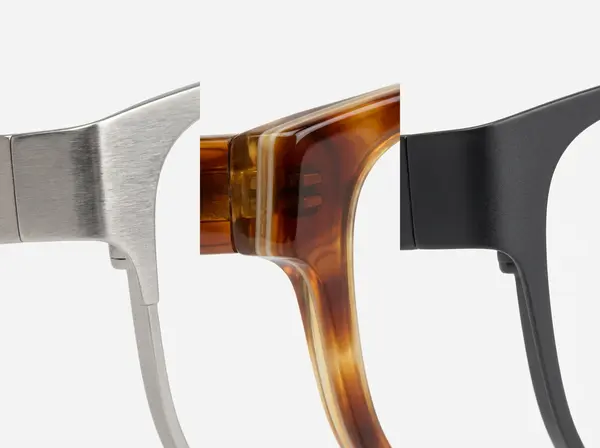
Your frames aren't just a fashion statement—they're structural support for precision optics, a daily-wear accessory, and an investment in visual comfort. The material determines:
Weight and all-day comfort(especially important for strong prescriptions or progressives)
Durability against San Francisco's salt air, fog, and temperature shifts
Adjustment flexibility as your face changes or preferences evolve
Hypoallergenic properties if you have sensitive skin
Longevity and value over years of daily wear
According to the American Academy of Ophthalmology, frame material directly affects how well your glasses maintain optical alignment over time. Even the best lenses can't perform properly if the frame warps, loosens, or breaks.
The Complete Guide to Eyeglass Frame Materials
Premium Metal Frames: Engineering Meets Elegance
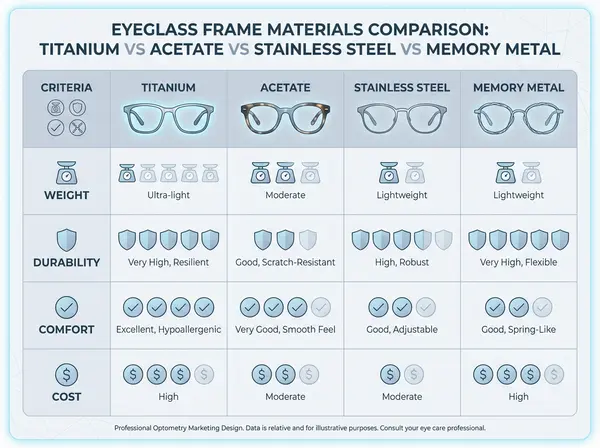
Titanium: The Gold Standard
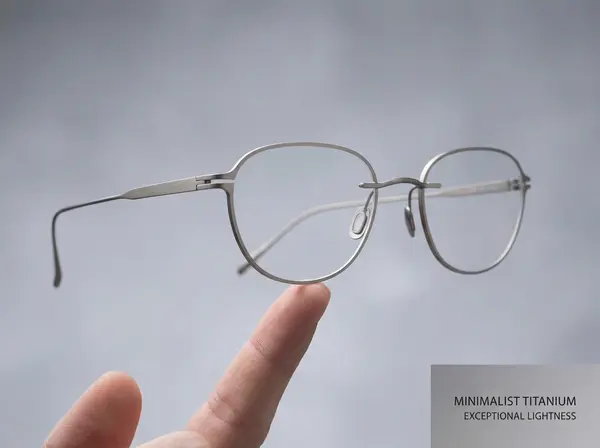
What it is: Pure titanium or titanium alloy frames represent the pinnacle of eyewear engineering. This aerospace-grade material weighs40% less than stainless steel while offering exceptional strength.
Advantages:
Ultra-lightweight: Ideal for strong prescriptions or all-day wear (9-15g vs 22-25g for acetate)
Hypoallergenic: Perfect for sensitive skin; no nickel reactions
Corrosion-resistant: Thrives in San Francisco's coastal environment
Flexible yet strong: Resists breaking under stress
Longevity:10+ years with proper care
Considerations:
Higher price point ($300-$800+ for quality frames)
Limited color options (typically metallic finishes)
Requires precision adjustment tools (not DIY-friendly)
Best for:Tech professionals with long screen hours, active individuals, anyone with metal allergies, strong prescription wearers
Stainless Steel: Reliable Workhorse
Stainless steel offers excellent strength-to-weight ratio at a more accessible price than titanium. Modern stainless frames use surgical-grade alloys that resist corrosion and maintain their finish.
Advantages:
Durable and long-lasting (5-8 years typical lifespan)
Moderate weight
Clean, minimalist aesthetic
Good value ($150-$400)
Considerations:
Heavier than titanium
May contain nickel (check for hypoallergenic variants)
Can show wear in high-salt environments
Best for:Classic style preferences, moderate budgets, professional environments
Memory Metal (Flexon): Resilience Engineered In
Memory metal alloys (primarily titanium-based)return to their original shape after being bent or twisted—a game-changer for active lifestyles.
Advantages:
Virtually indestructible hinges
Self-adjusting fit
Lightweight and hypoallergenic
Excellent for children or active adults
Considerations:
Premium pricing ($250-$600)
Limited style variety
May feel less substantial
Best for:Parents, athletes, frequent travelers, anyone prone to sitting on their glasses
Beryllium: The Overlooked Contender
Beryllium offers titanium-like benefits at stainless steel pricing. It's extremely corrosion-resistant—ideal for San Francisco's bayside microclimates.
Advantages:
Excellent strength and lightness
Superior corrosion resistance
Flexible for easy adjustments
Wide color palette
Considerations:
Less common (fewer style options)
Moderate price ($200-$450)
Best for:Coastal living, outdoor enthusiasts, budget-conscious quality seekers
Acetate Frames: Artistry in Cellulose
What it is: Cellulose acetate—derived from plant fibers—is the premium plastic used by luxury brands like Oliver Peoples, Cartier, and Tom Ford. It's not injection-molded; quality acetate is hand-cut from layered sheets, creating unique patterns.
Advantages:
Unmatched color and pattern variety: Tortoise shell, translucent hues, custom finishes
Comfortable and warm to the touch: Doesn't conduct temperature like metal
Easily adjustable: Can be heat-fitted for custom face shapes
Hypoallergenic: Plant-based, no metal sensitivities
Sustainable: Renewable material with lower environmental impact
Considerations:
Moderate weight:22-25g (heavier than titanium, lighter than some metals)
Heat sensitivity: Can warp if left in hot cars (above 140°F)
Requires periodic adjustments: Acetate naturally relaxes over time
Color can fade: With years of UV exposure (quality acetate resists this longer)
Lifespan:5-7 years with regular professional adjustments, up to 10+ for premium hand-layered acetate
Best for: Style-forward individuals, creative professionals, those who rotate multiple pairs, anyone seeking unique aesthetics
According to an Doctor Optical analysis, acetate excels inexpressive design and tactile comfort, while titanium leads in structural longevity and weight reduction.
Hybrid Frames: The Best of Both Worlds
Modern luxury eyewear increasingly combines acetate fronts with titanium or stainless steel temples. This hybrid construction offers:
Bold acetate styling around the lenses
Lightweight, flexible metal temples
Reinforced hinge zones (metal's strength where stress concentrates)
Reduced overall weight versus full acetate
Examples: Many Oliver Peoples, Dita, and Matsuda designs use this architecture. You get the visual impact of acetate with the engineering advantages of metal.
Specialty Materials Worth Knowing
TR90 (Thermoplastic):
Flexible, rubber-like texture; extremely impact-resistant. Common in sports and children's frames. Not typical for luxury eyewear.
Ultem (Polyetherimide):
NASA-developed material; lightweight and heat-resistant. Used in premium sports and aviation eyewear.
Wood & Bamboo:
Sustainable, unique grain patterns. Requires careful maintenance; best for occasional wear or eco-conscious statement pieces.
Frame Construction: The Details That Define Quality
Material alone doesn't guarantee durability—construction quality separates disposable eyewear from heirloom pieces.
Hinge Systems: The Make-or-Break Component
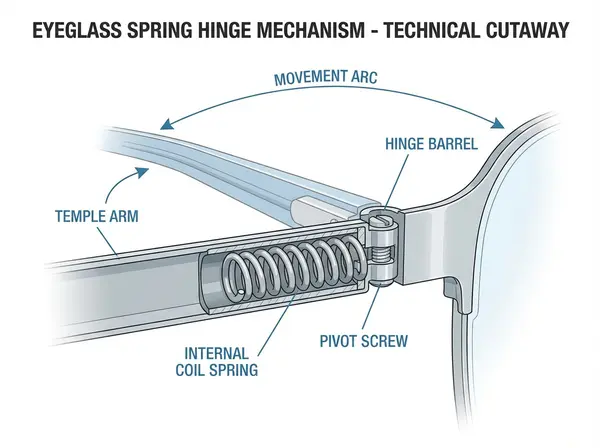
Hinges account for 60% of eyewear failures, according to optical industry data compiled by ModaFrames. Here's what to look for:
1. Barrel Hinges (Standard)
Five-barrel systems offer more durability than three-barrel
Precision machining ensures smooth operation
Metal-on-metal contact; requires periodic tightening
2. Spring Hinges (Premium)
Internal spring mechanism allows temples to flex outward beyond 90 degrees
Automatically returns to proper position
Reduces repair costs by 70%versus standard hinges
Ideal for active lifestyles, children, or anyone who puts glasses on/off frequently
Tested for50,000-100,000+ open/close cycles
Expert Insight:I recommend spring hinges for almost every patient. The modest upfront cost ($20-$40 extra) typically pays for itself by preventing a single hinge repair.
3. Screwless Hinges
Common in high-end titanium frames
Cleaner aesthetic, no screws to loosen
Requires specialized tools for adjustment
4. Rivet Hinges (Vintage-Inspired)
Visible rivet construction
Durable but less adjustable
Popular in retro acetate designs
Other Construction Quality Indicators
Nose Pads:
Silicone: Comfortable, hypoallergenic, widely available
Titanium or gold-plated arms: Won't corrode or discolor skin
Adjustable vs. integrated: Adjustable pads (common on metal frames) allow custom fit; integrated pads (acetate) require frame heating to adjust
Temples (Arms):
Core-wire reinforcement: Metal wire inside acetate temples prevents snapping
End-tip quality: Rubber or acetate tips should be replaceable, not glued
Length options: Most quality frames offer 135mm, 140mm, 145mm lengths
Lens Mounting:
Full-rim: Maximum lens protection and durability
Semi-rimless: Requires sturdy lens materials (polycarbonate, Trivex); elegant but more fragile
Rimless: Drilling directly into lenses; beautiful but highest risk of lens cracking
Finish Quality:
Hand-polished edges(acetate): Sign of artisan craftsmanship
Consistent coating(metal): No chipping, even color
Branding: Discreet engravings or quality logos (not cheap stickers)
Material Comparison: At a Glance
The Investment Question: What's Quality Eyewear Really Worth?
I often hear:"$600 for frames? That's more than my prescription lenses! "Here's how to think about value:
Total Cost of Ownership (5-Year Comparison)
Budget Frames ($80-$150):
Average lifespan: 18-24 months
Typical repairs: 2-3 hinge fixes at $40-$60 each
Replacements needed: 2-3 pairs
Total 5-year cost:$360-$600+
Premium Frames ($400-$800):
Average lifespan: 7-12 years
Typical repairs: 0-1 minor adjustments (often complimentary)
Replacements needed: 0 within 5 years
Total 5-year cost:$400-$800
The math changes dramatically when you factor in:
Time lost to repairs and replacements
Optical alignment (cheap frames lose it quickly, affecting vision)
Comfort (inferior materials cause pressure points, headaches)
Confidence (quality frames elevate your professional presence)
What Justifies Premium Pricing?
According to Fox Run Eye Care's designer frame analysis, luxury eyewear pricing reflects:
Material sourcing: Aerospace-grade titanium, hand-layered acetate, hypoallergenic alloys
Manufacturing precision: CNC machining, hand-polishing, multi-step quality control
Design IP: In-house design teams, iconic brand heritage
Warranty and service: Many luxury brands offer multi-year warranties and complimentary adjustments
Optical precision: Frame geometry engineered for optimal lens performance
A quality frame is a 7-10 year investment. At $600, that's $85/year—less than $0.25 per day.
San Francisco-Specific Considerations
Our microclimate demands specific material choices:
Coastal Corrosion
The Marina, Embarcadero, and Presidio's salt-laden fog accelerates metal corrosion. Best choices:
Titanium (highly resistant)
Beryllium (exceptional resistance)
High-grade stainless steel with protective coatings
Acetate (no corrosion issues)
Avoid: Cheap metal alloys, nickel-heavy frames
Temperature Swings
San Francisco can shift30°F in a single commute(Sunset District fog to Mission sun). Materials that handle this:
Titanium and memory metal (dimensionally stable)
Quality acetate (but avoid leaving in hot cars)
Avoid: Cheap plastics that warp, poorly brazed metal joints
Active Urban Lifestyle
If you bike, walk hills, or use public transit:
Spring hinges for durability
Lightweight materials(titanium, Flexon) to stay put during movement
Non-slip nose pads and temple tips
Tech Industry Norms
Many of our tech clients prefer minimalist titanium or rimless designs that disappear on video calls while providing all-day screen comfort.
Fashion-Forward Neighborhoods
Pacific Heights, Haight-Ashbury, and Hayes Valley clients often favor bold acetate or hybrid frames that make a statement—these neighborhoods appreciate eyewear as personal expression.
How to Evaluate Frame Quality in Person
When you visit Eyes in Disguise (or any optician), use these tests:
The Flex Test
Gently press the temples inward. Quality frames:
Flex smoothly without creaking
Return immediately to original shape
Show no stress marks
Cheap frames snap or stay bent.
The Hinge Check
Open and close the temples 5-10 times:
Should feel smooth, not gritty
No play or wobble
Spring hinges should have noticeable resistance
The Weight Test
Hold frames in one hand:
Premium titanium feels almost weightless
Quality acetate has balanced heft (not front-heavy)
Cheap plastic feels hollow or unevenly weighted
The Finish Inspection
Acetate: Look for hand-polished edges (smooth, glassy finish vs. rough-cut)
Metal: Check temple interiors for quality stamps (titanium purity, brand codes)
Nose pads: Should be silicone, not hard plastic; arms should be adjustable
The Alignment Test
Place glasses on a flat surface, temples closed:
Should sit evenly (not rock)
Lenses should be parallel
Nose pads (if present) should align symmetrically
Material Recommendations by Lifestyle
Tech Professionals & Screen-Heavy Workers
Top choice:Titanium or hybrid (acetate front/titanium temples)
Ultra-light for 10+ hour days
Minimizes pressure during video calls
Pair with blue-light filtering lenses
Active Lifestyle & Outdoor Enthusiasts
Top choice:Memory metal (Flexon) or premium acetate with spring hinges
Durability against impacts and bending
Spring hinges for frequent on/off
Consider polarized sunglass clip-ons for versatility
Style-Conscious & Fashion-Forward
Top choice:Premium acetate or hybrid frames
Unmatched color and pattern variety
Bold statement pieces or subtle sophistication
Easy to build an eyewear wardrobe (multiple pairs for different looks)
Sensitive Skin & Allergy-Prone
Top choice:Titanium or acetate (avoid mixed metals)
100% hypoallergenic
No nickel, no skin discoloration
Silicone nose pads
Budget-Conscious Quality Seekers
Top choice:Stainless steel or quality acetate with spring hinges
Solid durability without premium pricing
Prioritize hinge quality over brand names
$200-$350 range offers excellent value
Children & Teens
Top choice:Memory metal or flexible TR90
Virtually indestructible
Self-adjusting fit as they grow
Reduces replacement frequency
Caring for Different Frame Materials
Titanium & Metal Frames
Clean with lens solution and microfiber cloth
Avoid salt water (rinse immediately if exposed)
Professional adjustment 1-2x/year
Store in protective case
Lifespan:10-15+ years with care
Acetate Frames
Clean with mild soap and lukewarm water (not hot)
Avoid alcohol-based cleaners (can dry/crack acetate)
Professional heat-adjustment every 12-18 months
Never leave in hot cars or direct sun for extended periods
Lifespan:5-10 years; up to 15 for premium hand-layered
Hybrid Frames
Follow acetate care for fronts, metal care for temples
Pay special attention to hinge connections (different materials expand differently)
Semi-annual professional inspection
When to Replace Frames (Beyond Breakage)
Even quality frames eventually need replacement:
Replace acetate frames when:
Color has significantly faded
Material feels brittle or shows cracks
Shape no longer holds after adjustment
Nose pads have worn through protective layers
Replace metal frames when:
Corrosion appears despite cleaning
Temples no longer hold adjustment
Hinge mechanisms feel loose or gritty
Prescription changes significantly (frame may not accommodate new lenses)
Professional tip: Bring frames in for annual "health checks." We can spot early warning signs and extend frame life by years.
The Eyes in Disguise Difference
At our Cow Hollow boutique, we carry carefully curated brands known for material integrity and construction excellence:
Luxury tier: Cartier, Oliver Peoples, Tom Ford, Dita (titanium, premium acetate, gold)
Premium contemporary: Garrett Leight, Moscot, Persol (acetate, stainless steel, hybrids)
Performance luxury: IC! Berlin, Lindberg (screwless titanium, minimalist engineering)
Sustainable quality: Eco-conscious brands using bio-acetate and recycled metals
What we offer:
Expert material guidance: We'll recommend frames based on your prescription strength, lifestyle, and comfort priorities—not commission
Lifetime complimentary adjustments: Spring hinges, acetate reshaping, nose pad replacement
Transparent pricing: No hidden fees; we explain exactly what you're paying for
Optical precision: Digital measurements ensure your lenses work with your frame geometry
30+ year expertise: Dr. Blas and our team have fitted tens of thousands of frames
Call (415) 474-5321 or visit eyesindisguise.com to schedule a frame consultation.
8 Myths About Frame Materials—Busted
Myth 1: "Plastic frames are always cheap."
Truth:Premium cellulose acetate (Oliver Peoples, Cartier) costs more to produce than many metals. Hand-layered acetate is artisan-level craftsmanship.
Myth 2: "Titanium frames are too expensive."
Truth:When you calculate cost-per-wear over 10-15 years, titanium often costslessthan replacing budget frames every 2 years.
Myth 3: "Designer frames are just paying for the logo."
Truth:Luxury brandsdocharge for branding, but they also use superior materials, precision manufacturing, and offer warranties. The key is choosing brands known for construction quality, not just fashion hype.
Myth 4: "Metal frames always contain nickel."
Truth:Titanium, beryllium, and hypoallergenic stainless steel contain zero nickel. Always ask about material composition if you have sensitivities.
Myth 5: "Spring hinges are a gimmick."
Truth:Spring hinges reduce hinge-related repairs by 70% and extend frame life by 3-5 years on average. They're one of the best upgrades available.
Myth 6: "Acetate frames can't handle strong prescriptions."
Truth:Acetate frames work beautifully with high prescriptions when paired with high-index lenses. The material's density actually helps hide lens thickness.
Myth 7: "I need to buy online to get good value."
Truth: Online retailers can't provide proper frame fitting, material consultation, or ongoing adjustments—services that protect your investment. Hidden costs (return shipping, incorrect sizing, adjustment fees elsewhere) often negate savings.
Myth 8: "All titanium frames are the same quality."
Truth: Titanium purity varies (Ti-5, Ti-8, pure titanium). Manufacturing precision differs wildly. Cheap "titanium" frames often use low-grade alloys with minimal actual titanium.
FAQ: Frame Materials & Construction
What's the best frame material for strong prescriptions?
Titanium is ideal—its strength supports heavier high-index lenses without warping, and its lightness offsets lens weight. Premium acetate with reinforced hinges also works well if you prefer bolder style. Avoid thin metal wire frames or fragile rimless designs for prescriptions above ±4.00.
Are expensive frames really more durable, or am I just paying for branding?
Both can be true. Top-tier brands like Oliver Peoples and Lindberg use genuinely superior materials and construction—hand-polished acetate, aerospace-grade titanium, 100,000-cycle-tested hinges. However, some fashion brands charge premium prices for average materials. Look for material specifications(e.g., "beta-titanium," "cellulose acetate propionate"),spring hinges, and warranty terms to verify you're getting construction quality, not just logo status.
How can I tell if my frames are quality titanium vs. cheap metal?
Real titanium is extremely lightweight(you'll notice immediately),non-magnetic(test with a magnet), and has purity stamps(Ti-P, Ti-5, Ti-8) inside the temples. Quality titanium frames also feel rigid yet flexible—they spring back when gently flexed. Cheap metal alloys feel heavier, may be magnetic, and often have no interior markings.
Do spring hinges really make a difference, or are they marketing hype?
Absolutely real. Spring hinges absorb stress during on/off, allow temples to flex outward without breaking, and self-return to proper position. Industry data shows they reduce hinge repair needs by 60-70%. I recommend them for virtually every patient—especially parents (kids are rough on glasses), active adults, and anyone who's broken hinges before.
Can acetate frames handle San Francisco's climate (fog, salt air)?
Yes—acetate is one of the best choices for coastal environments because it doesn't corrode like metals can. However, avoid leaving acetate in hot cars (above 140°F), as prolonged heat can warp frames. The occasional foggy commute or beach day is no problem; just rinse frames if exposed to salt spray.
What's the actual lifespan of quality frames vs. budget frames?
Budget frames ($80-$150):18-24 months average before breakage or significant wear.
Mid-range quality ($200-$350):3-5 years with professional adjustments.
Premium materials ($400-$800):7-12 years; titanium frames often last 15+ years.
Key factors: Hinge quality, material purity, and whether you get regular professional adjustments.
Are hybrid (acetate + metal) frames as durable as full-metal or full-acetate?
Often more durable.Hybrid construction places metal reinforcement where stress concentrates(hinges, temples) while using acetate for style and comfort at the front. This engineering approach combines the best properties of each material. Look for brands like Dita, Matsuda, or Oliver Peoples that specialize in hybrid designs.
What's the best material for people with metal allergies or sensitive skin?
Titanium or cellulose acetate are 100% hypoallergenic. Titanium frames have the added advantage of requiring no nose pad contact if you choose integrated nose bridges, eliminating another potential irritation point. Silicone nose pads (vs. hard plastic) also reduce sensitivity issues.
Conclusion: Invest in Materials That Match Your Life
The right frame material isn't about following trends—it's about alignment between your lifestyle, visual needs, and values. Whether you prioritize featherlight comfort (titanium), bold self-expression (acetate), or virtually indestructible durability (memory metal), understanding materials empowers you to invest wisely.
Sarah Chen, the client I mentioned earlier, ultimately chose Oliver Peoples titanium frames with spring hinges—$580, yes, but engineered to last 10-15 years with her demanding tech workday. Three years later, they still look and feel new. That's $0.15 per day for flawless vision and confidence.
Your frames are the foundation of your entire eyewear system. Choose materials that honor your investment in premium lenses, respect your daily routine, and reflect the quality you expect from everything else you wear.
Ready to find frames built to last?
Visit Eyes in Disguise at 2133 Union Street in Cow Hollow, or call (415) 474-5321 to schedule a personalized frame consultation. We'll help you navigate materials, construction quality, and style—ensuring your next pair is your last pair for many years to come.
Book your appointment at eyesindisguise.com
About the Author
Dr. Michelle Blas, OD has been San Francisco's trusted optometrist for over 30 years, serving Cow Hollow, Pacific Heights, Marina District, Russian Hill, and Presidio residents. Board-certified in pediatric optometry and myopia control, Dr. Blas combines clinical precision with a deep appreciation for eyewear as both functional necessity and personal style. Her boutique practice emphasizes patient education, lifetime eyewear support, and curated designer collections chosen for material quality and construction excellence.
FAQ Section
Q1: What frame material is best for active lifestyles in San Francisco?
A: Memory metal (Flexon) or premium acetate with spring hinges offer the best combination of durability, flexibility, and resistance to San Francisco's coastal conditions. Titanium is also excellent for lightweight strength.
Q2: How long should quality eyeglass frames last?
A: Premium titanium frames can last 10-15+ years; high-quality acetate frames 5-10 years; stainless steel 5-8 years. Lifespan depends on material quality, hinge construction, and regular professional adjustments.
Q3: Are spring hinges worth the extra cost?
A: Absolutely. Spring hinges reduce hinge-related repairs by 60-70%, extend frame life by 3-5 years, and provide superior comfort. The $20-$40 upcharge typically pays for itself by preventing a single repair.
Q4: What's the difference between cheap and premium acetate frames?
A: Premium acetate (cellulose acetate) is hand-cut from layered sheets, offering richer colors, better durability, and longer shape retention. Cheap plastic frames are injection-molded, fade quickly, and warp easily. Premium acetate can last 10+ years; budget plastic often fails within 18-24 months.
Q5: Can titanium frames handle strong prescriptions?
A: Yes—titanium's exceptional strength-to-weight ratio makes it ideal for strong prescriptions. It supports heavier high-index lenses without warping while keeping overall weight minimal for all-day comfort.
Q6: How do hybrid (acetate + metal) frames compare to single-material frames?
A: Hybrid frames combine acetate's bold styling with metal's structural strength and light weight. They often outlast full-acetate frames by placing metal reinforcement at stress points (hinges, temples) while maintaining acetate's comfort and aesthetic variety.
Q7: What frame materials are truly hypoallergenic?
A: Pure titanium, cellulose acetate, beryllium, and nickel-free stainless steel are hypoallergenic. Avoid frames with nickel content, cheap metal alloys, or hard plastic nose pads. Always request material specifications if you have sensitive skin.
Q8: Do expensive designer frames justify their price through material quality?
A: Top-tier brands like Oliver Peoples, Lindberg, Cartier, and Dita use genuinely superior materials—aerospace-grade titanium, hand-layered acetate, precision-machined hinges—and offer multi-year warranties. However, verify material specifications and construction details to ensure you're paying for engineering quality, not just branding.
