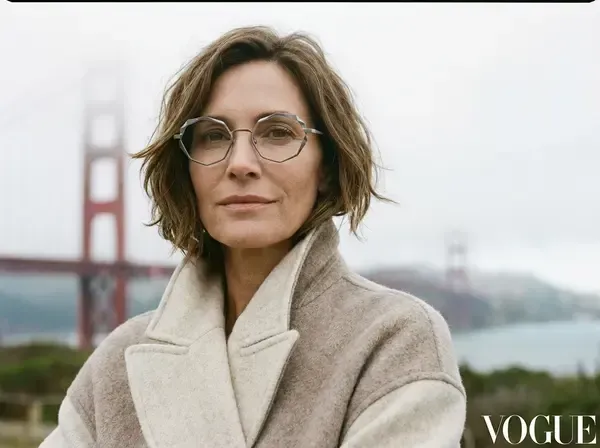
The Future of Eyewear: San Francisco's 2026 Vision Technology & Style Revolution
How Smart Lenses, Sustainable Materials, and AI-Powered Eye Care Are Transforming Vision in the Bay Area
When Maria, a 38-year-old UX designer in Pacific Heights, walked into our Cow Hollow practice last month, she asked a question we're hearing more than ever: "What's actually new in eyewear for 2026?" She'd been wearing the same frames for three years and felt disconnected from the rapid evolution happening in vision technology. Like many San Franciscans, Maria wanted eyewear that matched her tech-forward lifestyle—glasses that could keep pace with her digital demands while reflecting her personal aesthetic.
The answer surprised her. We're no longer just talking about frames and prescriptions. The eyewear landscape in 2026 represents a convergence of materials science, artificial intelligence, environmental consciousness, and personalized design that's reshaping how we see—and how we're seen.
If you've been putting off your eye exam or wearing outdated glasses, this is your year to rediscover what modern vision care can offer. Here's everything San Francisco's active, style-conscious residents need to know about the eyewear revolution happening right now.
The 2026 Eyewear Landscape: What's Actually Changed

The eyewear industry has undergone more transformation in the past two years than in the previous decade. Three major forces are driving this evolution:
1. Material Innovation
Contact lens manufacturers have introduced phospholipid-infused surfaces that mimic the eye's natural tear film, dramatically improving comfort for all-day wear—especially critical in San Francisco's microclimates, where fog transitions to sun within blocks.West Broward Eye Care Frame materials now incorporate bio-based acetates and ocean-reclaimed plastics without compromising luxury or durability.
2. AI-Driven Personalization
Artificial intelligence now powers everything from frame selection (virtual try-ons with 98% accuracy) to prescription optimization. At Eyes in Disguise, we use advanced diagnostic tools that create a comprehensive digital map of your eye health, enabling precision corrections that previous generations of optometry couldn't achieve.Optometry Times
3. Lifestyle Integration
Eyewear no longer exists in isolation. Today's lenses adapt to your environment—dimming in bright coastal sun, filtering blue light during late-night coding sessions, and even adjusting focal zones based on your activity. For San Francisco's multitaskers who transition from Ferry Building runs to Zoom calls to sunset walks on Crissy Field, this adaptability matters.
7 Eyewear Trends Defining San Francisco Style in 2026
1. Sculptural Architecture with Wearable Proportions
The oversized drama of 2023-2024 has given way to thoughtfully proportioned frames that make a statement without overwhelming your features. Think bold geometry softened by organic curves—frames that feel architectural yet approachable.
What to look for:Hexagonal and octagonal shapes, asymmetric temples, and bridge designs that create visual interest without adding weight. Designers like Jacques Marie Mage and Moscot are leading this movement with frames that balance presence and proportion.
San Francisco context:These frames photograph beautifully against our city's iconic backdrops (the Golden Gate, Victorian homes, Ferry Building) while remaining professional enough for Financial District meetings.
2. Quiet Luxury and Refined Neutrals
The "stealth wealth" aesthetic has migrated from fashion runways to eyewear collections. Creamy off-whites, warm taupes, soft grays, and translucent honey tones dominate 2026's palettes.Royal Palm Optical
Why it matters:These understated tones complement rather than compete with your wardrobe, and they're universally flattering across skin tones—important in our diverse city. The materials feel expensive (Italian acetate, Japanese titanium) without screaming for attention.
Pairing tip:Neutral frames pair seamlessly with Silicon Valley's elevated casual dress codes and Marina District weekend style alike.
3. Ultra-Lightweight Titanium and Rimless Designs
If you've ever complained that glasses give you headaches or nose-bridge indentations, 2026's engineering innovations are your answer. Titanium frames now weigh as little as 8 grams (about two nickels), while new rimless mounting systems eliminate pressure points entirely.
Technical advancement:Laser-welded titanium hinges and memory-metal temples ensure durability despite the featherweight construction. Rimless designs use precision-drilled lenses with nearly invisible mounting hardware.
Ideal for:All-day computer users, anyone with sensitive skin, and active Bay Area residents who need glasses that disappear during hikes, cycling, or yoga.
4. Sustainable and Regenerative Materials
Conscious consumption isn't a trend in San Francisco—it's a baseline expectation. Eyewear brands have responded with materials that go beyond "less bad" to actively beneficial.
What's available now:
Bio-acetate from wood pulp and cotton (90% biodegradable)
Frames made from ocean-reclaimed plastic (genuine marine waste, not marketing)
Castor bean-derived plastics that perform like petroleum-based polymers
Recycled metals with closed-loop manufacturing
Why we stock them:Our Cow Hollow clients increasingly request sustainable options without compromising aesthetics or performance. These materials deliver both.CareCredit Optometry Trends
5. Color-Adaptive and Activity-Responsive Lenses
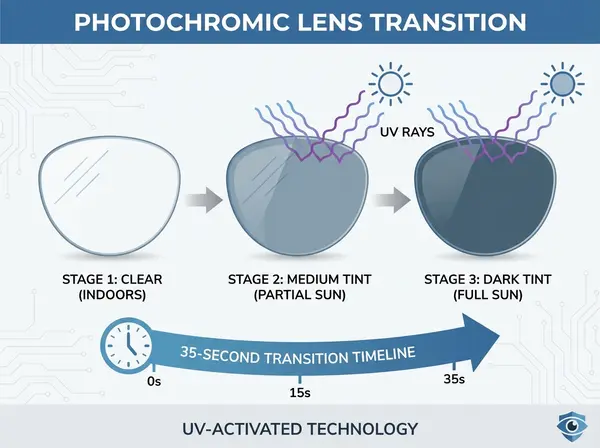
Photochromic lenses aren't new, but 2026's generation responds faster and adjusts more precisely. The latest technology transitions from clear to dark in 35 seconds (versus 2-3 minutes for older versions) and fine-tunes tint based on UV exposure, not just brightness.
Beyond photochromics:Electrochromic lenses can be manually controlled via a small button or app, letting you darken lenses on demand—perfect for unexpected glare on Highway 101 or shifting from foggy mornings to bright afternoons.
San Francisco advantage:Our city's famously variable weather makes adaptive lenses practical rather than optional. One pair handles fog, full sun, and everything between.
6. Blue Light Management That Actually Works
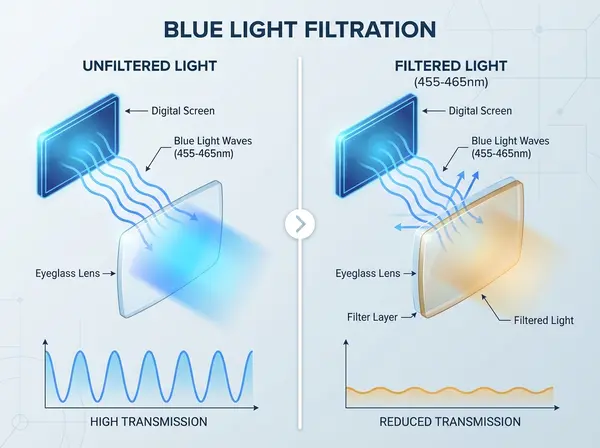
After years of overhyped "blue light blocking" glasses, 2026 brings science-backed solutions. Modern blue light filters target specific wavelengths (455-465nm) proven to disrupt circadian rhythms, without the yellow tint that plagued earlier coatings.
The research:While blue light doesn't cause permanent eye damage, it does contribute to digital eye strain and can suppress melatonin production when you're on screens after sunset.American Academy of Ophthalmology
Our approach:We customize blue light filtering based on your screen time, work schedule, and sleep patterns. A software engineer coding until midnight needs different protection than a morning-shift barista.
7. Personalized Fit Technology
Mass-produced frames never fit everyone perfectly. In 2026, we're moving toward true customization using 3D facial mapping and adjustable components.
What this looks like:Digital scans capture 27 facial measurements—not just pupillary distance but temple width, nose bridge angle, ear positioning, and facial asymmetries. Frames can then be micro-adjusted or custom-manufactured for your unique proportions.
The difference you'll feel:No more sliding down your nose, no pressure headaches, no constant readjusting. Your glasses sit where they belong and stay there.
Contact Lens Innovation: Beyond Daily Disposables
If you wear contacts, 2026's material advances deserve attention. The contact lens market is projected to reach $17.46 billion by 2034, driven by innovations in comfort, health, and functionality.LinkedIn Market Analysis
Moisture-retention technology:Lenses now incorporate ingredients that bind water molecules to the lens surface throughout the day—addressing the 3 PM dryness that plagued earlier designs.
UV and blue light integration:Select contact lenses now offer built-in UV protection and optional blue light filtering, eliminating the need for separate computer glasses in some cases.
Expanded parameters:Manufacturers have dramatically increased the range of available prescriptions, especially for astigmatism and presbyopia. If you were told "contacts won't work for you" in the past, it's time for a re-evaluation.
The Eyes in Disguise Advantage: Why Our Cow Hollow Practice Stands Out
With 30 years serving San Francisco families, Dr. Michelle Blas brings board-certified expertise and a genuine passion for helping clients find their perfect vision solution. Here's what sets our practice apart:
Comprehensive Technology
We invest in diagnostic equipment that most practices reserve for medical specialists—optical coherence tomography (OCT), corneal topography, and digital retinal imaging. These tools catch problems early and enable precision prescriptions.
Curated Designer Collections
Our frame gallery features independent designers and heritage brands you won't find at chain opticals. We select for quality, fit range, and timeless style—not fast-fashion trends that look dated in six months.
Personalized Consultations
We spend time understanding your lifestyle, aesthetic preferences, and vision challenges. Whether you're a Russian Hill attorney, a Marina yoga instructor, or a Presidio parent juggling work and family, your eyewear should support your actual life.
Ongoing Care
Vision changes. Your first pair of progressives needs fine-tuning. Frames require periodic adjustments. We're here for complimentary adjustments, lens cleanings, and prescription updates whenever you need them.
Transparent Pricing
Luxury eyewear doesn't mean opaque pricing. We discuss costs upfront, help maximize insurance benefits, and offer options at multiple price points without compromising quality.
How to Choose Eyewear That Works for Your San Francisco Life

Consider Your Microclimates
Do you commute from foggy Sunset District to sunny SOMA? Keep adaptive lenses or a second pair of prescription sunglasses in your bag.
Match Your Activity Level
Active outdoor enthusiasts benefit from lightweight, impact-resistant materials (titanium, TR-90 plastic). Office professionals might prioritize blue light management and ergonomic nose pads for all-day computer work.
Think Long-Term Value
Quality frames with durable hinges and premium lenses (anti-reflective coating, scratch resistance) cost more initially but last 3-5 years with proper care. Cheap frames replaced annually actually cost more over time.
Don't Ignore Fit
The most stylish frames in the world won't work if they slide down your nose or cause pressure headaches. Prioritize proper fit—our opticians ensure your frames sit correctly before you leave.
Plan for Versatility
Many clients maintain a "wardrobe" of eyewear: progressive lenses for general use, computer glasses for work, prescription sunglasses for driving and outdoor activities. This isn't excess—it's optimization.
Taking Care of Your 2026 Eyewear Investment

Daily maintenance:
Rinse frames under lukewarm water before wiping (removes abrasive dust)
Use microfiber cloths only—paper towels and clothing create micro-scratches
Clean weekly with diluted dish soap; avoid household cleaners with ammonia
Storage:
Always use a hard case when glasses aren't on your face
Store away from heat sources (dashboards, windowsills)
Keep a backup pair accessible
Professional care:
Schedule annual comprehensive eye exams (prescriptions change even if your vision feels stable)
Bring glasses in for adjustments every 4-6 months
Replace lenses if you notice scratches affecting vision
Update frames when temples loosen beyond adjustment
When to Schedule Your 2026 Eye Exam
Vision care isn't just about seeing clearly—it's about protecting your long-term eye health. Schedule an exam if:
It's been more than 12 months since your last comprehensive exam
You're experiencing headaches, eye strain, or blurred vision
Your current glasses are more than 2 years old
You're interested in trying contacts for the first time
You want to explore new lens technologies or frame styles
You've noticed changes in your vision (even subtle ones)
You have a family history of eye disease (glaucoma, macular degeneration)
What to expect at Eyes in Disguise:
Your appointment includes a thorough refraction, eye health evaluation, discussion of your lifestyle needs, and personalized recommendations. We allocate time for questions and frame selection—no rushing through.
The Bottom Line: Your Vision Deserves 2026 Technology
The eyewear industry's evolution isn't about gimmicks or unnecessary upgrades. It's about leveraging material science, artificial intelligence, and environmental innovation to improve how you see and protect your eyes for decades to come.
If you're still wearing frames from 2021 or 2022, you're missing out on measurable improvements in comfort, clarity, and performance. And if you've never experienced a truly personalized frame fitting or precision progressive lenses, you haven't yet experienced what modern eyewear can deliver.
San Francisco residents deserve eyewear that matches our city's innovation and style. Whether you're exploring the Presidio trails, presenting to Pacific Heights clients, or navigating BART commutes, your vision should be supported by the best technology available—not what was cutting-edge five years ago.
Ready to experience the 2026 eyewear revolution?
Schedule your comprehensive eye exam with Dr. Michelle Blas at Eyes in Disguise. Call(415) 474-5321or visiteyesindisguise.comto book your appointment.
About the Author
Dr. Michelle Blas, OD, has dedicated her 30-year optometry career to providing exceptional vision care at Eyes in Disguise in San Francisco's Cow Hollow neighborhood. Board-certified with extensive training in pediatric optometry and myopia control, Dr. Blas serves families throughout San Francisco including Pacific Heights, the Marina District, Russian Hill, and the Presidio. She combines evidence-based medical care with personalized service, helping clients navigate eye health challenges with confidence and clarity.
FAQ SECTION
1. Are 2026 eyewear innovations really worth the investment, or is this just marketing?
The advances in materials (phospholipid-infused contact lenses, titanium frames under 10 grams), lens technology (35-second photochromic transitions, targeted blue light filtering), and diagnostic tools (AI-powered prescriptions, 3D fit mapping) represent genuine functional improvements—not cosmetic updates. These technologies measurably improve comfort, visual clarity, and eye health outcomes. That said, not everyone needs every innovation. A comprehensive exam helps identify which technologies benefit your specific vision and lifestyle.
2. How do I know if blue light filtering lenses are necessary for me?
Blue light filters make sense if you spend 6+ hours daily on screens, experience afternoon eye fatigue, or have trouble falling asleep after evening screen time. However, the 20-20-20 rule (every 20 minutes, look 20 feet away for 20 seconds), proper screen ergonomics, and good lighting often matter more than special coatings. We assess your actual screen habits and light exposure patterns to recommend blue light management only when it will make a noticeable difference.
3. What's the difference between standard progressive lenses and the premium options you mentioned?
Standard progressives have a single corridor design based on average measurements. Premium progressives (what we call "personalized" or "digital" progressives) use your exact measurements—including how you tilt your head, your dominant eye, and your typical viewing distances—to create a custom lens. The result: wider fields of clear vision, less peripheral distortion, and faster adaptation. Most clients notice the difference immediately, especially for computer work and driving.
4. Can I still get stylish frames if I have a strong prescription?
Absolutely. High-index lens materials (1.67, 1.74 refractive indices) dramatically reduce lens thickness even for strong prescriptions. Combined with proper frame selection—smaller lens diameters, strategic frame shapes—we can fit high prescriptions into fashionable frames without the "Coke bottle" effect. We guide frame choices that work with your prescription, not against it.
5. How long do quality eyeglass frames actually last?
With proper care, premium frames (Italian acetate, Japanese titanium, handmade construction) typically last 3-5 years. Hardware components like hinges and nose pads can be replaced as needed. Budget frames often show wear—loose hinges, faded color, warped shape—within 12-18 months. For clients who want long-term value, we recommend investing in frame quality and replacing lenses as prescriptions change rather than buying new frames annually.
6. Are sustainable eyewear materials as durable as traditional plastics and metals?
Modern bio-acetates and recycled materials meet the same performance standards as petroleum-based plastics—they're not compromise materials. Ocean-reclaimed plastic frames undergo the same stress testing and durability requirements. Recycled titanium is metallurgically identical to newly mined titanium. The sustainability advantage comes from sourcing and manufacturing, not reduced quality. We wouldn't stock materials that underperform.
7. Do I need separate glasses for computer work, or can one pair do everything?
It depends on your prescription and work setup. If you're under 40 with a simple prescription, a single pair with blue light filtering may suffice. Over 40, or if you're wearing progressives, dedicated computer glasses often improve comfort significantly. Computer glasses optimize the focal distance for screens (20-26 inches), eliminating the neck strain from tilting your head to find the right progressive zone. Many clients keep both and switch based on their activity—it's not redundant, it's strategic.
8. What should I look for in an optometry practice when shopping for 2026 technology?
Ask about diagnostic equipment (Does the practice have OCT imaging? Digital retinal cameras? Corneal topography?), frame selection philosophy (curated collections versus mass-market inventory), and customization capabilities (Can they order custom progressive lenses? Do they offer 3D fit mapping?). Also assess appointment length—comprehensive exams and personalized consultations require time. If the practice feels rushed, you're not getting the individualized care that makes modern technology effective.
