Scleral Contact Lenses in San Francisco: Life-Changing Vision Solutions for Complex Eye Conditions
You've tried every contact lens brand your optometrist recommended. Standard soft lenses won't stay centered on your irregular cornea. Rigid gas permeable lenses feel like sandpaper with every blink. Your previous eye surgeon said your post-LASIK complications make you "not a good contact lens candidate." Perhaps you've been told nothing can help your keratoconus except surgery. Or maybe your severe dry eyes have relegated you to thick glasses, watching from the sidelines as others enjoy the freedom of contact lenses.
What if I told you there's a contact lens technology that has transformed vision for thousands of patients just like you—people who thought they'd exhausted every option? Scleral contact lenses represent one of the most significant advances in specialty contact lens care, offering clear, comfortable vision for conditions that traditional contacts simply cannot address.
After three decades of fitting specialty contact lenses at Eyes in Disguise in Cow Hollow, I've witnessed countless patients experience what they describe as "life-changing" improvements in both vision and quality of life. From the keratoconus patient who couldn't drive at night regaining confidence behind the wheel, to the post-LASIK patient finally comfortable enough to work full days at a computer, to the severe dry eye sufferer who can wear contacts for the first time in years—scleral lenses solve problems other solutions cannot.
Let's explore what makes scleral lenses different, who benefits most from this technology, and why San Francisco patients are increasingly choosing Eyes in Disguise for their custom scleral lens fittings.
Understanding Scleral Lenses: A Different Approach to Contact Lens Wear
If you're unfamiliar with scleral lenses, the name itself provides a clue to what makes them unique. Unlike traditional contact lenses that rest directly on your cornea, scleral lenses vault entirely over the corneal surface and rest on the sclera—the white part of your eye. This fundamental design difference creates both optical and therapeutic benefits impossible with standard contact lenses.
The Anatomy of a Scleral Lens
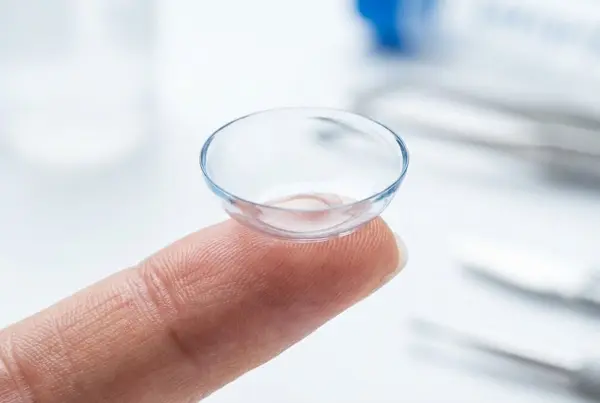
Think of scleral lenses as tiny bowls that create a perfect optical surface in front of your eye. Here's what makes them revolutionary:
Size Matters – Scleral lenses are significantly larger than traditional contacts, typically ranging from 14mm to 24mm in diameter (compared to standard soft lenses at 14mm). This larger size provides several advantages: they center perfectly with every blink, they're easier to handle despite initial intimidation, and they create a stable platform for vision correction regardless of corneal irregularities.
The Fluid Reservoir – Between the back surface of the scleral lens and your cornea sits a thin layer of sterile saline solution. This fluid reservoir serves multiple purposes: it smooths out corneal irregularities to provide crystal-clear optics, it keeps your cornea constantly hydrated (crucial for dry eye sufferers), and it protects sensitive corneal tissue from environmental irritants and friction.
Custom Design – Every scleral lens is custom-designed based on detailed topographical maps of your unique eye shape. Using advanced diagnostic technology at Eyes in Disguise—including corneal topography and OCT imaging—we create lenses that fit your eyes with micron-level precision. No two eyes are identical, and no two scleral lenses should be either.
Gas Permeable Material – Made from highly oxygen-permeable rigid materials, scleral lenses allow adequate oxygen to reach your cornea despite the fluid reservoir. Modern materials provide oxygen transmission rates that support healthy corneal metabolism even with all-day wear.
How Scleral Lenses Create Clear Vision
The optical magic of scleral lenses lies in their ability to functionally replace an irregular corneal surface with a perfectly smooth one. If your cornea has an irregular shape—whether from keratoconus, post-surgical complications, corneal scarring, or other conditions—traditional contacts can't fully correct the resulting optical distortions. The corneal irregularities create what optometrists call "higher-order aberrations" that cause ghosting, halos, glare, and fluctuating vision no matter how perfect your prescription.
Scleral lenses solve this by vaulting completely over the irregular cornea and replacing it with a smooth, regular front surface. The saline reservoir fills in the corneal irregularities, and the rigid front surface of the lens creates the optical clarity you've been missing. Patients often describe their first moments seeing through properly fitted scleral lenses as revelatory—crisp, clear vision they didn't know was still possible.
5 Conditions That Benefit Most from Scleral Lenses
While scleral lenses can help various vision conditions, certain patients experience truly life-changing improvements. Here are the five conditions where scleral lenses excel:
1. Keratoconus: Restoring Vision to Cone-Shaped Corneas
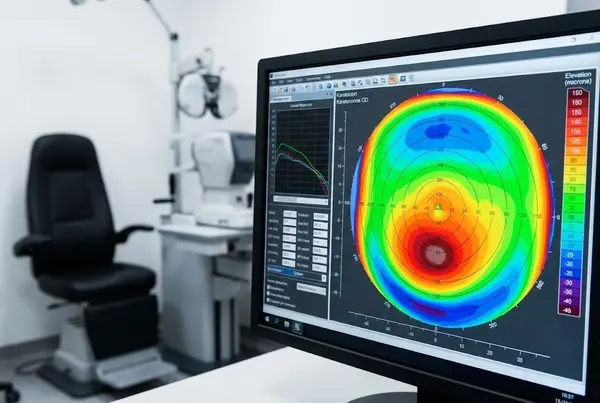
Keratoconus—a progressive condition where the cornea bulges forward into an irregular cone shape—affects approximately 1 in 2,000 people, with higher rates in certain ethnic populations common in San Francisco's diverse community. As the cornea distorts, it creates severe irregular astigmatism that glasses cannot adequately correct and standard contacts cannot comfortably address.
Traditional rigid gas permeable (RGP) lenses can improve vision for keratoconus patients, but they rest directly on the cone, creating discomfort and often unstable positioning. The cone apex experiences constant pressure and friction, making all-day wear difficult or impossible for many patients.
Scleral lenses vault over the entire cone, eliminating direct contact with the sensitive corneal apex. The fluid reservoir neutralizes the irregular surface, while the lens's large diameter provides rock-solid stability. Recent research published in PMC (January 2025) confirms that scleral lenses provide "substantial and sustained improvements in visual acuity and quality of life for keratoconus patients, particularly those with advanced disease" PMC.
At Eyes in Disguise, I've fit scleral lenses for keratoconus patients ranging from early-stage disease in their twenties to advanced cases in their sixties. Many arrive having been told they need corneal transplant surgery—scleral lenses often defer or eliminate that need entirely. The visual improvement is typically dramatic: patients who struggled to pass driving tests suddenly achieve 20/20 or better vision with sclerals.
2. Post-LASIK Complications: Addressing Surgical Aftereffects
LASIK and PRK have helped millions achieve clear vision without glasses, but a small percentage of patients experience complications that standard correction cannot address. These complications include:
Irregular Astigmatism – If the corneal reshaping isn't perfectly uniform, irregular astigmatism results, causing distorted vision that glasses can't fully correct.
Severe Dry Eye – LASIK temporarily or permanently reduces corneal sensitivity and tear production, leaving some patients with debilitating dry eye symptoms. Many can no longer tolerate standard contact lenses due to dryness.
Visual Aberrations – Some post-LASIK patients experience persistent glare, halos, starbursts, and night vision problems that interfere with driving and daily activities.
Ectasia – In rare cases, the thinned cornea bulges forward post-surgery (similar to keratoconus), creating progressive vision loss.
Scleral lenses address all these complications simultaneously. The rigid optical surface corrects irregular astigmatism and reduces aberrations. The fluid reservoir provides constant corneal hydration, relieving dry eye symptoms that make standard contacts intolerable. And for ectasia cases, sclerals provide the same benefits as they do for keratoconus.
I've seen post-LASIK patients at Eyes in Disguise who regretted their surgery decision—until scleral lenses restored the clear, comfortable vision they'd hoped LASIK would provide. While we always hope surgical outcomes are perfect, when complications occur, sclerals offer an excellent solution.
3. Severe Dry Eye Disease: The Therapeutic Lens
For patients with severe dry eye disease—whether from Sjögren's syndrome, graft-versus-host disease, chronic blepharitis, or other causes—scleral lenses function as much as therapy as vision correction. The constant fluid reservoir bathes the cornea in moisture, protecting it from the drying effects of air exposure and providing relief that artificial tears alone cannot achieve.
Think of scleral lenses as creating a mini-aquarium for your cornea. Where standard contacts can exacerbate dry eye by absorbing tears from your ocular surface, sclerals do the opposite—they trap moisture against your cornea and maintain hydration for hours. Many severe dry eye patients describe sclerals as more comfortable than no lens at all, since the fluid layer protects their sensitive corneas from environmental exposure.
During the initial fitting at Eyes in Disguise, dry eye patients often express skepticism that any contact lens could help their condition. The transformation when they experience proper scleral lens fit for the first time is remarkable—many report immediate relief from burning, grittiness, and the constant awareness of their eyes that defines severe dry eye.
Research confirms this clinical experience. Studies show scleral lenses significantly improve both symptoms and objective measures of ocular surface health in severe dry eye patients PMC 2024. At Eyes in Disguise, we often combine scleral lens wear with our TearCare® dry eye treatment for optimal long-term management.
4. Corneal Transplants and Scarring: Navigating Irregular Surfaces
Patients who've undergone corneal transplant surgery (penetrating keratoplasty or newer techniques like DSAEK/DMEK) often face ongoing vision challenges. The transplant creates an irregular corneal surface where donor tissue meets native tissue, resulting in high irregular astigmatism that's difficult to correct with glasses or standard contacts.
Similarly, corneal scarring from infections, injuries, or inflammatory conditions creates optical irregularities and sometimes increased sensitivity that makes traditional contact lens wear problematic.
Scleral lenses excel in these scenarios by vaulting over the irregular graft-host junction or scarred areas, providing both optical correction and protection for sensitive tissue. Post-transplant patients often achieve their best vision ever with properly fitted sclerals—better than they experienced even before their original corneal problems began.
5. High Prescriptions and Complex Astigmatism: When Standard Options Fall Short
Some patients with very high myopia (nearsightedness), hyperopia (farsightedness), or astigmatism find that standard contact lenses either don't provide adequate correction or are unstable and uncomfortable. Soft toric lenses for astigmatism rotate on the eye, causing fluctuating vision. Standard RGP lenses may not center properly with high prescriptions.
Scleral lenses' large diameter provides exceptional stability regardless of prescription strength, and the custom design allows for correction of virtually any refractive error—including presbyopia with multifocal sclerals. For San Francisco professionals who need crisp vision for detailed work, sclerals often provide clarity that standard options simply cannot match.
The Scleral Lens Fitting Journey at Eyes in Disguise
If you're accustomed to quick contact lens fittings where you're in and out in an hour, scleral lens fitting represents a different—and more involved—process. However, this investment of time and precision is exactly what delivers the exceptional outcomes scleral lens wearers experience.
Initial Comprehensive Evaluation
Your scleral lens journey begins with a thorough assessment to determine if you're a good candidate and gather the detailed measurements needed for custom lens design.
Medical History and Goals – We discuss your eye health history, previous contact lens experiences (if any), specific vision complaints, daily visual demands, and goals for scleral lens wear. Understanding what activities you need clear vision for helps us optimize your lens design.
Comprehensive Eye Examination – A complete eye exam assesses your current prescription, ocular health, and identifies any conditions requiring treatment before lens fitting begins.
Advanced Corneal Mapping – Using corneal topography, we create detailed three-dimensional maps of your corneal shape. These maps reveal irregularities invisible to standard examination and guide custom lens design. At Eyes in Disguise, our advanced diagnostic technology captures thousands of data points to ensure micron-level precision.
Scleral Shape Assessment – The sclera (white of your eye) isn't uniformly curved—it has unique contours that vary between individuals. We assess these contours to ensure optimal lens positioning and comfort.
Diagnostic Fitting and Refinement
Based on your measurements, we order diagnostic lenses—trial lenses that approximate your ideal final design. The fitting process typically involves 3-4 appointments over 2-3 months as we refine the fit.
First Fitting Appointment – You'll learn insertion and removal techniques (easier than you'd think despite the lens size—most patients master it within their first week). We evaluate how the diagnostic lenses fit, checking clearance over your cornea, alignment with your sclera, and initial vision quality. Expect to spend about 90 minutes at this appointment.
Short-Term Wear Trial – You'll wear diagnostic lenses for several hours or days (depending on your specific situation) to assess comfort, vision, and any fit issues that appear with longer wear. You'll return for follow-up evaluation and potential lens modifications.
Refinement Appointments – Based on how diagnostic lenses perform, we may order new diagnostic lenses with adjusted parameters. Each refinement brings us closer to your ideal final lens design. This iterative process—though time-consuming—is essential for optimal long-term outcomes.
Final Lens Order – Once we achieve excellent fit, comfort, and vision with diagnostic lenses, we order your custom final lenses. Manufacturing typically takes 1-2 weeks. When they arrive, we verify fit, teach proper care protocols, and establish your follow-up schedule.
Insertion and Removal: Easier Than You Think
The size of scleral lenses initially intimidates most patients. "You want me to put THAT in my eye?" is a common reaction at the first fitting. However, the large size actually makes handling easier than small soft lenses, and with proper technique, insertion and removal become second nature within days.
Insertion Process – Using a small plunger or your fingers (depending on preference and lens type), you fill the bowl of the lens with sterile saline solution, position it in front of your eye while looking down, and gently place it on your eye. The large diameter means you don't need precise aiming—the lens essentially "finds" your eye. Total time once proficient: 20-30 seconds per eye.
Removal Process – Using a small plunger placed at the edge of the lens, you break the seal and gently lift the lens off your eye. Alternative techniques include using your eyelids to "pop" the lens out. With practice, removal takes just seconds.
During your fitting at Eyes in Disguise, we provide hands-on training and won't send you home until you're comfortable with both insertion and removal. We also provide detailed video instructions you can reference as needed.
Adaptation Period and Long-Term Success
Most patients adapt to scleral lenses within 1-2 weeks. Initial awareness of the lenses typically resolves quickly as your eyes adjust. Vision often improves progressively over the first week as your corneas settle into their new hydrated state.
We schedule follow-up appointments at 1 week, 1 month, 3 months, and then annually (or as needed) to monitor lens fit, ocular health, and address any concerns. With proper care and monitoring, scleral lenses typically last 1-3 years before replacement is needed due to normal wear or prescription changes.
Daily Life with Scleral Lenses: What to Expect
Understanding the daily realities of scleral lens wear helps set appropriate expectations and ensures long-term success.
Wearing Schedule and Comfort
Most scleral lens wearers comfortably wear their lenses 12-16 hours daily—longer than many soft lens wearers can tolerate. The fluid reservoir means your corneas remain hydrated throughout wear, and the lack of lens movement means minimal awareness of the lenses once adapted.
However, scleral lenses do require morning insertion and evening removal—you cannot sleep in them (unlike some extended-wear soft lenses). This daily insertion/removal becomes routine but does require a few extra minutes in your morning and evening routines.
Some wearers experience slight midday fogging—cloudiness that develops in the fluid reservoir after several hours of wear. This is more common in patients with certain dry eye conditions and can usually be managed with preservative-free saline refills (removing and reinserting lenses with fresh solution) or lens design modifications.
Care and Maintenance
Scleral lens care involves slightly more steps than soft disposable lenses but is straightforward with proper habits:
Daily Cleaning – After removal each evening, clean lenses with approved rigid lens cleaner, rinse thoroughly, and store in conditioning solution overnight. Morning insertion requires filling with sterile saline (not the conditioning solution).
Weekly Protein Removal – Use an enzymatic cleaner weekly to remove protein deposits that can cloud lenses and reduce comfort.
Replacement Supplies – You'll need rigid lens cleaner, conditioning solution, preservative-free saline for filling, and optionally a plunger for insertion/removal. Monthly cost typically runs $30-50 for supplies.
Proper Storage – Lenses should be stored in a clean case with fresh solution nightly. Replace cases every 3 months to prevent contamination.
At Eyes in Disguise, we provide detailed written care instructions and are always available to troubleshoot any care-related questions.
Activities and Lifestyle Considerations

Scleral lenses accommodate virtually any lifestyle—with a few considerations:
Sports and Exercise – The large diameter and vault over your cornea make sclerals exceptionally stable during physical activity. Unlike soft lenses that can dislodge or fold, or small RGPs that can pop out, sclerals stay firmly in place. Many athletes prefer sclerals for this reason. For water sports, wear swimming goggles over your lenses to prevent exposure to pool water or ocean contaminants.
Screen Time – San Francisco's tech professionals particularly appreciate sclerals' performance during long computer work sessions. The constant hydration prevents the dryness and discomfort that plagues many soft lens wearers during extended screen time.
Travel – Bring extra supplies (solution, cleaner, saline) in carry-on luggage. The solid case and rigid nature of sclerals make them more travel-friendly than disposables—no need to pack multiple pairs or worry about running out mid-trip.
Driving – Most scleral lens wearers report superior night driving vision compared to glasses or standard contacts, with reduced glare and halos. This is particularly valuable for San Francisco's nighttime fog and wet road conditions.
7 Signs You Might Be a Candidate for Scleral Lenses
Not everyone needs scleral lenses—standard contacts work beautifully for most people. However, certain situations indicate sclerals might be your best solution:
1. Standard Contact Lenses Are Uncomfortable
If you've tried multiple soft lens brands and rigid lenses but find all contact lenses uncomfortable—causing dryness, redness, or irritation—scleral lenses' unique design might solve your discomfort issues.
2. Your Vision Fluctuates with Contacts
Contact lenses that slide around, rotate, or provide inconsistent vision throughout the day suggest your eye shape or condition needs scleral lens stability.
3. You've Been Diagnosed with Keratoconus or Corneal Irregularities
These conditions specifically benefit from scleral lenses and should prompt a consultation at Eyes in Disguise to discuss your options.
4. Post-Surgical Complications Have Left You Dissatisfied
If LASIK, PRK, or other eye surgery didn't provide the results you hoped for—or created new problems—scleral lenses may restore the vision quality you expected from surgery.
5. Severe Dry Eyes Make Current Contacts Intolerable
When artificial tears and standard dry eye treatments aren't enough to make contact lens wear comfortable, scleral lenses' therapeutic benefits may be your solution.
6. You Have Very High Prescriptions
If your prescription is beyond the range of standard soft lenses, or if available options provide poor vision or comfort, custom scleral lenses can be designed for virtually any prescription.
7. You've Been Told "You're Not a Contact Lens Candidate"
This statement often really means "You're not a candidate for standard contact lenses." Scleral lenses have made contact lens wear possible for thousands of patients told they had no options.
Understanding Scleral Lens Investment: Cost and Insurance
Scleral lenses represent a significant investment—but for patients who need them, they're invaluable. Understanding the costs and insurance considerations helps you plan appropriately.
What Scleral Lenses Cost in San Francisco
Expect the following investment for custom scleral lens fitting and lenses at Eyes in Disguise:
Initial Fitting Fees: $1,500-$2,500 – Covers comprehensive evaluation, corneal mapping, diagnostic lens trials, follow-up appointments, and professional fitting services. This fee reflects the complexity and time required for proper custom fitting—typically 4-6 appointments over 2-3 months.
Custom Lenses: $600-$1,200 per lens – Your final custom lenses are individually designed and manufactured. Most patients order both eyes, doubling this cost.
Annual Supplies: $300-$500 – Cleaning solutions, conditioning solutions, preservative-free saline, enzyme cleaners, and replacement supplies.
Lens Replacement: Every 1-3 years – Lenses require replacement due to normal wear or prescription changes. Replacement lenses (without full refitting) typically cost $400-$800 per lens.
Total First-Year Investment: $3,000-$5,000 for comprehensive fitting and both lenses. Subsequent years involve only supply costs ($300-$500) unless lenses need replacement.
While this represents a substantial upfront cost compared to soft disposable contacts, consider the value: restored vision quality, elimination of discomfort, and in many cases, a life-changing improvement in visual function that no other solution can provide.
Insurance Coverage for Scleral Lenses
Insurance coverage for scleral lenses varies significantly and depends primarily on medical necessity documentation:
Medical Insurance (Not Vision Insurance) – Scleral lenses are medical devices, not routine vision correction. When prescribed for conditions like keratoconus, corneal scarring, post-surgical complications, or severe dry eye, medical insurance may cover fitting fees and lenses—often with your standard deductible and copay.
Vision Insurance Limitations – Standard vision insurance typically covers only routine contacts, providing perhaps $150-$200 toward scleral costs—helpful but not comprehensive. However, some vision plans offer supplemental specialty lens coverage.
Medicare Coverage – Medicare may cover scleral lenses when medically necessary for specific diagnoses, though coverage rules vary and typically require significant documentation.
HSA/FSA Accounts – Health savings accounts and flexible spending accounts can be used for scleral lens expenses, providing tax savings on your investment.
At Eyes in Disguise, we assist with insurance verification and provide detailed documentation of medical necessity to maximize your coverage. Many patients find their insurance covers 50-80% of costs when medically indicated. We'll review your specific insurance situation during your consultation and provide cost estimates before beginning fitting.
Why Choose Eyes in Disguise for Scleral Lens Fitting
Scleral lens fitting is both art and science—it requires specialized training, advanced technology, patience, and extensive experience to achieve optimal outcomes. Here's what distinguishes scleral lens care at Eyes in Disguise:
Three Decades of Specialty Lens Expertise
With over 30 years of fitting specialty contact lenses in San Francisco, I've guided hundreds of patients through successful scleral lens fittings. Experience matters enormously in scleral lens care—each fitting builds on knowledge from previous patients, creating a depth of expertise that accelerates success and troubleshoots challenges efficiently.
Unlike practices that fit sclerals occasionally, specialty lens fitting is a core competency at Eyes in Disguise. We dedicate significant appointment time to each patient, maintain relationships with all major scleral lens manufacturers, and stay current with the latest designs and fitting philosophies through continuing education and professional associations.
Advanced Diagnostic Technology
Successful scleral lens fitting begins with precise measurements. At Eyes in Disguise, our investment in advanced diagnostic technology includes:
Corneal Topography – Creates detailed three-dimensional maps of your corneal surface with thousands of measurement points, revealing irregularities and guiding initial lens selection.
OCT Imaging – Optical coherence tomography provides cross-sectional views of corneal structure, assesses health, and evaluates scleral lens vault and tear layer thickness with micron-level precision.
High-Resolution Photography – Documents lens fit and positioning, allowing detailed analysis and comparison between fitting appointments.
This technology ensures your custom lenses are designed with maximum precision from the start, reducing the number of trial lenses needed and accelerating your path to successful wear.
Personalized, Patient-Centered Approach
Scleral lens fitting isn't one-size-fits-all. At Eyes in Disguise, we tailor every aspect of your care to your unique needs, lifestyle, and goals:
Extended Appointment Times – We don't rush fittings. Expect 60-90 minute appointments where we answer all questions, address concerns, and ensure you're comfortable with each step of the process.
Hands-On Training – You won't leave your fitting appointment until you're confident with insertion and removal. We provide in-person training, written instructions, video resources, and welcome questions anytime you need support.
Ongoing Support – Adjusting to scleral lenses involves a learning curve. We're available between appointments to troubleshoot concerns, answer questions about care protocols, and provide reassurance during your adaptation period.
Long-Term Care Partnerships – Once fitted, you become part of the Eyes in Disguise family. We monitor your lenses annually, replace them as needed, and adjust fit if your eyes change over time.
Luxury Environment in Cow Hollow
Scleral lens fitting requires multiple appointments over months—you'll be visiting us regularly. Our boutique practice on Union Street provides a comfortable, sophisticated environment that reflects the quality care you'll receive. Located in the heart of Cow Hollow, we're easily accessible from Pacific Heights, the Marina District, Russian Hill, and throughout San Francisco.
Our practice culture combines medical expertise with the personalized service luxury brands provide. You're not a number or a quick fitting slot—you're an individual whose vision and comfort are our priority.
Take the First Step Toward Life-Changing Vision
If you've been struggling with vision problems that standard correction cannot address—whether from keratoconus, post-surgical complications, severe dry eye, or other corneal irregularities—scleral lenses may offer the solution you've been searching for. The transformation patients experience often extends far beyond vision improvement: renewed confidence, restored independence, and the ability to fully engage in work, hobbies, and life without visual limitations.
The fitting process requires commitment—multiple appointments, patience during adaptation, and investment of both time and money. But for patients who need scleral lenses, the results justify this investment many times over. Imagine seeing clearly and comfortably for the first time in years—or perhaps for the first time ever.
Schedule a scleral lens consultation at Eyes in Disguise in Cow Hollow. Call (415) 474-5321 or visit us at 2133 Union Street, San Francisco, CA 94123. Let's explore whether scleral lenses are your path to the clear, comfortable vision you deserve.
About the Author
Dr. Michelle Blas, OD, brings over 30 years of specialized expertise in scleral lens fitting and specialty contact lens care to Eyes in Disguise Optometry in San Francisco's Cow Hollow neighborhood. Board-certified with extensive training in managing complex corneal conditions, Dr. Blas has successfully fitted scleral lenses for hundreds of patients with keratoconus, post-surgical complications, severe dry eye, and irregular astigmatism. She combines advanced diagnostic technology with personalized care, serving patients throughout San Francisco including Pacific Heights, the Marina District, Russian Hill, and the Presidio. Her commitment to achieving optimal outcomes has established Eyes in Disguise as a premier destination for specialty contact lens care in San Francisco.
FAQ SECTION
1. How long does it take to get fitted for scleral contact lenses in San Francisco?
The complete scleral lens fitting process at Eyes in Disguise typically takes 2-3 months and involves 3-4 appointments. Your initial comprehensive evaluation and diagnostic fitting takes about 90 minutes. Follow-up refinement appointments are typically 45-60 minutes each, spaced 1-2 weeks apart as we perfect your lens design. Once your custom lenses are ordered, they usually arrive within 1-2 weeks. While this is longer than standard contact lens fitting, the investment in precision is what delivers the exceptional outcomes scleral lens wearers experience.
2. Are scleral lenses comfortable for all-day wear?
Yes—most scleral lens wearers find them extremely comfortable for 12-16 hours daily, often more comfortable than standard contacts. The lenses vault over your cornea without touching it, eliminating the friction and dryness common with other lens types. The fluid reservoir keeps your cornea constantly hydrated. Many patients report they're less aware of scleral lenses than they were of soft contacts. There's typically a 1-2 week adaptation period, but once adapted, comfort is exceptional for most wearers.
3. How much do scleral contact lenses cost in San Francisco, and does insurance cover them?
At Eyes in Disguise, expect a first-year investment of $3,000-$5,000, including comprehensive fitting ($1,500-$2,500), custom lenses for both eyes ($1,200-$2,400), and supplies ($300-$500). Subsequent years involve only supply costs unless lenses need replacement. Insurance coverage varies: medical insurance (not vision insurance) often covers 50-80% of costs when scleral lenses are medically necessary for conditions like keratoconus, severe dry eye, or post-surgical complications. We provide detailed documentation and insurance verification to maximize your coverage.
4. Can scleral lenses help with severe dry eye disease?
Absolutely—scleral lenses are one of the most effective treatments for severe dry eye disease. The fluid reservoir between the lens and your cornea provides constant hydration, protecting your sensitive cornea from air exposure and environmental irritants. Many severe dry eye patients find scleral lenses more comfortable than no lens at all. Research confirms significant improvement in both symptoms and ocular surface health with scleral lens wear. At Eyes in Disguise, we often combine scleral lenses with TearCare® treatment for comprehensive dry eye management.
5. I was told I'm "not a contact lens candidate" after LASIK surgery—can scleral lenses help?
Very likely, yes. Post-LASIK complications including irregular astigmatism, severe dry eye, and ectasia often make standard contact lenses uncomfortable or ineffective, leading to the "not a candidate" statement. However, scleral lenses are specifically designed for these situations. They correct the irregular corneal surface created by surgical complications, provide constant hydration for post-LASIK dry eye, and vault over areas of ectasia. Many post-LASIK patients at Eyes in Disguise have achieved excellent vision and comfort with scleral lenses after being told they had no options.
6. How long do scleral lenses last before needing replacement?
With proper care, scleral lenses typically last 1-3 years before replacement is needed. Lifespan depends on several factors: your care habits, protein deposits that accumulate despite cleaning, scratches from handling, and whether your prescription changes. We examine your lenses at annual appointments and advise when replacement is recommended. Replacement lenses (without complete refitting) typically cost $400-$800 per lens. Most patients budget for lens replacement every 2 years.
7. Are scleral lenses difficult to insert and remove?
No—despite their larger size, scleral lenses are actually easier to handle than small soft lenses once you learn proper technique. At Eyes in Disguise, we provide hands-on training during your fitting and won't send you home until you're comfortable with insertion and removal. Most patients master the technique within their first week. Insertion involves filling the lens bowl with saline and gently placing it on your eye while looking down—total time once proficient is 20-30 seconds per eye. Removal takes just seconds using a small plunger or your eyelids.
8. Can I play sports and exercise while wearing scleral contact lenses?
Yes—scleral lenses are exceptional for sports and exercise. Their large diameter and vault over the cornea make them extremely stable during physical activity. Unlike soft lenses that can dislodge or fold, or small RGP lenses that can pop out, scleral lenses stay firmly in place. Many athletes prefer sclerals specifically for this reason. For water sports, wear swimming goggles over your lenses to prevent exposure to pool water or ocean contaminants. Otherwise, sclerals accommodate virtually any physical activity San Francisco's active lifestyle demands.
