The Complete Guide to Eyeglass Care: How to Keep Your Glasses Looking and Performing Like New
When Sarah, a 38-year-old marketing executive from Pacific Heights, came into our Cow Hollow office with scratched lenses and bent frames after just six months of wear, she was frustrated. "I paid good money for these designer glasses," she told Dr. Blas, examining the damage. "Why didn't they last?"
After a few questions, the issue became clear: Sarah had been cleaning her lenses with her cotton shirt throughout the day, storing them loose in her purse, and leaving them on her car dashboard during hot afternoons. Her glasses hadn't failed—her care routine had.
The reality? Quality eyeglasses are a significant investment—often $300 to $800 or more—and with proper care, they should last 2-3 years or longer. Yet most people treat their glasses carelessly, leading to premature scratches, broken hinges, and degraded coatings that compromise both vision and appearance.
Whether you've just invested in new frames or want to extend the life of your current glasses, this guide covers everything San Francisco residents need to know about eyeglass care, maintenance, and protection.
Why Proper Eyeglass Care Matters
Beyond the obvious financial investment, your glasses are medical devices that directly impact your daily life. Scratched lenses force your eyes to work harder, causing strain and headaches. Misaligned frames alter optical centers, degrading vision quality. Damaged coatings reduce UV protection and anti-reflective benefits.
The cost of neglect:
Scratched lenses:Often require complete lens replacement ($150-$400+)
Broken frames:May need new frames entirely if damage is severe ($200-$600+)
Coating damage:Cannot be repaired; requires new lenses
Bent frames:Affects optical alignment, causing vision distortion and discomfort
The benefits of proper care:
Extended lifespan:3-5 years vs. 6-12 months with poor care
Better vision:Clean, undamaged lenses maintain optical clarity
Comfort:Properly adjusted frames prevent pressure points and headaches
Cost savings:Avoid premature replacements and repairs
The Right Way to Clean Your Glasses: A Step-by-Step Guide
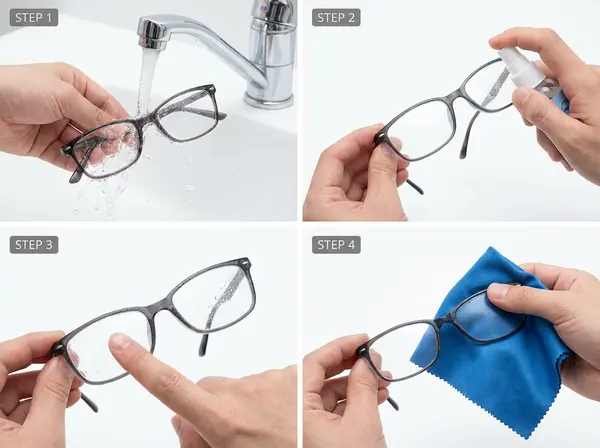
Most people clean their glasses incorrectly, unknowingly creating micro-scratches that accumulate over time. Here's the proper method recommended by optometrists:
Daily Cleaning Routine (Morning & Evening)
Step 1: Rinse with Lukewarm Water
Hold glasses under a gentle stream of lukewarm tap water (not hot—can damage coatings). This removes abrasive dust and particles that would scratch lenses if wiped dry.
Why it matters:Even invisible dust particles act like sandpaper when dragged across lenses with a dry cloth. Water removes these particles safely.
San Francisco tip:Our coastal location means salt residue accumulates on frames, especially near the Marina, Embarcadero, or Ocean Beach. Daily rinsing prevents buildup.
Step 2: Apply Lens Cleaner
Put one small drop of lens cleaning solution on each lens (both sides). Avoid dish soap unless it's completely free of lotions, moisturizers, or additives—these leave residue.
Recommended cleaners:
Purpose-made eyeglass lens cleaner spray
Diluted dish soap (Dawn Ultra, unscented)
Pre-moistened lens cleaning wipes (Zeiss, Koala Kleaner)
Never use:
Window/glass cleaners (Windex contains ammonia that damages coatings)
Household cleaners with bleach or acids
Hand soap with moisturizers
Paper products (napkins, tissues, paper towels)
Step 3: Gently Clean All Surfaces
Using your fingertips, gently rub both sides of each lens, nose pads, and frame edges. Focus on areas where oils accumulate:
Where lenses meet frames
Nose pads (collect skin oils and makeup)
Temple tips (contact hair products and skin oils)
Step 4: Rinse Again
Thoroughly rinse all soap/cleaner residue under lukewarm water. Soap film causes streaks and attracts more dirt.
Step 5: Dry with Microfiber Cloth
Gently pat lenses dry with a clean, dedicated microfiber cloth. Don't rub vigorously—use light pressure and let the cloth absorb moisture.
Microfiber care:Wash cloths weekly with mild detergent (no fabric softener—it leaves residue). Air dry or tumble dry low. Keep one cloth at home and one in your bag.
Quick Cleaning Throughout the Day
When you don't have access to water:
Option 1: Lens Cleaning Spray + Microfiber Cloth
Spray both sides of lenses, wipe gently with clean microfiber cloth. Effective for fingerprints and light smudges.
Option 2: Pre-Moistened Lens Wipes
Individual packets (Zeiss, Koala Kleaner) are TSA-friendly and perfect for bags, cars, or travel. Use a fresh wipe—never reuse.
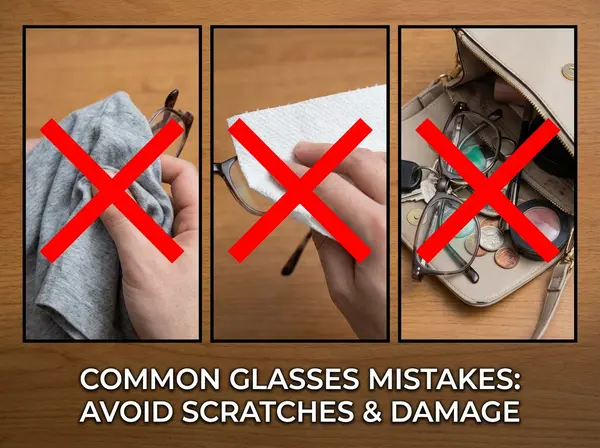
Never use:Your shirt, sleeve, scarf, or other clothing. Cotton and synthetic fabrics are too abrasive and often have dirt particles that scratch lenses. This is the #1 cause of scratched glasses.
What Damages Your Glasses (And How to Avoid It)
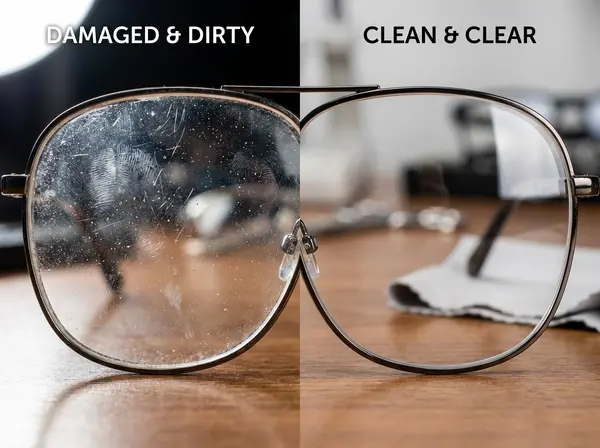
The 8 Most Common Causes of Eyeglass Damage
1. Dry-Wiping Lenses
The problem:Wiping lenses without water or cleaner drags dust particles across the surface, creating micro-scratches that accumulate into noticeable damage.
The solution:Always rinse with water first, or use pre-moistened wipes. Never use your shirt, even in emergencies.
2. Leaving Glasses Loose in Bags or Pockets
The problem:Keys, phones, coins, makeup, and other items scratch lenses and bend frames. This is especially common in larger purses and gym bags.
The solution:Always store glasses in a hard case when not wearing them. Keep a case in your car, desk, and bag.
San Francisco context:If you commute via BART or Muni, loose glasses in bags get jostled constantly. A hard case prevents damage during transit.
3. Heat Exposure
The problem:Leaving glasses on car dashboards, near stoves, in hot cars, or on heaters can warp plastic frames, damage lens coatings, and melt anti-reflective layers.
The solution:Never leave glasses in hot environments. Store in center console, glove box, or bring with you.
SF summer note:Even our "mild" summers create 120°F+ dashboard temperatures in parked cars—hot enough to damage glasses within 20-30 minutes.
4. Wearing Glasses on Top of Your Head
The problem:This stretches frames out of shape, causing them to sit loose and crooked. Hair products also transfer to lenses, creating hard-to-remove residue.
The solution:Remove glasses and store them properly. If you switch between glasses and contacts, use a case—never your head as a "holder."
5. Using Harsh Chemicals
The problem:Hairspray, perfume, sunscreen, hand sanitizer, and cleaning products contain chemicals that degrade lens coatings (anti-reflective, anti-fog, scratch-resistant).
The solution:Put glasses on after applying hair products and perfume. Wash hands thoroughly after using hand sanitizer before touching glasses. If chemicals contact lenses, rinse immediately.
6. Setting Glasses Lens-Down
The problem:Placing glasses face-down on tables grinds dirt and debris into lenses, scratching them.
The solution:Always set glasses with temples folded and lenses facing up, or store in a case. Make this an automatic habit.
7. Sleeping in Glasses
The problem:Pressure from pillows bends frames, shifts nose pads, and can crack lenses. You'll wake with crooked, uncomfortable glasses.
The solution:Remove glasses before sleeping—even brief naps on the couch. Keep a bedside case for convenience.
8. Using the Wrong Cleaning Materials
The problem:Paper towels, tissues, napkins, and toilet paper contain wood fibers that scratch lenses despite feeling soft. Clothing fabrics are also too abrasive.
The solution:Microfiber cloths only. Buy several and rotate through weekly washing.
Proper Storage: Protecting Your Investment
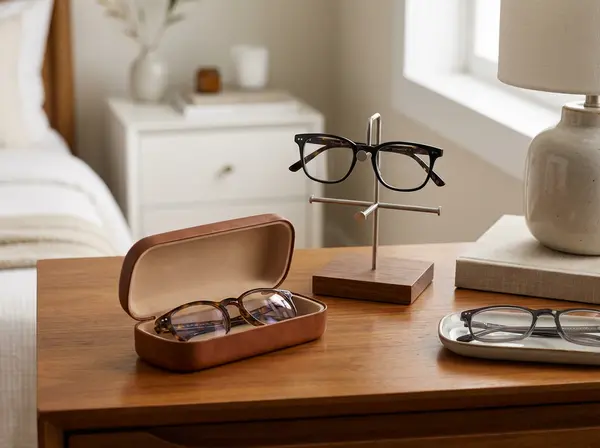
At Home
Nightstand case:
Keep a hard case on your nightstand for overnight storage. This protects glasses from accidental drops, pets, children, and morning scrambles where you might sit on them.
Consistent location:
Designate one spot for glasses when not wearing them. This prevents the "where are my glasses?" hunt that leads to frantic searching and potential damage.
Avoid:
Bathroom counters (moisture, hairspray, toothpaste splatter)
Kitchen counters (cooking grease, heat, spills)
Windowsills (direct sun damages coatings and can warp plastic frames)
Bed, couch, or chair surfaces (easy to sit on or knock off)
During Activities
At work/desk:
Keep a hard case in your desk drawer. If you remove glasses for Zoom calls or reading, store them properly—not pushed up on your head or balanced on your keyboard.
At the gym:
Bring a hard case and store glasses in your locker during workouts. Never leave them loose in gym bags with shoes and sweaty clothes.
Swimming/water activities:
Leave glasses in a secure case in your locker or car. If you need vision correction in water, discuss prescription swim goggles or daily disposable contacts with Dr. Blas.
Outdoor activities:
If you're hiking, biking, or running in San Francisco's parks, keep a case in your backpack. Remove glasses during high-contact sports (use sports goggles if vision correction is needed).
Travel and Commuting
Daily commute:
Keep a hard case in your bag. If you switch between sunglasses and regular glasses on your commute (foggy Marina morning to sunny Financial District afternoon), carry both in protective cases.
Air travel:
Always carry glasses in carry-on luggage in a hard case. Checked bags get roughly handled. TSA-friendly lens wipes are perfect for mid-flight cleaning.
Hotel stays:
Use the provided safe or a drawer for overnight storage—never leave glasses on nightstands in unfamiliar rooms where you might knock them off.
Frame Maintenance: Keeping Glasses Fitting Properly
Even with careful handling, regular wear causes frames to loosen and shift. Professional maintenance keeps them comfortable and functioning correctly.
DIY Minor Adjustments (If You're Comfortable)
Tightening loose screws:
Use an eyeglass repair kit with tiny screwdrivers (available at drugstores). Turn screws clockwise just until snug—don't overtighten or you'll strip the screw hole.
Straightening bent frames (minor):
Gently bend plastic frames back to shape using warm (not hot) water to soften the material slightly. For metal frames, very gentle pressure may help, but it's easy to over-correct—better to visit your optician.
What NOT to do:
Don't use pliers or tools not designed for eyeglasses
Don't apply force to plastic frames when cold (they'll crack)
Don't try to adjust spring hinges yourself
Don't tighten screws excessively (causes frame damage)
Professional Maintenance (Recommended)
Every 3-4 months:
Bring glasses to Eyes in Disguise for complimentary professional maintenance:
Thorough cleaning (including hard-to-reach crevices)
Screw tightening
Nose pad replacement (if needed)
Frame alignment check
Adjustment for comfort
Why professional care matters:Opticians have specialized tools (frame heaters, alignment gauges, precision screwdrivers) and training to adjust frames correctly without damage. DIY adjustments often over-correct, creating new problems.
When to schedule immediately:
Glasses sit crooked or uneven
Nose pads leave deep marks or don't touch your nose
Temples feel too tight or too loose
Frames slide down your nose constantly
Any visible damage (cracks, breaks, loose parts)
San Francisco-Specific Care Considerations

Coastal Salt and Fog
The challenge:San Francisco's marine air leaves salt deposits on frames and lenses, which can corrode metal components and leave stubborn spots on lenses.
The solution:
Rinse glasses daily (even if they don't "look" dirty)
Pay extra attention to cleaning nose pads and hinges where salt accumulates
Consider corrosion-resistant frame materials (titanium, stainless steel) if you live near the coast
Microclimates and Temperature Swings
The challenge:Going from foggy Ocean Beach to sunny Mission within 20 minutes, or entering warm BART stations from cold fog, causes rapid temperature changes that stress frame materials and fog lenses.
The solution:
Allow glasses to gradually adjust to temperature changes
Consider anti-fog coating (available during lens ordering)
Wipe condensation gently—don't leave it to air-dry (leaves spots)
Active Urban Lifestyle
The challenge:Walking SF's hills, navigating crowded Muni, cycling, and active outdoor culture increase risk of drops, impacts, and exposure to elements.
The solution:
Invest in a durable hard case for daily carry
Consider a sport strap for hiking or cycling (attaches to temples)
Keep backup glasses in your car or office
Choose impact-resistant lens materials (polycarbonate, Trivex)
Tech Industry Screen Time
The challenge:Extended screen time means glasses stay on faces 10-12+ hours daily, accumulating oils, dust, and dirt faster.
The solution:
Clean glasses at lunch break (mid-day refresh)
Keep lens cleaner and microfiber cloth at your desk
Consider blue light filtering coatings (easier to keep clean than uncoated lenses)
Remove glasses during breaks to give frames and your face a rest
When to Replace Your Glasses
Even with excellent care, glasses eventually need replacement. Knowing when ensures you're always seeing your best.
Replace Lenses When:
Scratches interfere with vision(despite cleaning)
Coatings are deteriorating(peeling, crazing, hazing)
Prescription has changed(typically every 1-3 years for adults)
Impact damage occurs(chips, cracks—even small ones compromise structural integrity)
Can lenses be replaced in existing frames?Often, yes—if frames are in good condition. This saves money versus buying entirely new glasses.
Replace Frames When:
Structural damage(cracks, breaks that affect stability)
Hinges are damaged beyond repair(stripped screws, broken springs)
Frames are stretched out(can't be adjusted back to proper fit)
Material degradation(fading, warping, brittleness from age/sun exposure)
You want a style update(every 2-3 years keeps you current)
Average frame lifespan:2-4 years with good care; 6-18 months with poor care.
Warning Signs Your Glasses Need Attention:
Constant sliding down your nose (even after adjustments)
Visible gaps between nose pads and skin
Pressure headaches from tight temples
Visible lens scratches, even if vision seems "okay"
Coating flaking or peeling
Loose screws that won't stay tight
Squeaking or clicking hinges
Discoloration or fading of frame material
Building a Complete Eyewear Wardrobe
Relying on a single pair of glasses puts your vision at risk if they're lost, broken, or being repaired. Consider a complete eyewear system:
Primary Everyday Glasses
Your main prescription glasses for daily wear—invest in quality frames and premium lens coatings.
Prescription Sunglasses
Essential UV protection for outdoor activities. San Francisco's variable weather makes these particularly valuable (see our Complete Guide to UV Protection & Prescription Sunglasses).
Backup Pair
An older prescription (within 1-2 years) or budget-friendly second pair ensures you're never without vision correction if primary glasses break.
Computer Glasses (Optional)
If you spend 6+ hours daily on screens, dedicated computer glasses with optimized intermediate focus reduce neck strain from progressives.
Sports/Activity Glasses (Optional)
Impact-resistant frames and lenses for cycling, hiking, or contact sports. Some people prefer contacts for sports, but prescription sports goggles offer superior protection.
The Eyes in Disguise Advantage: Expert Care and Support
Complimentary Services
Included with every eyeglass purchase:
Professional fitting and alignment
Complimentary adjustments for life (bring them in anytime)
Ultrasonic cleaning (removes buildup from hinges and crevices)
Screw replacement and tightening
Nose pad replacement
Frame straightening and reshaping
No appointment needed for quick adjustments and cleaning during business hours.
What to Bring to Adjustment Appointments
Your glasses (obviously!)
Concerns: "They slide down," "left temple feels tight," "lenses seem dirty no matter what I do"
Your glasses case (we'll check if it's providing adequate protection)
Annual Comprehensive Exam
Even if your glasses feel fine, annual exams with Dr. Blas ensure:
Prescription accuracy (vision changes gradually—you may not notice blur)
Eye health monitoring (detect issues before they affect vision)
Frame condition assessment
Lens coating evaluation
Discussion of new technologies that might benefit you
Essential Eyeglass Care Kit: What to Keep on Hand
Build a complete care system for home, office, and travel:
At Home:
Lens cleaning spray (8-12 oz bottle)
3-4 microfiber cloths (rotate through washing)
Hard case for nightstand
Eyeglass repair kit (tiny screwdrivers, extra screws)
Backup glasses
In Your Bag/Purse:
Hard protective case
Microfiber cloth in protective pouch
Travel-size lens cleaning spray (TSA compliant)
OR: individual lens wipes (Zeiss, Koala Kleaner)
At Work/Desk:
Lens cleaning spray
Microfiber cloth
Hard case for storage
Backup glasses (optional)
In Your Car:
Hard case in center console or glove box
Microfiber cloth
Lens wipes (convenient when water isn't available)
Cost:Complete care kit: $30-50 initially; ongoing costs minimal (replace wipes, sprays as needed).
Eyeglass Myths We Hear Every Day
Myth: "Scratches on lenses can be buffed out or polished away."
Truth:Scratches penetrate the lens material itself. Attempting to "polish" them creates additional damage and distorts the optical surface, degrading vision. Scratched lenses require replacement—there's no DIY fix.
Myth: "I don't need a case—my frames are really durable."
Truth:No frame is indestructible. Even titanium frames with polycarbonate lenses can bend, scratch, or break under pressure. Cases prevent 90% of accidental damage.
Myth: "It's fine to clean glasses with my shirt in an emergency."
Truth:Every "emergency" wipe creates micro-scratches. Over months, these accumulate into visible damage. Keep pre-moistened wipes in your bag for true emergencies.
Myth: "Hot water cleans glasses better than lukewarm water."
Truth:Hot water can damage anti-reflective and other lens coatings, causing premature deterioration. Always use lukewarm water.
Myth: "I should clean my glasses less often to avoid wearing down the coatings."
Truth:Modern lens coatings are designed for regular cleaning. Infrequent cleaning allows buildup that's harder to remove and requires more aggressive scrubbing—that damages coatings. Clean daily for best results.
The Bottom Line: Care Extends Your Investment
Quality eyeglasses are expensive, but they're also incredibly durable when properly maintained. The difference between glasses lasting 6 months and 3+ years isn't the frames or lenses—it's how you treat them daily.
A few simple habits—rinsing before wiping, using microfiber cloths, storing in cases, and scheduling regular professional maintenance—protect your investment and ensure you're always seeing clearly and comfortably.
San Francisco's active lifestyle, variable weather, and tech-heavy culture create unique challenges for eyewear, but with the right care routine, your glasses will serve you well through foggy commutes, long screen days, and everything in between.
Need professional maintenance, adjustment, or have questions about caring for your glasses?
Visit Eyes in Disguise in Cow Hollow for complimentary cleaning and adjustment. Call (415) 474-5321 or visit eyesindisguise.com to schedule your comprehensive eye exam or stop by for quick service—no appointment needed.
About the Author
Dr. Michelle Blas, OD, has dedicated her 30-year optometry career to providing exceptional vision care at Eyes in Disguise in San Francisco's Cow Hollow neighborhood. Board-certified with extensive training in pediatric optometry and myopia control, Dr. Blas serves families throughout San Francisco including Pacific Heights, the Marina District, Russian Hill, and the Presidio. She combines evidence-based medical care with personalized service, helping clients navigate eye health challenges with confidence and clarity.
FAQ SECTION(8 Questions)
1. How often should I clean my glasses?
Clean your glasses thoroughly (with water and lens cleaner) at least twice daily—morning and evening. Clean more frequently if you work in dusty environments, wear makeup, use hair products, or spend time outdoors. Throughout the day, wipe away fingerprints and smudges with a clean microfiber cloth or pre-moistened lens wipes. Never let significant buildup accumulate—it becomes harder to remove and requires more aggressive scrubbing that can damage coatings.
2. Can I use household products like Windex or dish soap to clean my glasses?
Never use Windex or window cleaners—they contain ammonia that damages anti-reflective and other lens coatings. Some dish soaps are safe IF they're completely free of moisturizers, lotions, and additives (Dawn Ultra unscented is a safe option). However, purpose-made lens cleaners are specifically formulated to be safe for all coatings and are worth the investment. When in doubt, use only products designed for eyeglasses.
3. What's the best way to store glasses when I'm not wearing them?
Always store glasses in a hard protective case when not wearing them—whether at home, in your bag, or in your car. Place glasses with lenses facing up if setting them down temporarily (never lens-down). Avoid storing glasses in bathrooms (moisture damages coatings), hot cars (heat warps frames), or anywhere they could be sat on or knocked off surfaces. Consistent case use prevents 90% of accidental damage.
4. How can I prevent my glasses from fogging up in San Francisco's fog and weather changes?
Anti-fog coatings (applied during lens ordering) are the most effective solution for frequent fogging. For glasses without this coating: ensure lenses are completely clean (residue promotes fogging), allow glasses to gradually adjust to temperature changes rather than sudden transitions, and carry a microfiber cloth to gently wipe condensation. Some people use anti-fog sprays or wipes, but these require frequent reapplication and may leave residue.
5. Is it really that bad to clean my glasses with my shirt?
Yes—this is the #1 cause of scratched lenses. Cotton and synthetic clothing fibers are too abrasive for lens coatings, and shirts often have dust, dirt, or food particles that act like sandpaper when dragged across lenses. Every "quick wipe" creates micro-scratches that accumulate over months into visible damage requiring lens replacement. Always use microfiber cloths with water or lens cleaner, or pre-moistened lens wipes in emergencies.
6. How long should eyeglasses last with proper care?
Quality frames with proper care typically last 2-4 years before needing replacement due to wear or style updates. Lenses usually need replacement when your prescription changes (every 1-3 years for most adults) or if coatings deteriorate. With excellent care, some people wear the same frames for 5+ years by replacing just the lenses as prescriptions change. Poor care reduces this to 6-18 months—making proper maintenance a significant cost saver.
7. Can scratched lenses be repaired or polished?
No. Despite what internet tutorials claim, scratches cannot be buffed out, polished away, or filled in without creating additional optical distortion. "Scratch removal" attempts damage lenses further and degrade vision quality. Once lenses are scratched deep enough to interfere with vision, they must be replaced. This is why prevention (rinsing before wiping, using microfiber cloths, proper storage) is so critical—there's no fix after the fact.
8. Do I really need to bring my glasses in for professional cleaning and adjustments?
Yes—even with excellent home care, professional maintenance every 3-4 months extends the life and comfort of your glasses. Opticians use specialized tools (ultrasonic cleaners, frame heaters, alignment gauges) to clean hard-to-reach areas, properly adjust frames without damaging them, and catch small issues before they become big problems. Most practices (including Eyes in Disguise) offer these services complimentary for life—take advantage of this valuable benefit.
