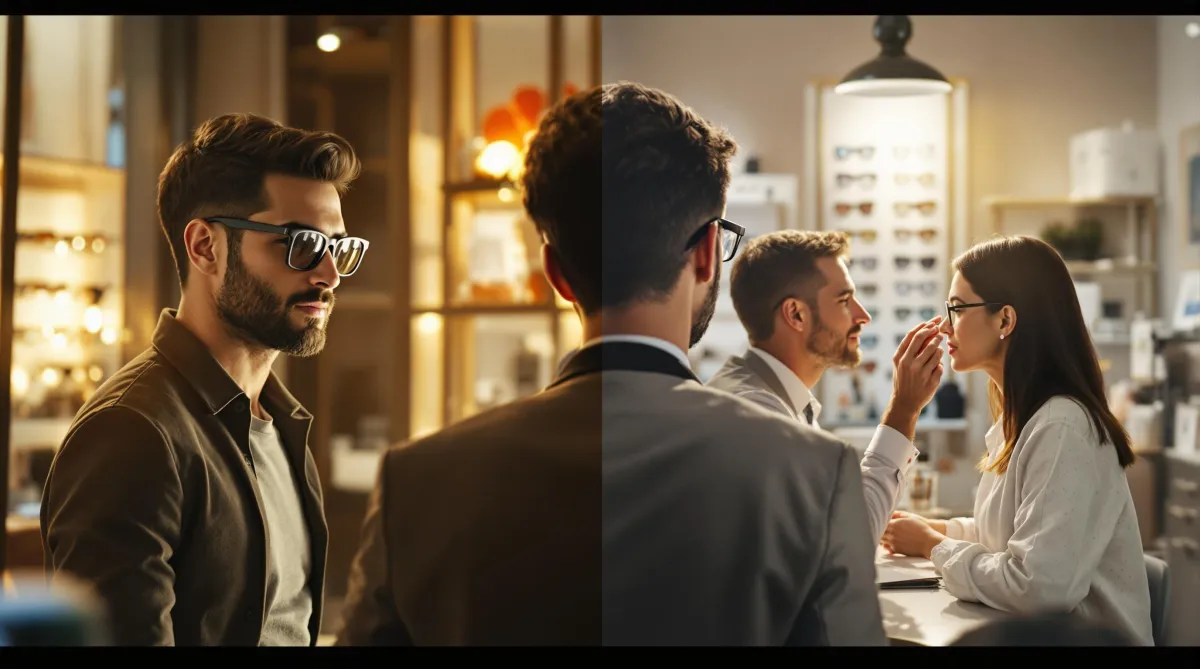
Contact Lens Fitting vs. Glasses Fitting: What's Right for You?
Contact Lens Fitting vs. Glasses Fitting: What's Right for You?
Choosing between contact lenses and eyeglasses is one of the most personal decisions in vision correction. Both offer unique advantages, and for many San Francisco residents, the ideal solution involves having both options available for different situations. Whether you're a tech professional in Cow Hollow spending hours on screens, an active outdoor enthusiast hiking the Presidio trails, or someone who simply wants flexibility in how you correct your vision, understanding the fitting process for each option helps you make informed decisions.
At Eyes in Disguise in San Francisco's Cow Hollow neighborhood, Dr. Michelle Blas guides patients through both contact lens and glasses fittings with expertise gained over 30 years in optometry. The fitting process for contacts versus glasses differs significantly—each requires specialized measurements, different considerations, and unique follow-up care.
Let's explore everything you need to know about contact lens fittings versus glasses fittings, helping you determine which option (or combination) best suits your visual needs and lifestyle.
Understanding the Fundamental Differences
Before diving into the fitting processes, it's important to understand how these vision correction methods differ fundamentally:
Contact Lenses: Direct Correction
Contact lenses sit directly on your eye's surface (either on the cornea for soft lenses or just above it for rigid gas permeable lenses). This creates a seamless optical system where the lens moves with your eye, providing:
Natural field of vision without frame obstruction
No peripheral distortion common with stronger eyeglass prescriptions
Unaffected by weather(no rain spots or fog)
Compatibility with non-prescription sunglasses and safety glasses
More natural appearance for those who prefer not to wear visible eyewear
Eyeglasses: External Correction
Glasses sit approximately 12mm from your eye's surface, creating an optical system that accounts for this distance. Modern eyewear offers:
Zero maintenance beyond occasional cleaning
No contact with eyes eliminating infection risk
Fashion and personal expression through frame selection
Added protection from wind, debris, and UV rays
Ease of use with no insertion or removal concerns
Long-term cost efficiency with durable frames
According to optometry research from 2024, "A comprehensive eye examination is essential to assess your overall eye health and vision needs" before determining which correction method is most appropriate.
The Contact Lens Fitting Process: A Detailed Journey
Contact lens fittings are more complex than glasses fittings because lenses interact directly with your eye tissue. The process ensures comfort, safety, and optimal vision.
Step 1: Comprehensive Eye Examination
Every contact lens fitting begins with a thorough eye exam that goes beyond a simple vision test:
Visual Acuity Assessment Measuring your prescription for distance and near vision, including testing for astigmatism that may require specialty toric lenses.
Eye Health Evaluation Dr. Blas examines the front surface of your eyes using a slit lamp biomicroscope, checking for:
Corneal health and clarity
Tear film quality and stability
Eyelid condition
Signs of dry eye or other conditions that might affect lens wear
Medical History Review Discussing medications, allergies, previous contact lens experience, and lifestyle factors that influence lens selection.
Step 2: Corneal Measurements and Mapping
Contact lenses must match your eye's unique curvature and dimensions:
Keratometry (K-Readings)Measuring the curvature of your cornea's front surface in different meridians. This determines the base curve of your contact lenses—essential for proper fit.
Corneal Topography Advanced practices like Eyes in Disguise use corneal topographers that create detailed 3D maps of your corneal surface. This technology identifies:
Irregular astigmatism
Early signs of keratoconus
Optimal lens designs for your specific corneal shape
Pupil and Iris Measurements Measuring pupil size in different lighting conditions and iris diameter helps determine optimal lens diameter, particularly important for multifocal and colored lenses.
Tear Film Assessment Evaluating tear production and quality through tests like Schirmer's test or tear break-up time. San Francisco's dry summer climate makes this especially relevant for local residents.
Step 3: Lens Selection and Trial Fitting
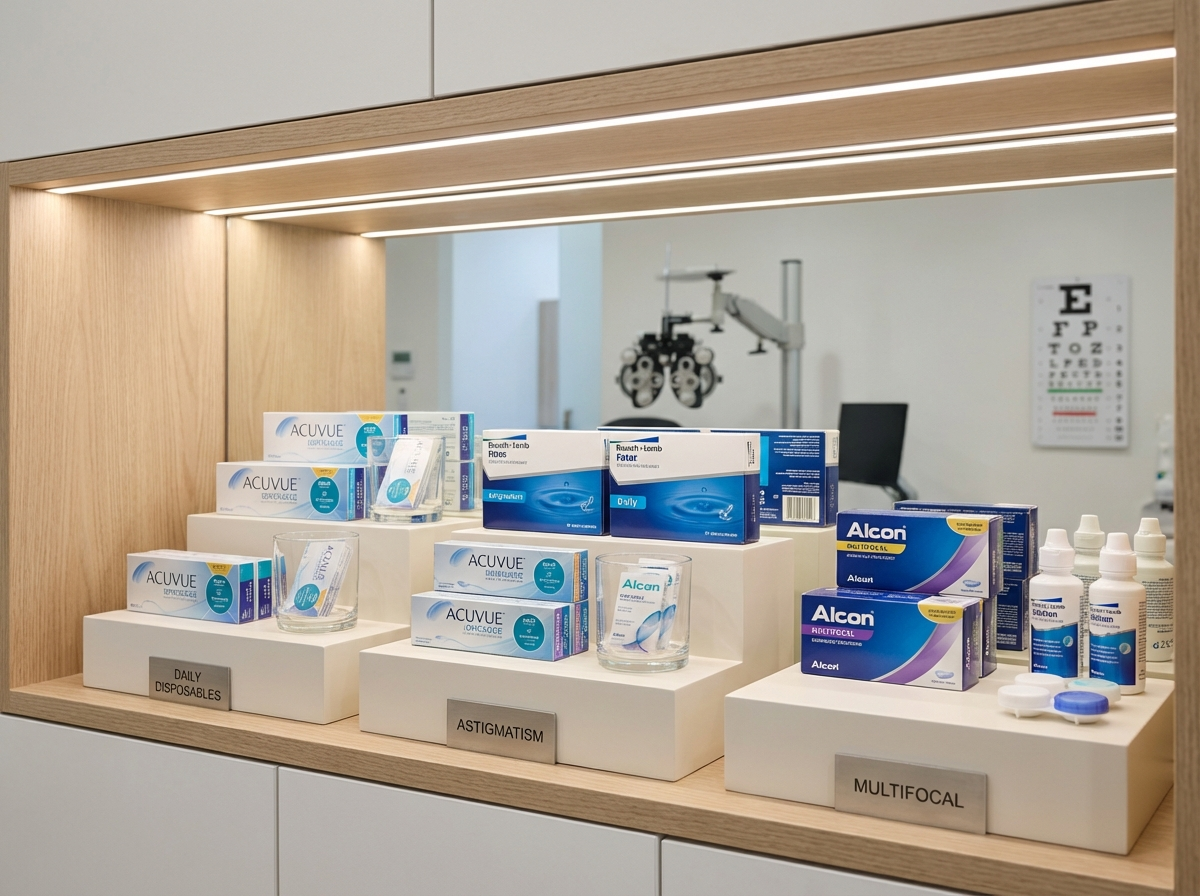
Based on measurements and lifestyle needs, Dr. Blas selects trial lenses:
Lens Type Determination
Daily disposable for convenience and hygiene
Biweekly or monthly replacement for cost-effectiveness
Toric lenses for astigmatism correction
Multifocal lenses for presbyopia (age-related near vision changes)
Specialty lenses for irregular corneas or high prescriptions
Initial Trial Lens Application Dr. Blas or a trained technician places trial lenses on your eyes. After allowing 10-15 minutes for lenses to settle, detailed assessments begin:
Lens Movement Evaluation Lenses should move slightly (about 1mm) with each blink but remain centered. Excessive movement causes discomfort and vision fluctuation; insufficient movement restricts oxygen flow.
Lens Centration Check Lenses must center properly over your cornea. Decentered lenses cause blurred vision, discomfort, and potential eye health issues.
Visual Acuity Testing Verifying you achieve clear, crisp vision at all distances with trial lenses.
Over-Refraction Fine-tuning lens power by performing an additional refraction over the trial lenses to ensure optimal prescription.
According to comprehensive guides from 2024, successful soft lens fitting requires "complete assessment of lens movement, centration, and patient comfort" for long-term success.
Step 4: Patient Training and Education
First-time contact lens wearers receive thorough training:
Insertion and Removal Instruction Step-by-step guidance on safely applying and removing lenses. This process may take 30-60 minutes for new wearers. Dr. Blas ensures you're completely comfortable before leaving the office.
Lens Care Education Detailed instruction on:
Proper cleaning and disinfection techniques
Storage case care and replacement
When to replace lenses
What products to use (and avoid)
Wearing Schedule Guidance Gradual adaptation schedules for new wearers, starting with 4-6 hours daily and slowly increasing. Understanding the "4-to-1 rule"—for every 4 hours of lens wear, give your eyes at least a 1-hour break.
Warning Signs EducationRecognizing symptoms requiring immediate lens removal and professional evaluation:
Sudden vision changes
Eye pain or severe discomfort
Redness that doesn't resolve
Light sensitivity
Discharge or excessive tearing
Step 5: Follow-Up Evaluations
Contact lens fitting doesn't end at the initial appointment:
Short-Term Follow-Up (1-2 Weeks)Evaluating how lenses perform in your daily life, checking for any signs of adverse reactions, and making adjustments if needed.
Comprehensive Follow-Up (1-2 Months)Detailed assessment of:
Long-term lens comfort
Vision quality throughout the day
Lens condition and handling
Eye health with extended lens wear
Any necessary prescription or lens type modifications
Annual Contact Lens Exams Even successful contact lens wearers need annual evaluations. Prescriptions expire yearly, and eyes change over time.
The Eyeglasses Fitting Process: Precision and Personalization
Glasses fitting combines science, artistry, and personal style. While less medically intensive than contact lens fitting, proper glasses fitting is essential for comfort and optimal vision.
Step 1: Comprehensive Vision Examination
Refraction and Prescription Determination Precise measurement of your refractive error using both automated and manual techniques. The prescription includes:
Sphere (SPH): Overall lens power for nearsightedness or farsightedness
Cylinder (CYL): Additional power for astigmatism correction
Axis: Orientation of astigmatism correction
Add Power: Additional magnification for reading (if needed)
Prism: For binocular vision issues (when necessary)
Pupillary Distance (PD) Measurement The distance between your pupils, measured in millimeters. Accurate PD ensures lenses are centered over your pupils—critical for visual comfort, especially with progressive lenses.
Segment Height MeasurementFor bifocal or progressive lenses, precise measurement of where your pupils align when looking straight ahead. This determines where near vision zones are positioned.
Step 2: Lifestyle Assessment and Lens Consultation
Dr. Blas discusses your specific visual needs:
Occupational Considerations
Computer work: Specialized computer glasses or anti-fatigue lenses
Outdoor work: Photochromic (light-adaptive) or polarized lenses
Close-up work: Enhanced near vision zones in progressive lenses
Driving: Anti-reflective coatings for night driving
Activity-Based Needs
Sports: Impact-resistant polycarbonate lenses
Reading: Optimized near vision corrections
Indoor/outdoor transitions: Photochromic options
Aesthetic Preferences Lens thickness, edge treatment, and coatings that affect appearance.
Step 3: Frame Selection and Fitting
This is where art meets science in eyewear:
Face Shape Analysis Professional opticians at Eyes in Disguise analyze your facial features to recommend flattering frame shapes:
Oval faces: Most frame shapes work well
Round faces: Rectangular or angular frames add definition
Square faces: Rounded or oval frames soften angles
Heart-shaped faces: Frames wider at bottom balance proportions
Frame Measurements Every frame has specific measurements:
Eye size: Width of each lens
Bridge width: Distance across the nose piece
Temple length: Length of arms extending to ears
These must align with your facial dimensions for comfort and proper lens positioning.
Material Considerations
Metal frames: Lightweight, adjustable, classic aesthetic
Acetate frames: Bold colors, patterns, substantial feel
Titanium frames: Ultra-lightweight, hypoallergenic, durable
Mixed materials: Combining benefits of different materials
San Francisco Style Considerations Eyes in Disguise carries designer and independent brands popular with San Francisco's fashion-conscious residents—from minimalist designs favored in tech circles to bold statements common in the city's creative communities.
Step 4: Lens Customization
Modern lens technology offers extensive customization:
Lens Materials
Standard plastic (CR-39): Excellent optics, moderate weight
Polycarbonate: Impact-resistant, UV-blocking, lightweight
High-index plastic: Thinner lenses for strong prescriptions
Trivex: Combines optical clarity with impact resistance
Lens Designs
Single vision: One prescription throughout
Bifocal: Distinct near and distance zones
Progressive (no-line bifocal): Gradual transition between distances
Computer lenses: Optimized for intermediate and near distances
Lens Coatings and Treatments
Anti-reflective (AR) coating: Eliminates glare, enhances clarity
Scratch-resistant coating: Protects lens surfaces
UV protection: Blocks harmful ultraviolet radiation
Blue light filtering: Reduces blue light exposure from screens
Photochromic treatment: Lenses darken in sunlight
Polarization: Eliminates reflected glare (sunglasses)
According to recent industry analysis, "Whether it's reducing glare with anti-reflective coatings, protecting against UV rays, preventing scratches, or filtering blue light, each coating plays a crucial role in the overall performance and longevity of eyewear" (October 2024).
Step 5: Precision Fitting and Adjustments
Once your custom lenses arrive:
Initial Fitting The optician at Eyes in Disguise adjusts your frames for:
Proper temple tension: Secure but not tight
Nose pad positioning: Even weight distribution
Pantoscopic tilt: Slight forward angle for optimal optics
Vertex distance: Correct distance from eyes
Face form (wrap): Proper curvature matching face shape
Visual Verification Confirming:
Prescription accuracy through visual testing
Proper lens centration over pupils
Comfortable vision at all distances
No distortion or aberrations
Adjustment Period Education New prescriptions or first-time progressive lens wearers may need adaptation time. Dr. Blas explains what's normal versus what requires modification.
Step 6: Ongoing Service and Adjustments
Glasses fitting doesn't end at initial delivery:
Complimentary Adjustments Frames naturally loosen or shift with wear. Eyes in Disguise offers free adjustments anytime—important for maintaining proper fit and vision.
Replacement Parts Nose pads, temple tips, and screws wear out. Professional replacement maintains comfort and function.
Annual Prescription Updates Even if vision seems stable, annual exams catch subtle changes and ensure continued optimal correction.
Contact Lenses vs. Glasses: Key Comparison Points

Let's directly compare critical aspects:
Vision Quality
Contact Lenses:
Provide wider field of clear vision without frame obstruction
Eliminate peripheral distortion present in higher prescriptions
Move with your eyes for consistent optical alignment
Better for active situations where stable vision is critical
Eyeglasses:
May cause peripheral distortion with stronger prescriptions
Limited by frame size and shape
Stationary optical system requires eye movement within lens zones
Superior for computer work with specialized designs
Winner: Depends on prescription strength and activities. Contacts generally win for active use; specialized computer glasses excel for desk work.
Convenience and Maintenance
Contact Lenses:
Daily cleaning and disinfection required (except daily disposables)
Case cleaning and replacement needed
Can't wear while swimming without risk
Require backup glasses for days you can't wear contacts
Regular replacement costs (daily, biweekly, or monthly)
Eyeglasses:
Simple cleaning with cloth and spray
No nighttime routine
Can be worn immediately upon waking
Durable frames last years with proper care
Single purchase serves indefinitely (until prescription changes)
Winner: Eyeglasses for convenience; daily disposable contacts for minimal maintenance among contact options.
Safety and Health Considerations
Contact Lenses:
Direct eye contact creates infection risk if hygiene lapses
Can cause or exacerbate dry eye symptoms
Require removal if eyes become irritated
Not recommended during illnesses affecting eyes
Overwear can cause corneal complications
Require professional monitoring
Eyeglasses:
Zero infection risk
No impact on tear film or corneal health
Provide protection from debris and UV rays (with proper coatings)
Safe for any duration of wear
Ideal during eye infections or injuries
Winner: Eyeglasses for inherent safety; properly managed contact lenses are very safe for appropriate candidates.
Cost Considerations
Contact Lenses:
Initial fitting fee: $100-300
Daily disposables: $400-800/year (premium)
Monthly lenses: $200-400/year plus solution ($100-150/year)
Specialty lenses: $600-1,200/year
Annual exam: $100-150
Total annual cost: $400-1,500+ depending on lens type
Eyeglasses:
Initial exam and fitting: $100-200
Frames: $150-500 (designer options higher)
Lenses with coatings: $200-600
Total initial cost: $450-1,300
Replacement: Only when prescription changes or frames break
Average lifespan: 2-3 years
Winner: Glasses are more cost-effective long-term; contacts offer better value if you need multiple pairs of glasses for different activities.
Lifestyle Compatibility
Contact Lenses:
Ideal for sports and active lifestyles
Better for jobs requiring safety gear or headphones
Compatible with non-prescription sunglasses
No fogging during temperature changes
Freedom from frame awareness
Eyeglasses:
Perfect for low-maintenance lifestyle
Better for dry or allergy-prone eyes
Easier for patients with dexterity issues
Fashion statement and personal expression
Instant correction without preparation
Winner: Highly individual based on your specific lifestyle demands.
10 Questions to Help You Decide Between Contacts and Glasses
Answering these questions honestly helps determine your ideal vision correction:
1. How Active Is Your Lifestyle?
Athletes, dancers, and active professionals often prefer contacts for unrestricted vision and freedom from bouncing or sliding frames.
2. How Much Time Do You Spend on Screens?
Heavy computer users may benefit from specialized computer glasses with anti-fatigue lenses, though contacts work fine with proper eye care habits.
3. Do You Have Dry Eyes or Allergies?
Dry eye syndrome and seasonal allergies complicate contact lens wear. Many patients wear contacts most days but switch to glasses during allergy season.
4. How Important Is Convenience to You?
Glasses offer unmatched convenience. Contacts require consistent daily routines—skip proper care, and you risk eye health.
5. What's Your Budget?
Consider both upfront and ongoing costs. Glasses have higher initial costs but lower maintenance; contacts spread costs throughout the year.
6. How Do You Feel About Touching Your Eyes?
Contact lens insertion requires comfort with eye contact. Some people never adjust to this sensation.
7. Do You Want Eyewear to Be Visible?
Many people love glasses as fashion accessories. Others prefer the invisible correction contacts provide.
8. How's Your Manual Dexterity?
Arthritis, tremors, or coordination issues can make contact lens handling challenging. Glasses eliminate this concern.
9. Do You Work in Dusty or Chemical Environments?
Environments with airborne particles make contact lens wear uncomfortable or risky. Glasses provide protection in these settings.
10. Would You Consider Having Both?
Many people find the flexibility of both options ideal—contacts for specific activities, glasses for everyday wear.
Special Considerations for San Francisco Residents
San Francisco's unique environment and culture create specific vision correction considerations:
Climate and Weather
Fog and Moisture San Francisco's famous fog doesn't affect contact lenses but can create condensation on eyeglasses. Hydrophobic coatings help glasses shed moisture quickly.
Wind and Coastal Conditions Windy conditions on the Bay or beaches can dry out contact lenses more quickly. Rewetting drops are essential for contact wearers enjoying outdoor San Francisco activities.
Variable Microclimates Temperature shifts between neighborhoods (Marina breeze to Mission sun) can affect both contacts and glasses. Photochromic lenses adapt to changing light; contacts may require mid-day rewetting.
Urban Lifestyle Factors
Public Transportation Many San Francisco residents rely on Muni, BART, or walking. Glasses fog when entering warm vehicles from cold streets; contacts eliminate this issue.
Tech Industry Demands Silicon Valley's influence means many San Francisco residents spend 8-12 hours daily on screens. Specialized computer glasses or high-quality contacts designed for digital device users become essential.
Active Outdoor Culture From surfing Ocean Beach to hiking Twin Peaks, San Francisco's outdoor culture favors contact lenses for activities. However, prescription sunglasses or photochromic glasses offer protection contacts can't match.
Fashion-Forward Culture San Francisco values personal expression. Eyes in Disguise's curated collection of designer and independent eyewear brands serves this aesthetic appreciation.
Can You Have Both? The Hybrid Approach
Many of Dr. Blas's patients at Eyes in Disguise maintain both contacts and glasses:
Common Hybrid Scenarios:
Daily Contacts + Eyeglasses Wear contacts during work and social activities; switch to glasses evenings at home and weekends for eye rest.
Part-Time Contacts + Specialty Glasses Contacts for sports and active pursuits; computer glasses for work; readers for detailed tasks; sunglasses for outdoor protection.
Backup System Primary glasses wearers keep contacts for special occasions, sports, or when glasses become impractical.
The Perfect Combination This approach provides maximum flexibility while ensuring your eyes get regular breaks from contact lens wear—important for long-term eye health.
Maintenance and Care Requirements
Understanding ongoing care helps set realistic expectations:
Contact Lens Care Essentials
Daily Routine:
Wash and dry hands thoroughly before handling
Remove lenses before sleeping (unless prescribed for overnight wear)
Clean lenses with appropriate solution (no water ever)
Store in fresh solution in clean case
Replace case every 1-3 months
Never:
Sleep in lenses not approved for overnight wear
Use tap water, saliva, or homemade solutions
Extend wearing schedule beyond recommendations
Ignore discomfort or redness
Share lenses with others
Regular Supplies Needed:
Multipurpose solution or hydrogen peroxide system
Lens cases
Rewetting drops
Makeup compatible with lens wear
Backup glasses
Eyeglasses Care Essentials
Daily Care:
Clean with microfiber cloth and lens spray
Store in protective case when not wearing
Avoid leaving in hot cars
Handle by frames, not lenses
Regular Maintenance:
Professional adjustments every 3-6 months
Nose pad replacement as needed
Screw tightening
Deep cleaning
Supplies Needed:
Microfiber cleaning cloths
Lens cleaning spray
Protective case
Small screwdriver for minor adjustments
Making Your Decision: Consultation at Eyes in Disguise
The decision between contacts and glasses isn't one-size-fits-all. During your consultation at Eyes in Disguise in Cow Hollow, Dr. Michelle Blas:
Conducts Comprehensive Assessment
Thorough examination of eye health, prescription needs, and lifestyle requirements.
Discusses Medical Considerations
Evaluating whether any conditions affect contact lens candidacy—dry eye, allergies, lid irregularities, or corneal shape issues.
Explores Lifestyle Needs
Understanding your daily activities, occupational demands, hobbies, and aesthetic preferences.
Presents All Options
Explaining various contact lens types, glasses options, and hybrid approaches with transparent cost discussions.
Provides Trial Opportunities
Many patients benefit from trying contacts before committing. Proper trials with follow-up ensure the right decision.
Supports Your Decision
Whether you choose contacts, glasses, or both, Dr. Blas and the Eyes in Disguise team provide ongoing support, adjustments, and monitoring.
The Future of Vision Correction
Both contact lenses and eyeglasses continue advancing:
Contact Lens Innovations
Smart lenses with health monitoring capabilities
Drug-delivering lenses for conditions like glaucoma
Extended wear materials allowing 30-day continuous use
Custom scleral lenses for complex prescriptions
Enhanced oxygen permeability reducing corneal stress
Eyewear Innovations
Digital lens designs optimized for modern viewing patterns
Advanced coatings that repel everything from water to bacteria
Lighter materials making glasses nearly weightless
Augmented reality integration(though still emerging)
Sustainable materials appealing to environmentally conscious consumers
Take the Next Step Toward Clear, Comfortable Vision
Whether you're considering vision correction for the first time, dissatisfied with your current option, or curious about trying something new, professional guidance makes all the difference.
The decision between contact lenses and eyeglasses—or the choice to have both—depends on your unique eyes, lifestyle, and preferences. There's no universal "right answer," only the right answer for you.
At Eyes in Disguise in San Francisco's Cow Hollow, Dr. Michelle Blas and her team combine three decades of expertise with genuine care for each patient's individual needs. From comprehensive contact lens fittings to precision eyeglass customization, you'll receive personalized attention that goes beyond simply correcting your vision—we're here to enhance how you experience the world.
Ready to explore your vision correction options? Schedule a comprehensive eye exam and fitting consultation at Eyes in Disguise. Discover whether contact lenses, eyeglasses, or a combination of both will best serve your San Francisco lifestyle.
About the Author
Dr. Michelle Blas, OD, has dedicated her 30-year optometry career to providing exceptional vision care at Eyes in Disguise in San Francisco's Cow Hollow neighborhood. Board-certified with extensive training in pediatric optometry and myopia control, Dr. Blas serves families throughout San Francisco including Pacific Heights, the Marina District, Russian Hill, and the Presidio. She combines evidence-based medical care with personalized service, helping clients navigate eye health challenges with confidence and clarity.
FREQUENTLY ASKED QUESTIONS
Q: Is contact lens fitting more expensive than getting glasses?
Contact lens fitting typically costs $100-300 for the initial fitting appointment (separate from the eye exam), plus ongoing lens costs of $200-1,500 annually depending on lens type. Glasses have higher upfront costs ($450-1,300) but last 2-3 years, making them more economical long-term. However, many patients find value in having both options for different situations. At Eyes in Disguise, Dr. Blas discusses all costs transparently before proceeding.
Q: How long does a contact lens fitting appointment take?
A comprehensive contact lens fitting appointment typically takes 60-90 minutes, including the eye exam, corneal measurements, trial lens fitting, and patient training. First-time wearers should budget additional time for insertion and removal training. Follow-up appointments are shorter, usually 15-30 minutes. At Eyes in Disguise in Cow Hollow, we schedule adequate time to ensure you're completely comfortable before leaving.
Q: Can I wear contact lenses if I have astigmatism?
Yes! Toric contact lenses specifically correct astigmatism by incorporating different powers in different meridians. Modern toric lenses are available in daily disposable, biweekly, and monthly replacement schedules. They're designed to remain stable on the eye so the astigmatism correction aligns properly. Dr. Blas has extensive experience fitting toric lenses for San Francisco patients with astigmatism of varying degrees.
Q: How often do I need to update my contact lens prescription versus my glasses prescription?
Contact lens prescriptions legally expire after one year and must be renewed with an exam. Glasses prescriptions typically last 1-2 years depending on your age and vision stability. However, even if your prescription hasn't changed, contact lens wearers need annual exams to monitor eye health with lens wear. Eyes in Disguise sends reminders when you're due for exam renewals.
Q: Can I try contact lenses before committing to wearing them regularly?
Absolutely. At Eyes in Disguise, Dr. Blas offers trial lenses during the fitting process so you can experience contact lens wear before purchasing a supply. This trial period allows you to evaluate comfort, vision quality, and whether you're comfortable with the maintenance routine. Many patients discover contacts aren't for them during trials—that's valuable information that saves money and frustration.
Q: Is it safe to wear contact lenses in San Francisco's windy, foggy climate?
Yes, with proper precautions. Contact lenses actually perform well in fog since they don't fog up like glasses do. However, wind and coastal conditions can dry lenses more quickly. Keep rewetting drops handy for outdoor activities. Stay well-hydrated. Consider daily disposable lenses if you frequently engage in outdoor activities—they're more comfortable in challenging conditions and don't require cleaning after exposure to wind-blown particles.
Q: Why do I need a separate fitting for contact lenses if I already have a glasses prescription?
Glasses sit about 12mm from your eyes while contacts rest directly on the eye surface. This distance difference requires prescription adjustment. Additionally, contact lens fitting involves measurements glasses don't require—corneal curvature, diameter, tear film quality, and individual eye topography. A glasses prescription alone doesn't provide the information needed to safely and effectively fit contact lenses.
Q: Can I wear both contacts and glasses, switching between them?
Yes, many people maintain both options. This hybrid approach offers maximum flexibility—contacts for sports and social situations, glasses for computer work and home comfort. Having both also provides a backup if one option isn't available (lost contacts, broken glasses). Dr. Blas can coordinate prescriptions between both options to ensure seamless transitions. Many San Francisco professionals find this approach ideal for their varied lifestyle demands.
